Calm Control Dual Ring Handcuff Keys - Brushed Steel
13 sold in last 24 hours
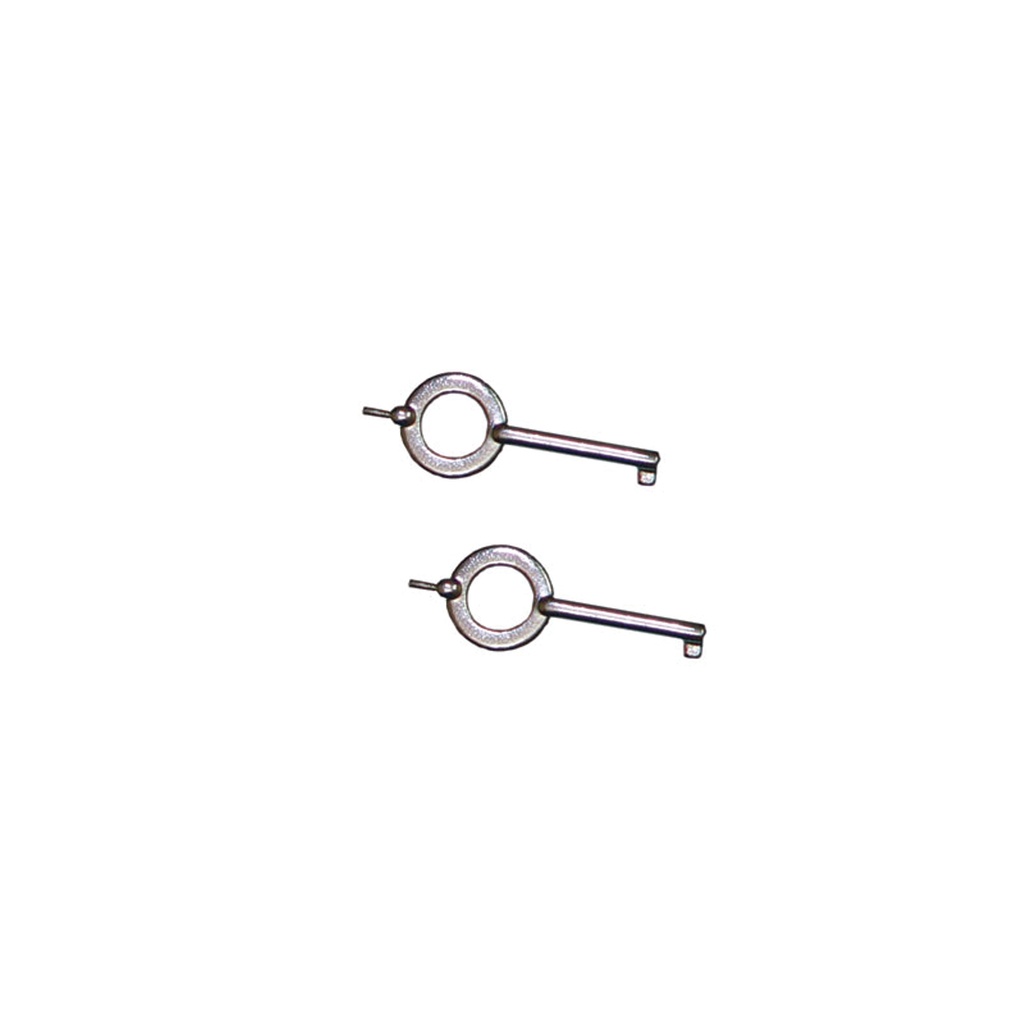
The Calm Control Dual Ring Handcuff Keys keep your focus on the person in cuffs, not the key in your hand. This twin set rides on any keyring, giving you a primary and backup handcuff key in the same clean, brushed steel profile. The round ring is easy to index by feel, while the standard bit and double-lock pin pair with common duty cuffs. It’s quiet redundancy for officers, security, and prepared civilians who refuse to gamble on a single key.
Why Backup Handcuff Keys Matter When Control Really Counts
When a pair of cuffs closes, your priorities are simple: maintain control, keep everyone safe, and avoid unforced errors. Losing or fumbling a single handcuff key is one of those errors that doesn’t need to happen. The Calm Control Dual Ring Handcuff Keys - Brushed Steel are built around a straightforward idea: redundancy should be simple, compact, and always within reach.
This twin set gives you two identical, standard-pattern handcuff keys designed for keyring carry and backup stow. No gimmicks, no bulky gadgets—just brushed steel reliability you can run by feel, even when your attention is on the person in front of you.
Design Intent: Quiet Redundancy for Duty and Security Work
These aren’t fashion accessories; they’re work tools. The brushed steel finish resists visual wear, the profile stays slim on a crowded keyring, and the round head makes each handcuff key easy to index without looking down. Whether you’re law enforcement, private security, or a prepared civilian who trains seriously, this set is about maintaining calm control under pressure.
Two keys mean you have options. One rides on your primary duty keyring. The second lives somewhere separate—a vest, a backup pouch, a go-bag, or clipped to a different ring. If one goes missing or gets dropped in the dark, your workflow doesn’t collapse; you reach for the backup and keep going.
Build Quality Details That Matter in Handcuff Keys
Most people don’t think about handcuff keys until they fail. Professionals do. This design leans into the small details that separate a dependable handcuff key from the throwaway kind that twist, bend, or strip.
Standard-Compatible Bit and Double-Lock Pin
Each key uses the familiar standard handcuff key bit, compatible with common law enforcement and security cuffs that accept that profile. Opposite the shaft, a small protruding pin is integrated into the ring, letting you release double locks without digging for a separate tool. That means fewer moving parts to lose, and one fewer step between decision and action.
Solid Brushed Steel Construction
The brushed steel body offers a balance of strength and low visual maintenance. It won’t scream for attention, and it won’t feel flimsy when you’re torquing against a tight cuff. The smooth ring is comfortable to pinch, twist, and spin, even with gloved or slightly numbed hands, giving you fine control over rotation without harsh edges.
Round Head for Fast Indexing by Feel
Under stress, your fine motor skills dip. A key design that expects perfection from your fingers is a key design that will betray you. The round head on these handcuff keys gives you a consistent, easily recognized shape to locate, orient, and manipulate without looking. You don’t need to burn visual focus on the key—you can keep it on the subject and surroundings.
Real-World Carry: How These Handcuff Keys Ride and Deploy
Gear only helps if you can comfortably carry it and access it when you actually need it. These handcuff keys are built to disappear into your everyday loadout while staying instantly available.
Keyring-Friendly Size and Shape
The Twin Ring profile is deliberate: a simple circle with a straight shaft keeps bulk down while still giving you something substantial to grab. They sit flat on a duty keyring, in a pocket, or clipped to a small carabiner. No protruding wings, no complicated contours to snag on clothing or equipment.
Primary and Backup Placement Options
For most users, the cleanest system is:
- Primary key: on the same ring as your main duty or access keys.
- Backup key: separated—on a different keyring, in a vest pocket, in your bag, or with a trusted partner.
That separation means a single point of failure—dropped ring, broken clip, lost keys—doesn’t leave you without a way to remove cuffs. It’s a small, inexpensive layer of insurance that experienced officers and security professionals tend to adopt after they’ve seen a key go missing at exactly the wrong time.
Control, Safety, and Professional Workflow
Good restraint work is about more than just getting cuffs on. It’s about efficient application, appropriate use, and clean removal when the situation calls for it. A reliable handcuff key supports that full arc of control.
Because these keys are standard-pattern and easy to orient, you get predictable engagement with the lock. That means less wrenching, less fumbling, and less time spent in that awkward moment where the subject is waiting for the click of release. In environments where professionalism and perception matter—hospital security, event security, transport—those smooth moments add up.
What People Ask Before Buying a Stun Gun for Protection
Most buyers looking for a stun gun for self defense are sorting through hype, big voltage numbers, and a lot of fear-based marketing. While this product is a set of backup handcuff keys, many of the same people shopping for duty and security gear also ask about stun gun protection as part of their kit. These answers focus on practical, real-world effectiveness—not marketing theatrics.
How effective are stun guns for self defense?
A stun gun can be effective for self defense in very specific conditions: close range, solid contact with the attacker’s body (ideally on large muscle groups), and enough contact time—usually several seconds—to let the current do its job. Unlike a projectile tool, a stun gun for personal protection is a contact device. It doesn’t knock people across the room; it disrupts muscle function and pain perception.
For many users, the biggest advantage is psychological and tactical: it gives you a pain-compliance and distraction tool that may create a window to escape. It is not a guarantee, and it doesn’t replace awareness, distance management, and basic self-defense skills. Treated as one layer in a protection plan, a stun gun can absolutely be useful; treated as a magic talisman, it will disappoint you.
Does voltage or amperage matter more in a stun gun?
Voltage numbers on stun gun packaging are mostly marketing. Once you’re over a certain threshold—enough to arc through clothing and skin oils—extra “millions of volts” don’t translate into real-world stopping power. What actually matters more is amperage (current) and contact time.
Amperage is what drives current through tissue to cause pain and muscle contraction. Within safe, non-lethal ranges, more useful current and better contact area often mean more reliable results. Duration also matters: a fraction of a second might startle; two to three seconds can significantly disrupt; longer contact, especially on large muscles, is more likely to drop someone. So when you evaluate a stun gun for self defense, look past the voltage claims and ask: how is it built, what’s the contact design, and can I realistically keep it in contact under stress?
Is this stun gun legal to carry in my state?
Stun gun legality in the U.S. varies by state and sometimes by city or county. Many states allow stun guns for personal protection with minimal restriction, but some require permits, limit carry in certain locations (schools, government buildings, airports), or ban them outright in specific jurisdictions.
The only responsible approach is to check current laws where you live and where you’ll carry. Look at your state statutes on electronic control devices, and then confirm whether your city or county has added extra rules. Laws change, and online summaries can lag behind. When in doubt, verify through official state resources or speak with a local attorney familiar with self-defense and weapons regulations.
Practical Preparedness: Building a Coherent Personal Protection Kit
Whether you’re on duty or just take personal safety seriously, the goal is the same: calm, functional control of bad situations. A stun gun for self defense may be one tool in that kit. Reliable restraints and handcuff keys may be another if your role and training justify them.
The Calm Control Dual Ring Handcuff Keys - Brushed Steel fit into that broader mindset. They’re a quiet, redundant solution to a simple but critical problem: never being without a working key when someone is in cuffs. Combine that mindset with honest, data-driven choices about any stun gun or other self-defense tools you carry, and you’re building something far more important than a gear collection—you’re building competence.
In the end, preparedness isn’t dramatic. It looks like simple, well-chosen tools, carried consistently, and backed by clear thinking and practice. These twin handcuff keys are one small, solid piece of that larger picture.