

Compass Legacy Ceremonial Sword Cane - Black Stainless
6 sold in last 24 hours
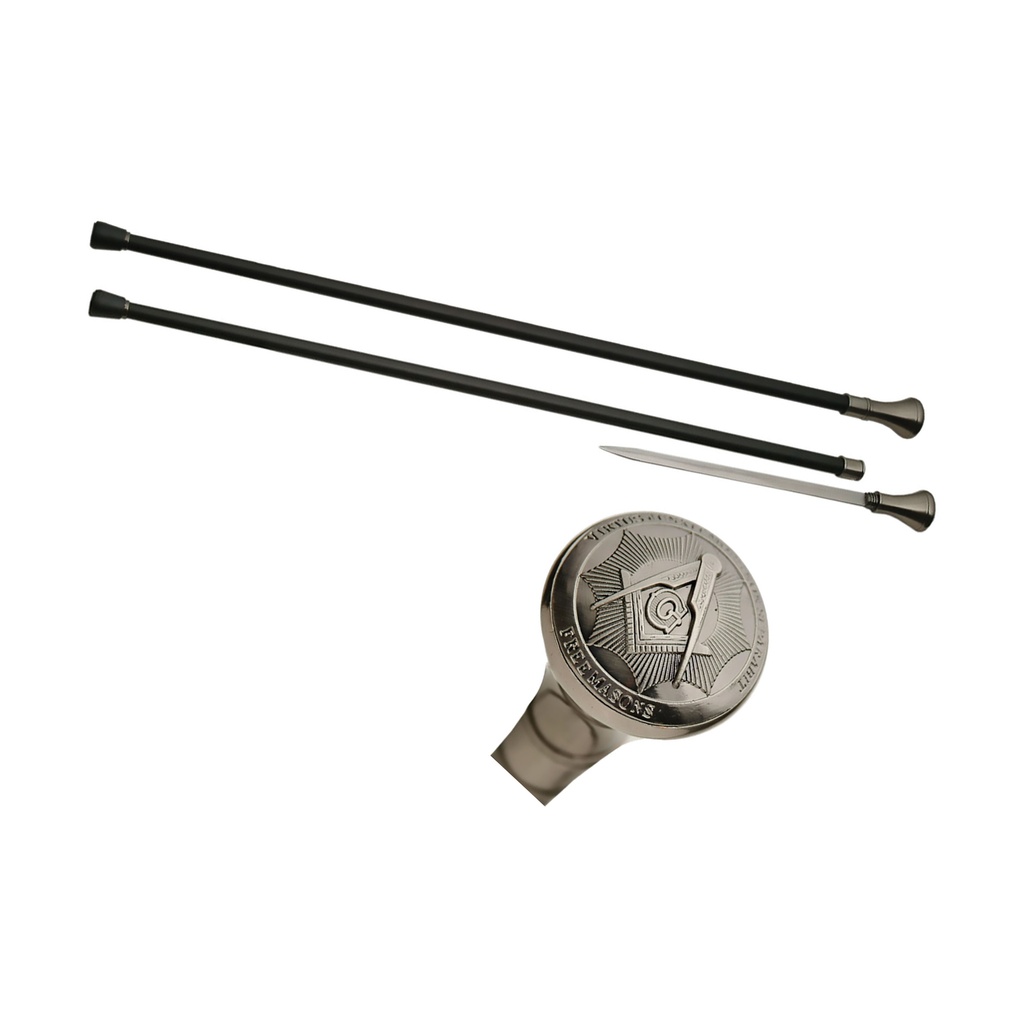
The Compass Legacy Ceremonial Sword Cane blends Masonic symbolism with discreet steel. A sleek black shaft supports a rounded metal knob etched with the square and compasses, while a 12-inch stainless blade hides neatly inside. It’s balanced more for presence than combat—ideal as a fraternal display piece, lodge accessory, or conversation-starting walking cane for collectors who value heritage, symbolism, and subtle craftsmanship over tactical performance.
What This Ceremonial Sword Cane Actually Is
The Compass Legacy Ceremonial Sword Cane - Black Stainless is, first and foremost, a symbolic walking cane with a concealed blade—not a primary self-defense weapon. Think of it as a fraternal heritage piece that happens to house a 12-inch stainless steel blade, rather than a tactical cane engineered for hard impacts or real-world fighting. If you’re looking for a practical stun gun for self defense or modern personal protection, this isn’t it. If you want a Masonic-themed sword cane that carries quiet tradition and visual presence, you’re in the right place.
Design Focus: Fraternal Symbolism Over Tactical Use
The most prominent feature on this sword cane is the rounded metal knob capped with the familiar square and compasses emblem. That immediately positions it in the realm of fraternal, lodge, or ceremonial gear. The long, straight black shaft and polished silver-toned fittings reinforce the formal, dress-cane look. This is the kind of piece that fits beside regalia, display swords, or lodge memorabilia—less an everyday mobility aid, more a symbolic accessory with a hidden steel core.
Collectors, Freemasons, and enthusiasts of fraternal history will appreciate that the blade is fully enclosed inside the shaft, keeping the external profile clean and discreet. From a few feet away, it simply reads as an understated black walking cane with a distinctive crest.
How This Sword Cane Actually Works
Mechanically, this is a concealed sword cane: a slim stainless blade hidden in a hollow cane shaft, accessed by separating the handle section from the lower portion. There is no complex locking mechanism, no spring assist, and no stun gun function—just a straightforward pull to reveal the blade.
The blade itself is approximately 12 inches in length, narrow and lightweight. It is designed more for visual impact and thematic consistency than for heavy-duty cutting or thrusting. In practical terms, that means:
- It can serve as a last-resort deterrent if absolutely necessary.
- It is not engineered like a full combat or self-defense blade.
- Its primary role is ceremonial, collectible, and decorative.
Where a stun gun for personal protection relies on amperage, contact time, and reliable electronics to disrupt muscle function, this sword cane relies on presence and symbolism. It should be treated as a display-grade edged tool, not a replacement for dedicated self-defense gear.
Build Quality Details That Matter
Blade and Shaft Construction
The 12-inch stainless blade is slim, straight, and corrosion-resistant under normal indoor use. It’s suitable for occasional handling, ceremonial drawing, and display. The shaft is finished in matte to semi-gloss black, keeping reflections low and the look understated.
At the transition between knob and shaft, a metal ferrule reinforces the joint and visually separates the polished handle from the dark cane body. A black rubber tip at the base provides basic floor contact and helps prevent slipping on typical indoor surfaces.
Handle, Emblem, and Grip
The rounded metal knob functions as both handle and focal point. The Masonic square and compasses emblem is engraved or stamped into the top face, surrounded by subtle radiating lines that frame the symbol. In hand, the knob offers a simple palm-filling grip for light walking support and ceremonial carry. It’s not contoured like a tactical cane handle or ergonomic trekking cane, so expect it to feel more like traditional dress furniture than a performance tool.
Practical Use: Display, Ceremony, and Light Carry
For most buyers, the primary use case of this sword cane will be:
- Display: On a stand, in a lodge, or as part of a collection of fraternal regalia.
- Ceremony: As a symbolic accessory during rituals, themed events, or formal gatherings.
- Conversation Piece: A visually interesting cane that reveals a blade when appropriate and legal to do so.
It can serve as a light walking aid for short, casual use, but it is not a medical-grade cane. If you need stable daily mobility support, you should choose a purpose-built cane. Similarly, if you’re focused on personal protection, a dedicated stun gun for self defense, pepper spray, or a legally carried self-defense tool will be more practical, controllable, and training-friendly than a ceremonial sword cane.
Legal and Safety Considerations
Where stun guns and modern self-defense tools are governed by clear categories in many jurisdictions, sword canes—and concealed blades in canes specifically—often fall into stricter or more ambiguous legal territory. Laws vary widely by state, country, and even city. In some regions, cane swords are classified as prohibited weapons; in others, they may be legal to own but restricted to private property or display.
Before carrying this sword cane outside your home or lodge, it is your responsibility to:
- Check local and state laws on cane swords or concealed blades.
- Understand whether ownership, transport, or carry is restricted.
- Transport it discreetly and safely if taking it to events or displays.
In terms of safety, treat this like any edged tool:
- Keep fingers clear of the blade path when drawing or sheathing.
- Do not swing, spar, or playfully fence with it—it’s a real blade, not a toy.
- Store it where children cannot access it unsupervised.
Why Choose This Cane Over a Purely Tactical Option
If your priority is personal protection in the modern sense, the best stun gun for personal protection, pepper spray, or a compact defensive flashlight will usually serve you better. These tools are designed with realistic self-defense scenarios, training, and legal frameworks in mind.
You choose this sword cane instead when:
- You value Masonic or fraternal symbolism.
- You want a heritage-style cane that adds a hidden steel detail.
- You’re building a display or collection around ceremonial weapons or regalia.
Seen in that light, this isn’t competing with a stun gun for self defense. It’s complementing a different part of your identity: respect for tradition, ritual, and the visual language of the craft.
What People Ask Before Buying a Stun Gun for Protection
Many buyers browsing this cane are also researching modern tools like a stun gun for self defense, so it’s worth addressing the most common protection questions plainly.
How effective are stun guns for self defense?
A stun gun can be effective as a close-range, contact-based self-defense tool when used correctly: good amperage, solid contact on muscle groups or nerve-rich areas, and at least a second or two of sustained contact. They shine as a deterrent (sound and visible arc) and as a way to create an opportunity to escape. They are not magic fight stoppers—poor contact, thick clothing, or low-quality devices can dramatically reduce their effect. Training, realistic expectations, and choosing a reliable unit matter more than any massive voltage claim on the package.
Does voltage or amperage matter more in a stun gun?
Voltage gets the marketing headlines, but amperage is what actually drives current through the body. Almost all consumer stun guns advertise exaggerated “million volt” ratings that don’t reflect real, usable output. For practical protection, focus on:
- Reputable manufacturer and build quality.
- Consistent power delivery (good battery system).
- Contact area and ergonomics so you can keep the device in place under stress.
A modest, well-built unit with adequate current and good contact will outperform a flimsy "10 million volt" device every time.
Is this sword cane legal to carry in my state?
Unlike a stun gun, which is legal with some restrictions in many U.S. states, sword canes can fall under concealed weapon or prohibited weapon statutes. Some places ban them outright; others allow ownership but restrict public carry. Check your state and local laws specifically for "cane sword," "sword cane," or "concealed blade in cane." When in doubt, treat this primarily as a display or ceremonial item and avoid everyday public carry unless you have clear, written guidance that it’s allowed.
Carrying With Clarity: Tradition First, Protection Second
Owning the Compass Legacy Ceremonial Sword Cane - Black Stainless is about understanding what role it plays in your life and kit. As a Masonic or fraternal accessory, it adds presence, story, and a hidden detail that only appears when invited. As a defensive tool, it is secondary at best and legally complex compared to modern options like a dedicated stun gun for self defense or other purpose-built personal protection devices.
Use it where it excels: in ceremony, display, collection, and as a symbol of heritage. For real-world self-defense, pair it with modern, legally informed tools and honest training. That mix—tradition carried proudly, protection approached practically—is how you stay both prepared and grounded.