Damascus Flow Velocity Assisted EDC Knife - Blackwood
12 sold in last 24 hours
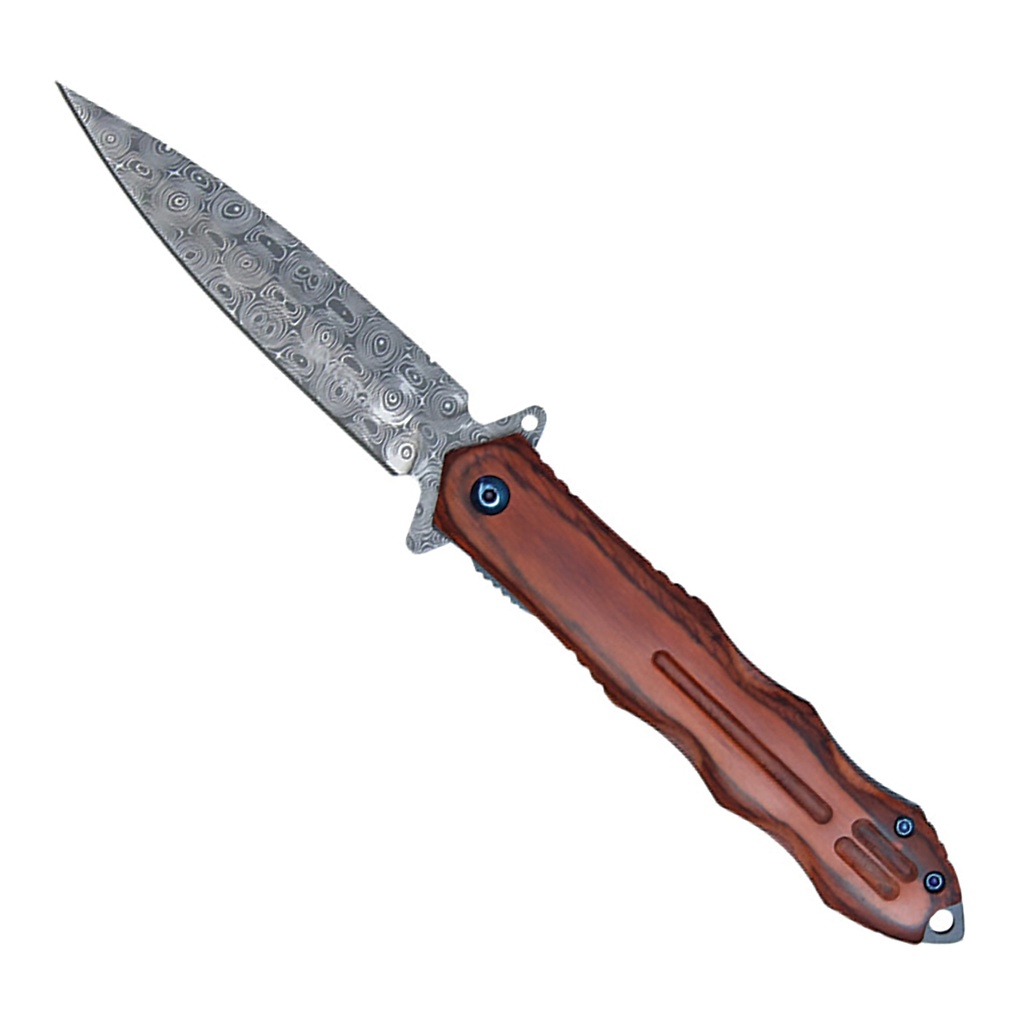
This assisted opening knife is built for people who actually use their gear. A Damascus-style spear point blade rides on a fast, reliable spring assist, while the blackwood handle locks into your grip without drama or bulk. At 8.75 inches open and just 4.6 ounces, it carries light, deploys quickly with the flipper, and disappears in pocket thanks to the clip and lanyard-ready tail. It’s a practical EDC blade for everyday cutting, not a shelf queen.
What This Assisted Opening Knife Actually Does Well
This knife isn’t pretending to be a fantasy sword or a tactical prop. It’s a spring-assisted EDC knife built for real, everyday cutting tasks: opening boxes, trimming cord, breaking down packaging, light camp work, and general utility. The Damascus-style pattern gives it character, but the working core is a straightforward spear point blade in a fast, reliable assisted-opening platform.
If you like gear that opens smoothly, cuts cleanly, and rides comfortably in the pocket, this assisted opening knife checks those boxes without trying to be something it’s not.
Damascus-Style Blade, Everyday Cutting Performance
The blade on this assisted knife runs 3.75 inches with a spear point profile and plain edge—long enough for serious utility, compact enough for pocket carry. The Damascus-style pattern is a finish, not an ancient forge secret, but it does two useful things: it visually breaks up scratches from use, and it gives the knife a more refined, enthusiast look.
The spear point geometry is practical: you get a fine tip for precision cuts and piercing, plus enough belly for slicing through cardboard, tape, plastics, and light cord. The plain edge sharpens easily on standard stones or pull-through sharpeners, making maintenance simple for non-collectors who actually cut things.
Balanced Length and Weight for Real EDC
Open length is 8.75 inches, closed around 5 inches, and weight sits at 4.6 ounces. That combination lands in the sweet spot for an everyday carry folding knife—big enough to fill the hand, but not so heavy that it drags your pocket down. If you’ve carried tiny knives that feel fiddly or giant folders that you leave at home, this rides right between those extremes.
Spear Point Utility Without the Tactical Theater
Many buyers see “spear point” and assume it’s purely a tactical shape. In reality, this profile is an excellent all-rounder: the centered tip lines up well with the handle, so detail work feels controlled, and the straight-ish edge section gives you predictable, repeatable cuts. It’s more about clean performance than intimidation factor.
Why This Assisted Opening Mechanism Matters
Mechanically, this is a spring-assisted folding knife. That means you start the opening with the flipper tab, and the internal spring takes over to drive the blade the rest of the way. It is not an automatic knife; it still requires your deliberate input to deploy.
For practical carry, assisted opening gives you a few concrete advantages: fast, consistent deployment with either hand (once you’re used to it), predictable motion under light stress, and less need to rely on thumb strength or fine motor control like a traditional thumb-stud-only folder.
Front Flipper and Guard-Style Flipper Tab
This knife uses both a front flipper tab and a guard-style flipper. That gives you multiple ways to open it quickly: a forward roll for a more subtle deployment, or a straight pull on the guard-style flipper when you want a positive, sure-fire open. Under cold, wet, or gloved conditions, that extra purchase on the flipper tab matters more than looks.
Liner Lock Simplicity and Security
The blade is secured by a liner lock—a proven, simple mechanism where a leaf of steel inside the handle moves into place behind the tang. When it’s open, you get solid resistance against closing during normal use. When you want to close it, you push the liner aside with your thumb and fold the blade safely into the handle. It’s a familiar system that many everyday carriers already trust.
Blackwood Handle: Grip, Not Gimmicks
The blackwood handle scales are where style and function intersect. Visually, the wood grain provides warmth and contrast to the patterned steel. Functionally, the contoured shape, jimping, and natural texture give your hand solid purchase without aggressive, pocket-shredding traction.
This is the opposite of cold, over-machined metal handles that get slippery with sweat or rain. The wood and light texturing let you maintain control in normal day-to-day use without feeling like you’re handling a rescue-tool pry bar.
Jimping and Ergonomic Contours
Jimping along the spine and handle gives you tactile reference points. When you choke up for detail cuts or apply pressure for slicing, those ridges help your thumb and fingers stay planted. Combined with the mild palm swell in the handle, you get a grip that feels more secure than the knife’s price would suggest.
Blue Pivot Accent: Subtle Modern Touch
The blue-accented pivot hardware adds a modern visual cue without shouting. It’s the sort of detail enthusiasts notice—a small design choice that signals someone actually thought about how this knife would look and feel in hand, not just how cheaply it could be produced.
Carry Reality: Clip, Lanyard, and Pocket Presence
Daily carry lives or dies on how a knife rides in your pocket. This assisted opening knife includes a pocket clip mounted on the handle and an exposed lanyard hole near the tail. Together, they give you several legitimate ways to carry, depending on your routine and clothing.
The clip keeps the knife oriented consistently for quick retrieval, while the lanyard hole lets you add a fob for easier access from deeper pockets or bags. Either way, you’re not fishing blindly for a loose tool.
Secure Pocket Clip for Everyday Use
The clip is designed for standard pocket carry, holding the knife close to the seam. That reduces printing and keeps it from rolling around in your pocket or pack. For warehouse work, campus life, or general daily use, this makes the knife feel more like part of your regular kit than a bulky add-on.
Lanyard-Ready Tail for Bags and Gloves
The exposed lanyard hole at the tail lets you run cord, leather, or a bead. That’s not just decoration; a short fob gives you a bigger target to grab when you’re pulling it from a backpack or winter jacket. It’s a simple way to make deployment more consistent when your hands aren’t bare and dry.
What People Ask Before Buying a Stun Gun for Protection
Even though this product is an assisted opening knife, many buyers cross-shop knives and stun guns for personal protection and self defense. The questions below address common stun gun concerns so you can compare tools realistically and choose what fits your situation best.
How effective are stun guns for self defense?
A stun gun for self defense can be effective, but only within its real limits. It’s a contact tool: you must be close enough to drive the electrodes into an attacker and maintain contact for several seconds. The goal is usually to create pain and muscular disruption long enough to break contact and escape, not to "knock someone out" instantly. Build quality, amperage (current), and where you make contact matter more than big voltage numbers on the package.
Does voltage or amperage matter more in a stun gun?
Voltage is largely marketing; once you’re past the threshold needed to arc through clothing, extra “million volt” claims don’t mean much. Amperage—the current—is what actually drives effect on the human body. In a stun gun for self defense, higher effective current, good contact area, and sustained contact time are what create meaningful disruption. When you’re comparing stun guns, look for honest discussion of current, reliable construction, and battery performance instead of being sold on ever-growing voltage claims.
Is this stun gun legal to carry in my state?
Stun gun laws vary by state and sometimes by city. Some states treat a stun gun for self defense much like other defensive tools with age restrictions; others require permits, and a few restrict or ban civilian possession altogether. Before you buy or carry any stun gun, check your state statutes and local ordinances, and verify whether there are rules about where you can take it (schools, government buildings, etc.). When in doubt, talk to a local attorney or law enforcement agency for current guidance.
Choosing the Right Tool and Carrying It Well
Whether you end up with an assisted opening knife like this or a stun gun for self defense, the same core principles apply: understand what the tool actually does, how it works, and where its limits are. Then match that to your daily life—how you dress, where you go, and what you’re realistically willing to carry every day.
This Damascus Flow Velocity Assisted EDC Knife - Blackwood is built for people who want a capable cutting tool that deploys quickly, carries comfortably, and doesn’t rely on hype. Paired with honest research about stun guns and other protection options, it helps you put together a calm, practical approach to everyday readiness instead of chasing dramatic claims.
| Blade Length (inches) | 3.75 |
| Overall Length (inches) | 8.75 |
| Closed Length (inches) | 5 |
| Weight (oz.) | 4.6 |
| Blade Color | Silver |
| Blade Finish | Patterned |
| Blade Style | Spear Point |
| Blade Edge | Plain |
| Blade Material | Steel |
| Handle Finish | Natural |
| Handle Material | Wood |
| Theme | Damascus |
| Pocket Clip | Yes |
| Deployment Method | Spring-assisted |
| Lock Type | Liner lock |