Neon Grip Palm-Lock Push Dagger - Electric Blue
10 sold in last 24 hours
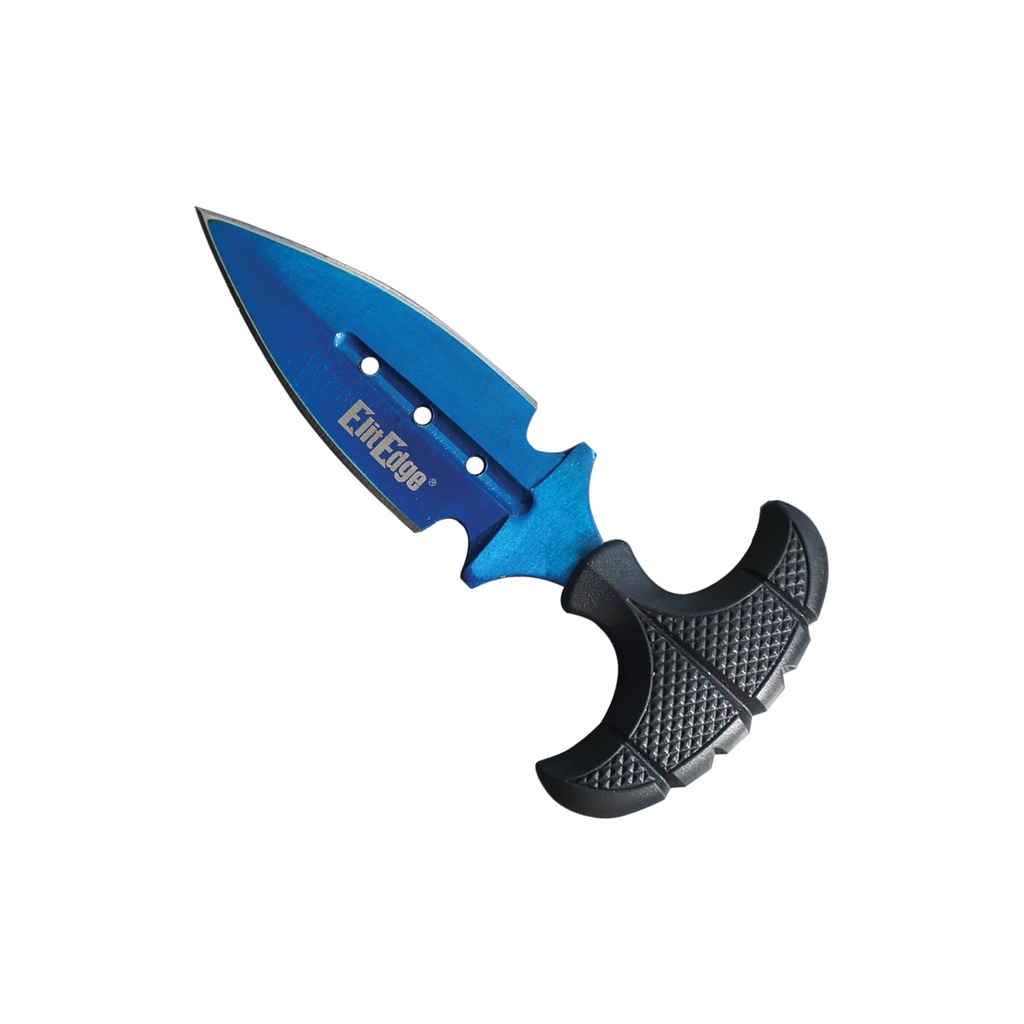
Built for close-quarters control, the Neon Grip Palm-Lock Push Dagger - Electric Blue pairs a vivid double-edged spear-point blade with a textured T-handle that locks into your palm. At 5.625 inches overall and just 2.65 oz, it stays compact yet confident in hand. The palm-lock groove and aggressive texture support quick indexing and solid retention, while the electric-blue blade finish turns heads in the case and on the belt—ideal for self-defense enthusiasts and retailers who want visual impact with real control.
What the Electric Edge Palm-Lock Push Dagger Actually Does
The Electric Edge Palm-Lock Push Dagger - Blue Blade is a compact, fixed push dagger built for close-quarters control, not fantasy combat. At 5.625 inches overall with a 2.875-inch double-edged spear-point blade, it’s designed for one specific job: give you a tight, locked-in grip and a stable thrusting platform when space, time, and options are limited.
This is a purpose-built self-defense tool, not a general utility knife. The T-shaped handle and palm-lock groove put the force of your arm directly behind the blade. The electric-blue finish makes it visually striking for display and carry, but the core value comes from its grip, orientation, and retention under stress.
How a Push Dagger Works in Personal Protection
A push dagger isn’t about finesse cutting; it’s about simple, gross-motor movement. You wrap your fingers around the T-handle, the palm-lock swell sits against your palm, and the blade projects between your fingers in line with your forearm. From there, it becomes a point-driven tool for close self-defense situations where you might be grabbed, pinned, or crowded.
Because the handle is perpendicular to the blade, you don’t need the same wrist strength or fine motor control that a standard knife grip demands. Under adrenaline, when your hands shake and your coordination drops, a push dagger’s straight-line support can be easier to keep oriented and on target.
In real self-defense terms, this design is about retention and stability. It’s harder to knock out of your hand, and the palm-lock profile lets you keep a more natural, compact guard position while still having the blade available.
Build Quality and Control Details That Actually Matter
Textured Palm-Lock T-Handle for Retention
The black synthetic T-handle is shaped with a deep finger groove and a curved palm swell. That geometry is more important than any cosmetic detail—it’s what keeps the push dagger locked into the hand when things get slippery, chaotic, or both. The aggressive texture on the grip panels adds friction without being so sharp that it tears skin during extended training.
Because this is a fixed push dagger and not a folding design, there’s no hinge, no lock to fail, and no opening mechanism to fumble. Simplicity is a form of reliability, especially in close-quarters self-defense.
Double-Edged Spear-Point Blade
The double-edged spear-point blade gives you symmetrical penetration on thrusts regardless of slight angle changes. In other words, you don’t have to think about edge orientation during a high-stress encounter. The central line of three lightening holes reduces weight slightly and contributes to the modern tactical look without compromising the basic strength expectations at this size and intended use.
Carry Reality: Where This Push Dagger Fits in Your Setup
At 2.65 oz, this push dagger is light enough for daily carry without pulling at fabric or gear. Its compact overall length keeps it in the "close to the body" category, which is exactly where a self-defense push dagger should live. While the sheath is not detailed here, the most practical carry options for a push dagger of this format are:
- Inside-the-waistband (IWB) at the centerline or slightly offset for quick, intuitive access
- On a belt, handle-up, where your hand naturally falls under stress
- On a vest or bag strap as a last-ditch retention tool in grappling distance
The key is consistency: carry it the same way, in the same place, and draw it the same way every time. A self-defense tool you can’t access under pressure isn’t protection—it’s decoration.
Electric Edge Palm-Lock Push Dagger for Self Defense: Where It Excels
Used correctly, this push dagger can be a serious close-quarters self-defense option. Its strengths are:
- Retention: The palm-lock design and T-handle are harder to strip from your hand compared to a slim traditional knife handle.
- Gross-motor deployment: No need to align a folding blade, flip a stud, or manage a complex opening method.
- Compact profile: Easier to conceal, harder to grab onto during a struggle.
However, it’s critical to be honest: any blade for personal protection, including this one, brings legal, ethical, and training responsibilities. A push dagger is not a warning tool—it’s a last-resort option when escape and de-escalation have already failed.
How This Differs from a Stun Gun for Self Defense
Many people shopping for personal protection tools compare knives, push daggers, and stun guns for self defense. They serve different roles. A stun gun is an electronic impact tool that relies on electrical current, contact time, and placement to disrupt muscle control or pain compliance. This Electric Edge Palm-Lock Push Dagger, by contrast, is a purely mechanical option that depends on your physical movement and targeting.
Where a stun gun needs battery charge, contact time, and free access to the attacker’s body, this push dagger needs grip, orientation, and intent. Both fall into the personal protection category, but the push dagger will not provide the electrical deterrence or crackling intimidation effect of a stun gun—and a stun gun will not provide the continuous mechanical retention and penetrating capability of a fixed blade. Many serious self-defense practitioners choose one primary tool and one backup, each filling a different niche.
What People Ask Before Buying a Stun Gun for Protection
How effective are stun guns for self defense?
A stun gun can be effective for self defense, but only within its limits. It’s a contact tool—you must be close enough to press it into the attacker. Its real stopping power comes from current (amperage), not just the advertised voltage. A properly designed stun gun with adequate amperage, solid contact points, and enough contact time can create intense pain and muscle disruption, sometimes breaking an attacker’s momentum long enough for you to escape.
However, heavy clothing, poor placement, or too-brief contact can reduce its effect. A stun gun for self defense works best when integrated into a broader plan: awareness, distance management, and a clear escape route.
Does voltage or amperage matter more in a stun gun?
Amperage matters more. Voltage is mainly about the ability of electricity to jump a gap—it’s what makes the arc look and sound impressive. Many "million volt" marketing claims exist largely for show. The real measure of a stun gun’s self-defense effectiveness is the current (amperage) delivered into the body over time.
Low amperage with high voltage can look scary but have limited effect beyond pain. Higher, carefully controlled amperage with good contact area and steady contact time is what actually disrupts muscle function. When you research the best stun gun for personal protection, prioritize build quality, reliable current output, and ergonomics over voltage hype.
Is this stun gun legal to carry in my state?
Stun gun legality varies widely by state and sometimes by city. Some locations treat a stun gun for self defense as a standard defensive tool requiring minimal restrictions; others classify it closer to a weapon and may require permits or ban carry altogether.
The right process is:
- Check your state statutes specifically for "stun gun" and "electronic control device."
- Look for city or county ordinances if you live in a major metro area.
- Confirm whether there are age restrictions, prohibited locations (schools, government buildings), or transportation rules.
Because laws change, always verify with your state’s official legal resources or a qualified attorney before carrying any stun gun or edged self-defense tool.
Practical Empowerment: Building a Realistic Protection Plan
Whether you choose a stun gun, a push dagger like the Electric Edge Palm-Lock, or a combination, the pattern is the same: choose something you can carry consistently, access reliably, and control under stress. Tools don’t replace judgment, awareness, or training—they support them.
This push dagger gives you a compact, retention-focused option for very close quarters, where a more complex opening knife or a contact stun gun might be harder to bring into play. Integrated into a broader personal protection plan that includes avoidance, verbal skills, and a realistic understanding of your local laws, it becomes one more deliberate layer of readiness rather than a talisman.
The goal isn’t to collect gear; it’s to carry one or two tools you understand thoroughly. If you decide this Electric Edge Palm-Lock Push Dagger fits that role, commit to regular practice—drawing, indexing the grip, and returning it safely. Calm, informed, and practiced will always beat flashy but untested.