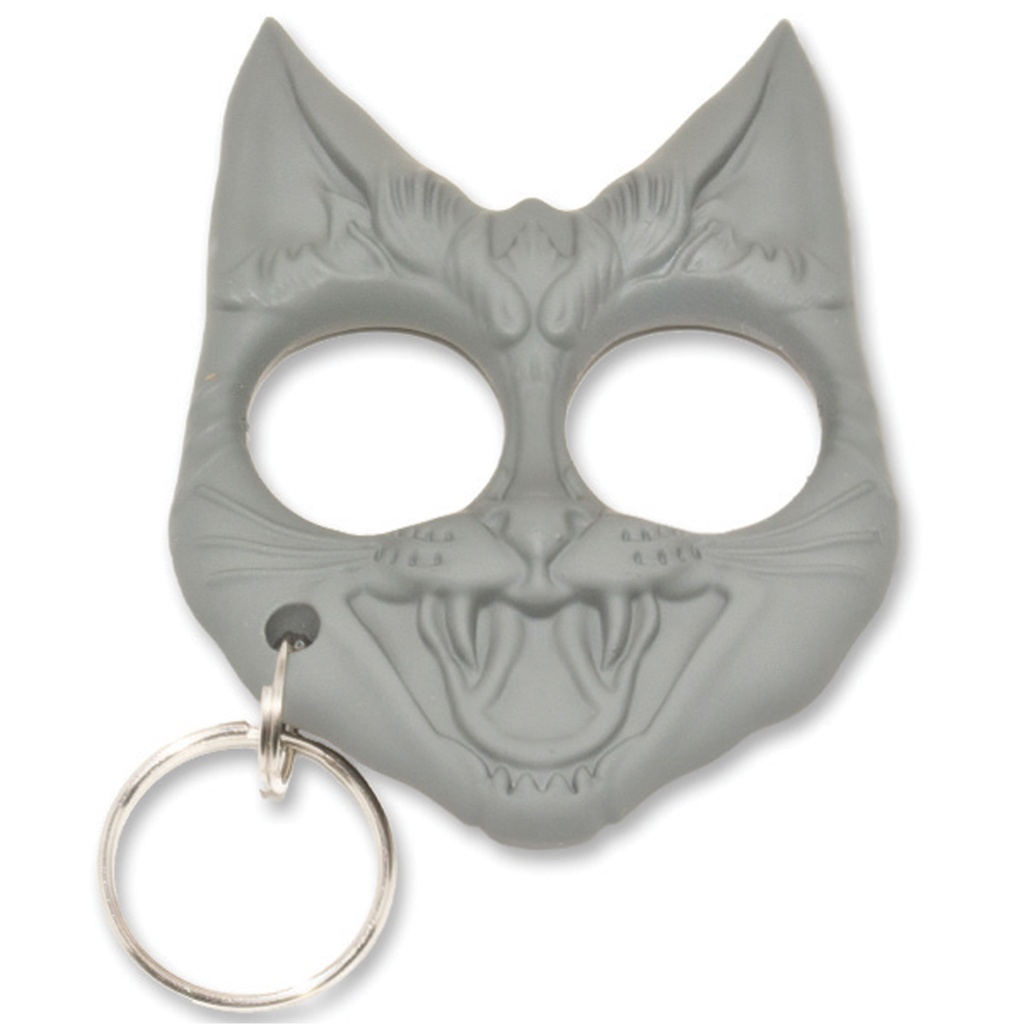
Silent Sentinel Feline Impact Keychain Defender - Gray
9 sold in last 24 hours
This self defense keychain is built for people who want a simple, always-there safety option without the drama. The cat-ear design turns the pointed ears into focused impact tips, while the two-finger grip gives you solid control under stress. At just 1 oz, it disappears on your keys but fills your hand when needed—compact, gray, and low-profile enough for daily carry on late walks, commutes, or parking lot runs.
What This Self Defense Keychain Actually Does
The Feline Guard two-finger self defense keychain is a compact impact tool, not a magic shield. It gives you a better way to strike and create an opportunity to escape. The cat-ear design focuses the force from your hand into two pointed tips, while the two-finger grip keeps the tool stable so it doesn’t twist or slip when you’re under stress. It’s meant to be on your keys every day so you’re not digging in a bag if you need it quickly.
How This Self Defense Keychain Works in Real Life
This is a mechanical, no-battery self defense tool. You slide two fingers through the openings so the body of the cat rests in your palm and the pointed ears extend beyond your knuckles. In that position, your regular punching or hammer-fist motion concentrates impact into small points instead of the broad surface of your knuckles. Smaller contact area equals more focused pressure, which is what makes an impact tool like this useful for self defense.
Because it’s a simple, solid piece with no moving parts, there’s nothing to switch on, no safety to fumble, and nothing to charge. If you can grab your keys, you can bring this into play.
Build Quality and Grip: What Makes This Keychain Reliable
Solid One-Piece Construction
The Feline Guard is a single, solid piece with a matte gray finish and integrated keyring attachment. There are no hinges or joints to fail. The cat face is sculpted, not just printed, which gives you texture under the fingers and palm. That texture helps maintain control if your hands are sweaty or you’re moving quickly.
Two-Finger Control for Stability
The two finger holes are large, smooth, and rounded on the edges, so you can slide your fingers in quickly from your normal key grip. With two fingers locked in, the keychain stays aligned with your hand instead of twisting sideways on contact. That stability matters more than looks: a tool that rotates in your grip is hard to use and more likely to hurt you than help you.
Carry Format: Everyday Self Defense That Actually Comes With You
The best self defense gear is the piece you’ll actually carry. At about 1 oz and with a flat, compact profile, this self defense keychain is designed to live on your keys and disappear into your pocket or bag. The neutral gray color keeps it low-key—nothing neon or flashy to invite questions, and it doesn’t scream “weapon” from a distance.
Practically, that means you can clip it to your main keyring and forget about it until you’re walking to your car, crossing campus, or making a late-night store run. A smart habit is to wrap your fingers through the keychain whenever you’re moving through a space that feels exposed—parking lots, garages, stairwells. That way, you’re not trying to get it into position while something is already happening.
How to Use This Self Defense Keychain Effectively
Self defense tools are only as useful as your ability to deploy them under pressure. With this impact keychain, that means a few simple habits and a realistic mindset.
- Pre-grip before you need it: When you’re approaching a higher-risk area, put the keychain in your hand with two fingers through the holes. Don’t wait until you feel scared.
- Use simple strikes: Think hammer-fist (downward) or straight-in jabs toward soft targets—face, nose, throat, solar plexus, groin. You’re not boxing; you’re creating an opportunity to get away.
- Hit and move: The purpose is to disrupt, then escape. This keychain is a force multiplier, not a tool for standing and trading blows.
A short training session—whether a basic self defense class or even working through a few simple movements at home—goes a long way. The more familiar the motion, the more likely you are to access it under adrenaline.
What People Ask Before Buying a Stun Gun for Protection
How effective are stun guns for self defense?
Stun guns can be effective for self defense when used correctly and when expectations are realistic. They work by delivering an electrical shock through direct contact, causing pain and sometimes muscular disruption. But they are not instant “off-switches.” Clothing, placement, and how long you maintain contact all affect results. They also require you to get close enough to touch the attacker, which is the same distance you’d use an impact tool like this keychain.
Where a mechanical self defense keychain has an advantage is reliability: there’s no battery to die, no switch to miss, and no dependence on voltage claims. It will behave the same on a cold night in a parking lot as it does in your hand at home.
Does voltage or amperage matter more in a stun gun?
Voltage is mostly marketing. Amperage—the current—is what actually determines how much effect a stun gun has on the body. Extremely high voltage numbers you see in ads are often just theater; you need enough voltage to arc through clothing, but beyond that, increases don’t translate to proportional stopping power. What matters more is:
- Amperage (current): The real driver of pain and muscular disruption.
- Contact time: Brief touches hurt; sustained contact has a better chance to affect movement.
- Contact area and placement: Torso, neck, and hip areas tend to be more effective than arms.
This Feline Guard keychain doesn’t depend on any of that. It’s a straightforward impact tool: your body provides the power, the design focuses it.
Is this self defense keychain legal to carry in my state?
Impact-style self defense keychains like this cat-ear design exist in a different legal category than stun guns, and laws vary by state and even by city. Some jurisdictions treat "brass knuckle" style items or reinforced knuckle tools as prohibited weapons, while others allow them as keychains or personal protection tools.
Before carrying this every day, check your local regulations—start with state weapon statutes, then look at city or county codes. Search for terms like “knuckles,” “sap gloves,” or “self defense keychain.” If you’re unsure, a quick call to a local attorney or referencing your state’s self defense weapon summaries can clarify things. The responsibility side of self defense is knowing not just how to use a tool, but where you can legally carry it.
Putting It All Together: A Practical Self Defense Layer
The Feline Guard two-finger self defense keychain isn’t about intimidation or hype. It’s a small, solid impact tool that rides quietly on your keys, ready to help you hit harder and more precisely if you ever need to create space and escape. It won’t replace awareness, avoidance, or good judgment—but it fits smoothly into the way you already move through your day.
You end up with a few clear advantages: a secure two-finger grip, focused impact tips, lightweight everyday carry, and zero dependence on batteries or voltage claims. Add a bit of practice and a realistic plan—when you’d grip it, where you’d aim, how you’d get away—and you have a calm, competent upgrade to your personal safety, built into something you already carry every time you walk out the door.