
Fieldgrade Tactical March Lensatic Compass - Military Green
12 sold in last 24 hours
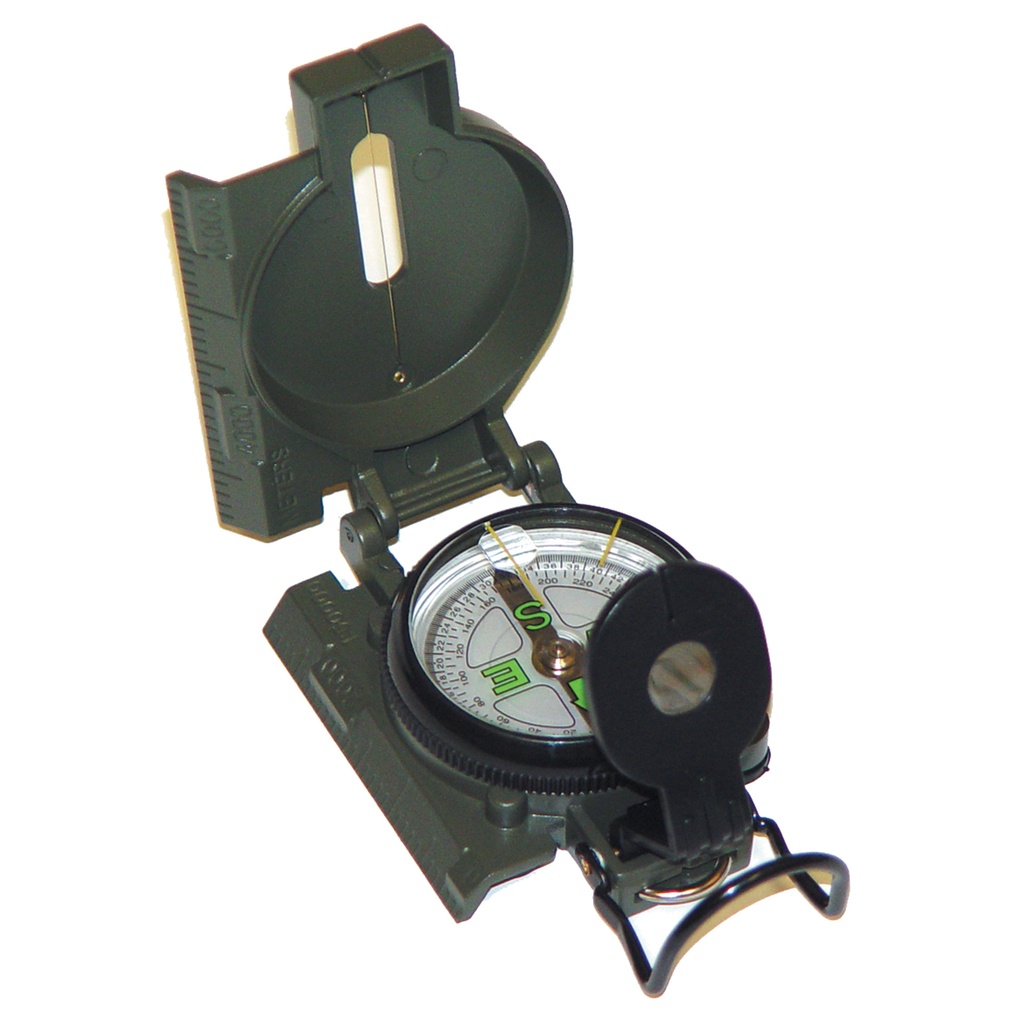
Built like classic military issue, the Fieldgrade Tactical March Lensatic Compass is a real navigation tool, not a toy. A metal body in military green protects a 2-inch dial, sighting wire, clicking bezel, and 1:50,000 map scale. The folding thumb ring locks your grip and bearing so you can shoot accurate azimuths, even under stress. Whether you’re hiking, training land nav, or building a bug-out kit, this compact lensatic compass gives you clear readings when GPS can’t be trusted.
What This Lensatic Compass Actually Does in the Field
The Fieldgrade Tactical March Lensatic Compass - Military Green is built for real navigation, not decoration. It’s the kind of compass you throw in a ruck, drop in the dirt, wipe off, and keep using. The metal housing, lensatic sighting system, and 1:50,000 map scale are all there for one job: helping you move confidently on a bearing when your phone, GPS, or trail markers stop cooperating.
Think of this as a practical land navigation tool. It won’t text your location or sync to an app. Instead, it does the basic things that matter under stress: gives you a clear heading, helps you shoot an accurate azimuth, and lets you translate that bearing to a map so you actually end up where you intended to go.
How a Lensatic Compass Works (and Why the Design Matters)
Lensatic compasses are designed around one priority: precise directional readings you can use while actually moving. The Fieldgrade Tactical March follows the classic military-style pattern:
- Folding lid with sighting wire: You line up the wire with a distant landmark while reading your bearing.
- Lensatic eyepiece: The small lens lets you see the dial’s degree markings magnified while you’re sighting a target.
- Rotating clicking bezel: The bezel ring lets you set and hold a direction of travel or mark a reference point.
- Floating 2-inch dial: The dial finds magnetic north and gives you a bearing in degrees.
In practice, you open the compass, raise the lid and eyepiece, and bring it up to eye level. You sight through the wire at your target—maybe a tree on a distant ridge—while looking down through the lens at the dial. That’s your azimuth. From there you can either walk directly toward that point or transfer the bearing to a topographic map.
Build Quality: Why Metal Housing and Military Green Finish Matter
With navigation tools, reliability isn’t cosmetic—it’s functional. A cheap plastic novelty compass can spin, stick, crack, or give inconsistent readings when bumped or dropped. This Fieldgrade model is built around a metal body in military green, which does a few practical things well:
Durable Field Housing
The metal case protects the 2-inch dial from crushing pressure in a pack or cargo pocket. Throw it in with other gear, step on your bag, or drop it on hard ground—this is built to shrug off normal field abuse that would destroy a lighter, toy-grade compass.
Matte, Non-Reflective Finish
The matte military green finish cuts glare and reflection. That’s not just a tactical aesthetic—it makes it easier to read in bright sun and avoids flashing light that can give away your position in a training or field scenario.
On the outside you’ll also notice integrated ruler markings and a map scale. Those aren’t decoration, either: they’re there so you can measure distance on a 1:50,000 map and relate ground distance to what you see on paper.
Field Use: Carry, Grip, and Navigation Control
A compass is only helpful if you can hold it steady and read it cleanly. The design of the Fieldgrade Tactical March Lensatic Compass supports that kind of control in a few simple ways.
Folding Thumb Ring for Locked-In Grip
The folding thumb ring is a small, easy-to-overlook component that makes a big difference in real use. Slide your thumb through the ring, rest the body against your hand, and you now have a locked, consistent platform to sight from. This stabilizes the compass when you’re moving, breathing hard, or dealing with wind or uneven ground.
Clicking Bezel for Simple Bearings
The clicking bezel helps you keep track of your direction of travel without staring at the dial constantly. You can set an offset, mark a reference, or quickly confirm that you haven’t drifted too far from your planned azimuth as you move through terrain with limited visibility.
When folded, the compact profile makes it easy to stash in a pocket, pouch, or pack lid. There’s no fragile external needle or exposed dial face to worry about scraping on other gear.
Using This Lensatic Compass with a Map
The 1:50,000 map scale and integrated ruler markings are what separate this from a basic direction-only compass. If you’re doing land navigation, search and rescue training, or serious hiking away from marked trails, the ability to use a map and compass together matters more than any built-in gadgetry.
- Measure distance on the map: Use the scale to translate inches or centimeters into ground distance.
- Plot bearings: Line the compass up with your route on the map, determine your azimuth, and then follow that bearing in the field.
- Confirm your position: Shoot back bearings from known landmarks to triangulate your approximate location.
This is the quiet, methodical way professionals and well-trained hikers navigate: not by guessing, but by combining a steady bearing with a clear sense of distance and terrain features.
What People Ask Before Relying on a Lensatic Compass
How accurate is this lensatic compass for navigation?
For typical field use—hiking, training, or emergency navigation—a properly used lensatic compass like this is more than accurate enough. Your biggest source of error won’t be the dial; it will be how carefully you sight your target, how steady your grip is, and how well you account for magnetic declination relative to your map. Treat it like a measuring tool, not a fashion accessory: keep it away from strong magnets, give the dial a moment to settle, and use the thumb ring and sighting wire as intended.
Is a lensatic compass better than a basic baseplate compass?
They’re built for slightly different strengths. A lensatic compass like this one is excellent for precise sighting of distant landmarks using the wire and lens, which is why militaries have used this style for decades. A baseplate compass is often quicker for straight map work because you can lay the clear base directly on the map. Many serious navigators carry both. If you want one tool that works well both for field bearings and basic map reading, a solid metal lensatic compass is a strong, durable choice.
Will this compass still work if my electronics fail?
Yes. This is entirely mechanical and magnetic—no batteries, no software, no network needed. As long as you aren’t near strong magnetic interference (like speakers, large motors, or powerful magnets), it will continue to point relative to magnetic north. That’s exactly why prepared hikers, SAR personnel, and field trainers still insist on carrying a dedicated compass even when they also use GPS.
Practical Confidence: When to Choose This Compass
The Fieldgrade Tactical March Lensatic Compass - Military Green makes sense if you want a navigation tool that:
- Feels solid and dependable in the hand rather than fragile or toy-like.
- Uses a proven lensatic design for accurate bearings on real terrain.
- Still works after being jostled in a pack, dropped, or used in rough conditions.
- Includes a map scale so you can do more than just vaguely walk "north."
It’s not about looking tactical—it’s about quietly doing its job while you do yours, whether that’s getting a scout team through land nav training, verifying a route on a multi-day hike, or giving yourself a reliable backup when your electronics aren’t guaranteed.
If you’re building a kit around calm, informed readiness, a robust lensatic compass like this is one of the simplest, highest-leverage additions you can make. No drama, no electronics—just a durable, repeatable way to know which way you’re going and how to get there.