

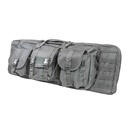

FlexShield Rapid-Mobility Armor Carrier - Black Nylon
13 sold in last 24 hours
This isn’t a bulky vest that fights your movement. The FlexShield Rapid-Mobility Armor Carrier uses flexible Level IIIA 10x12 UHMWPE soft armor panels that wrap to your frame, quick-buckle closures for fast on/off, and breathable mesh to keep heat manageable on long shifts. MOLLE webbing, patch-ready panels, and a reinforced drag handle round out a carrier built for people who actually move, work, and respond under pressure. Water-resistant 1050D black nylon with reinforced stitching keeps it service-ready long after cheaper rigs give out.
What This Armor Carrier Actually Does for Your Protection
The FlexShield Rapid-Mobility Armor Carrier is built for one job: give you Level IIIA soft armor protection without turning you into a stiff, overheated target. Instead of hard plates that fight your movement, this carrier uses flexible 10x12 UHMWPE panels that wrap to your torso for discreet, practical ballistic protection you can actually work in.
There’s no drama here—just a plate carrier designed for patrol, security work, range use, or personal protection setups where you need credible handgun-threat resistance and full mobility. Quick-connect buckles get you into duty mode in seconds, while water-resistant 1050D black nylon and reinforced stitching keep it reliable through real-world wear, not just the first range day.
How Soft Armor Carriers Like This Work to Protect You
Soft armor carriers don’t stop threats by being heavy; they stop handgun rounds by spreading and absorbing impact across tightly layered fibers. The Level IIIA UHMWPE panels in this armor carrier are designed to resist common handgun calibers and many defensive loadings while flexing enough to stay comfortable against your body.
Where a hard plate carrier is a rigid shield, this soft armor system is more like a ballistic second skin. The carrier holds the 10x12 panels snug to your chest and back, keeping coverage centered where it needs to be. The nylon shell doesn’t provide the protection—the ballistic panels do. The carrier’s job is to keep those panels where they belong while you move, run, kneel, and work under stress.
Protection Effectiveness: When This Soft Armor Carrier Makes Sense
If your realistic threat profile focuses on handgun and shotgun threats—typical of most security, night-shift, and personal protection scenarios—a Level IIIA soft armor carrier is often the most practical choice. It’s lighter, more flexible, and more wearable for long hours than a heavy rifle-rated plate system.
This armor carrier is optimized for speed and mobility, not rifle engagements. Used as intended, you get:
- Front and back torso coverage with flexible Level IIIA panels
- Quick deployment via side and shoulder buckles when a situation escalates
- Attachment space for pouches, medical gear, and ID on MOLLE and loop fields
- A reinforced drag handle for partner-assisted movement under emergency conditions
In plain terms: this is a practical ballistic protection layer for people who need to stay fast and functional around handgun-level threats, not a substitute for rifle plates in a high-threat rifle environment.
Build Quality Details That Matter Under Real Use
Durable Nylon, Stitching, and Hardware
The outer shell is water-resistant 1050D black nylon—a proven fabric weight in duty gear. That density matters: it resists abrasion from seatbelts, door frames, and routine gear contact. Reinforced stitching at stress points helps keep shoulder straps, drag handle, and MOLLE fields from tearing out when the carrier is loaded or grabbed hard.
Quick-connect buckles and adjustment points are placed for real-world handling: you can get into and out of the vest quickly, even with gloves, without wrestling with complicated cummerbund systems. For security and response work where you may need to don armor rapidly, that speed matters more than any marketing claim.
Comfort, Breathability, and Movement
Soft armor is only protective if you’re actually wearing it. The interior breathable mesh lining helps vent heat and moisture, especially across the torso where many vests feel oppressive after an hour. The flexible UHMWPE panels conform closer to your body than hard plates, reducing hot spots and pressure points when seated, driving, or bending.
The carrier is cut for arm clearance and shoulder movement—important if you’re drawing, shouldering a rifle or shotgun, or simply working hands-on with people. Protective gear that wrecks your mechanics becomes a liability; this design tries to stay out of your way while keeping the panels in the fight.
Carry Reality: How to Integrate This Carrier Into Your Setup
This armor carrier is meant to live staged and ready, then go on quickly when your personal protection or duty context demands it. The quick-buckle design makes that realistic. You can hang it by your workstation, in a patrol car, or near an entry point and get it on in roughly the time it takes to throw on a jacket.
The MOLLE webbing lets you configure it around your actual role: magazine pouches for armed professionals, medical kit and gloves for responders, or a lean, ID-and-radio-only setup for low-profile security. Patch-ready loop panels let you add agency identifiers, medical markers, or morale patches without improvising attachment.
Used with an appropriate belt and holster, the carrier becomes one part of a complete defensive system: armor for vital zones, belt for primary tools, carrier for support gear. That separation keeps your core tools accessible even if you have to strip the vest for comfort or environmental reasons.
Legal and Practical Context for Wearing Armor
Ballistic armor like this carrier is legal for most civilians in many U.S. states, but there are exceptions and restrictions—especially for convicted felons or in certain jurisdictions that regulate possession or wear in specific locations. Professionals may also be bound by agency or contract policy.
The practical approach is straightforward:
- Check your state and local laws on body armor ownership and public wear.
- If you work for an agency or company, confirm policy on personally owned armor.
- Consider context: walking into a bank or school openly armored may draw justified attention even if technically legal.
Used thoughtfully, this armor carrier becomes a quiet layer of ballistic insurance for work, transport, or home-defense staging—a tool, not a costume.
What People Ask Before Buying a Stun Gun for Protection
How effective are stun guns for self defense?
Stun guns can be effective as a close-contact defensive tool when used realistically: you must make solid contact with an assailant’s body and maintain that contact for long enough to cause pain, distraction, or muscular disruption. They are not magic “zap and collapse” devices. Their usefulness depends on amperage (current), contact time, and your ability to access and apply them under stress. Many professionals treat a stun gun as a secondary tool to create an opening to escape or transition to a more decisive option, not as a stand-alone solution.
Does voltage or amperage matter more in a stun gun?
Voltage gets all the marketing attention, but amperage is the real effectiveness factor. High-voltage claims mostly describe the potential to jump a spark across a gap in the air—not how much current actually flows through muscle once contact is made. A well-designed stun gun focuses on a controlled but meaningful amount of current, a contact area that bites into clothing and skin, and a power system that can sustain that delivery. If you’re comparing options, ignore “millions of volts” hype and look for honest discussion of current, build quality, and user access.
Is this stun gun legal to carry in my state?
Stun gun legality is state- and sometimes city-specific. Many places now allow them with few restrictions, while others require permits, limit carry in public spaces, or ban them outright. Before you buy or carry any stun gun for self defense, check:
- Your state statutes on electronic control devices or stun guns
- Local city or county ordinances that might add restrictions
- Policies from your employer, campus, or housing authority
As with body armor, you’re responsible for knowing your local rules. When in doubt, consult an attorney or your local law enforcement agency’s published guidance.
Putting It All Together: Practical Protection, Not Hype
The FlexShield Rapid-Mobility Armor Carrier doesn’t pretend to be something it’s not. It’s a flexible Level IIIA soft armor platform built around movement: quick on, stays put, and keeps handgun-level threats from reaching your vital areas while you do your job or manage a defensive emergency.
Paired with grounded expectations about what armor can and cannot do, and a realistic defensive plan that might also include tools like a stun gun for self defense, pepper spray, or a firearm where legal, this carrier becomes one part of a thoughtful protection strategy. You finish with a clear picture: this is practical ballistic protection you can actually wear, stage, and deploy when it matters—without the marketing theater.