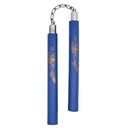
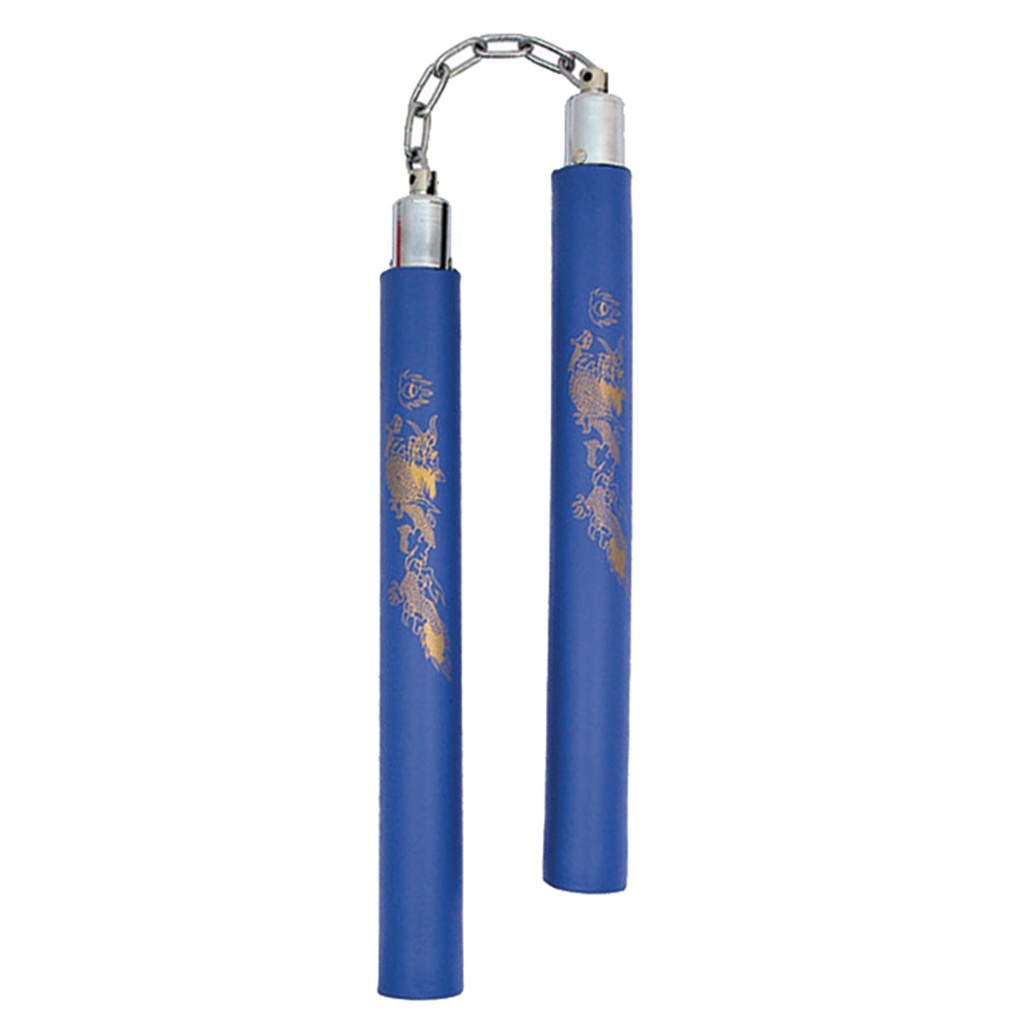
Flow Dragon Safe-Train Practice Nunchucks - Blue Foam
12 sold in last 24 hours
These foam training nunchucks are built for safe, consistent practice—not bruises. Blue padded handles with a gold dragon design wrap a firm inner core, giving realistic control without the sting of wood. A smooth ball‑bearing chain lets drills, katas, and flow work move cleanly between hands. At 12 inches per handle, they match common live nunchaku sizing so skills transfer directly. Ideal for dojos, instructors, and beginners who want to build real technique and confidence while keeping training contact forgiving.
What These Foam Training Nunchucks Actually Do
These foam training nunchucks are designed for one job: letting you build real nunchaku control, speed, and coordination without turning every mistake into a bruise. The 12-inch padded handles, firm inner core, and ball-bearing chain make them feel like a training weapon, not a toy—safe enough for beginners, accurate enough for serious drills.
How Training Nunchucks Like These Work in Practice
Training nunchucks use a simple formula: realistic shape and movement, forgiving impact. Under the blue foam you see is a solid inner core that holds its shape for strikes, passes, and blocks. The foam layer absorbs most of the sting when you clip an elbow, shoulder, or head—because everyone does, especially when learning.
The metal ball-bearing chain between the two handles is what makes these feel close to traditional nunchaku. It rotates freely, allowing clean figure-eights, wrist rolls, and transitions behind the back or under the arm. That smooth rotation helps students learn timing and angle, instead of fighting a stiff connector that jerks or snags mid-swing.
12-Inch Handles for Real Skill Transfer
Each handle is approximately 12 inches, matching common live nunchaku lengths. That matters for training. When handle length is correct, spacing, chamber positions, and range all translate directly from foam to wood or other live materials later on. You don’t have to re-learn distance or where the weapon sits relative to your body.
Foam Padding That Still Feels Like a Weapon
The blue foam padding is thick enough to take the edge off bad catches and wild swings, but not so squishy that the handles flop or feel like pool noodles. You get feedback when you hit a target or block an incoming strike, just without joint-barking impact. That balance is what makes these useful for dojos, youth programs, and anyone drilling basics at home.
Build Quality: Why These Nunchucks Hold Up in a Dojo
Training gear gets dropped, dragged, slammed into bags, and borrowed by every new student in the room. These practice nunchucks are built around that reality.
Ball-Bearing Chain for Smooth, Predictable Flow
The connector is a metal ball-bearing chain, not a simple fixed link. Each swivel point allows the handles to rotate, reducing twisting and binding when you change direction quickly. That makes drills like continuous figure-eights, reverse spins, and rapid transitions more consistent and easier to teach—students can focus on mechanics, not fighting friction.
Metal End Caps and Inner Core
Silver-tone metal end caps secure the foam around a firm inner core, giving the handles structure. That prevents the flex and bending you see in ultra-cheap foam nunchucks, where techniques fall apart because the weapon won’t track cleanly. Here, the core stays straight and balanced, so motions feel repeatable and techniques build correctly.
Who These Training Nunchucks Are Really For
These foam-padded nunchucks are aimed squarely at training environments where safety, repetition, and confidence matter:
- Dojo owners and instructors who need safe introductory weapons for kids and new adults.
- Beginners who want to practice spins, passes, and basic strikes without fearing every mistake.
- Intermediate students working on speed and flow who still value padded impact for longer sessions.
- Parents who want gear that respects martial arts tradition without putting their kid’s elbows and knuckles at risk every class.
The blue color and gold dragon artwork keep the traditional martial arts look, but the foam makes the training intent obvious. These don’t pretend to be combat nunchaku—they’re honest, safe tools to build the coordination and timing that carry over to more advanced weapons later.
Training Reality: What Foam Nunchucks Can and Cannot Do
It’s important to be clear: foam training nunchucks are not built for self-defense or real impact use. They are designed for controlled training, skill-building, and classroom environments.
What they do well:
- Teach basic handling, grip changes, and chamber positions.
- Build rhythm, flow, and timing between both hands.
- Allow safe partner drills with reduced risk of injury.
- Help beginners push speed without paying for every mistake in bruises.
What they are not for:
- Home defense or any real-world protection role.
- Hard contact on heavy bags or rigid surfaces.
- Breaking objects or impact conditioning.
Treat these as a safe bridge: from curiosity about nunchaku to competent handling. Once fundamentals are in place, more advanced students typically add wood, PVC, or other live-material nunchaku for power and contact work—ideally under proper supervision.
Carrying and Using These Nunchucks Responsibly
Even training nunchucks deserve some thought around storage and transport. Laws on nunchaku vary by region, and in some areas even foam practice versions may be restricted. Before carrying them outside a dojo or your home, check your local and state regulations on martial arts weapons.
For everyday practical use, most owners:
- Keep them in a gear bag or backpack on the way to class.
- Store them in a visible, easily reachable spot in the dojo for group training.
- Hang them on a hook or rack at home to prevent bending or foam deformation.
In training, start slow. Work single-hand drills, basic figure-eights, and simple passes first. Add speed only when movement is clean. Foam padding means you can push your pace sooner, but good form still matters more than how fast you can spin them.
What People Ask Before Buying a Training Nunchuck Set
How safe are foam nunchucks for beginners?
Foam nunchucks are significantly safer than wood or metal, especially for new students. The padded handles reduce the impact when they hit bone or soft tissue, and the firm inner core keeps techniques realistic. You can still feel contact, but it’s usually a reminder, not an injury. Eye protection is still smart for kids, and training should stay supervised, but these are a solid choice for starting out.
Do foam nunchucks feel like real nunchaku?
They’re close enough for fundamentals. The length, basic weight balance, and chain movement are designed to mimic traditional nunchaku handling. They’ll feel lighter and softer on impact than wood, of course, but the way they swing, track, and transition around the body is similar enough that skills transfer well once you step up to a live set.
Are these legal to own and practice with?
Laws around nunchucks vary by country, state, and even city. Some places treat all nunchaku—foam or not—as restricted weapons, while others allow them freely, especially for martial arts training. The responsible approach is to check your local regulations by searching your state and “nunchaku law” or contacting your dojo or local authorities. Use them in appropriate spaces (home, dojo, private training areas), and avoid carrying them casually in public where they may be misunderstood or restricted.
Training Confidence You Can Build On
These blue foam training nunchucks aren’t about looking dangerous; they’re about getting better. The padded handles, real-feel length, and smooth chain support exactly what most students and instructors actually need—safe repetition, technical growth, and a way to explore nunchaku without collecting bruises as souvenirs.
If your goal is real skill rather than showmanship or intimidation, this kind of honest, safety-focused training tool is the right starting point. Set your pace, drill the basics, and let your coordination—not your pain tolerance—be what improves session after session.