Frontier Sawback Field Survival Knife - Wood Handle
13 sold in last 24 hours
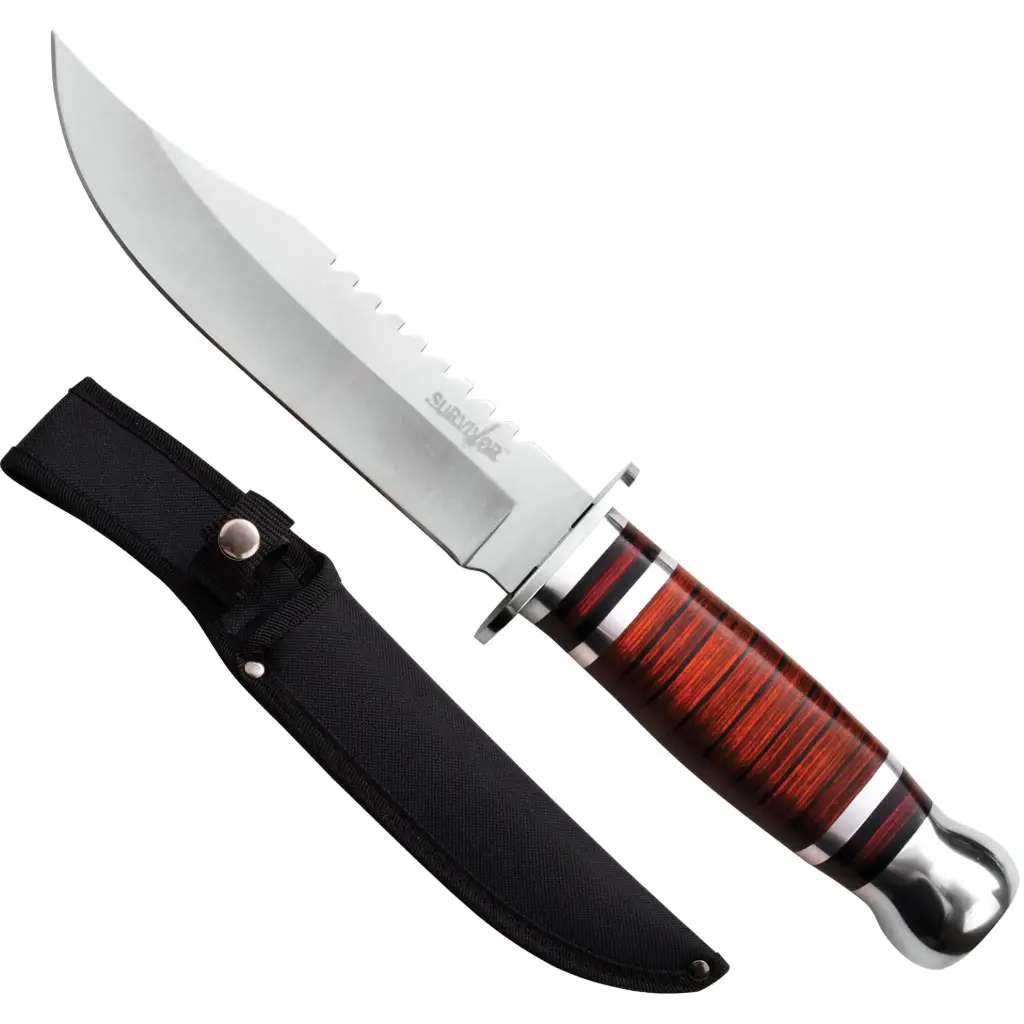
Morning frost, steady hands, and one survival knife that simply does the job. A 6-inch satin clip-point blade with sawback spine and partial serrations chews through cord, brush, and camp chores without fuss. The full-tang stainless build and rounded pommel give you leverage and striking power; the warm wood handle keeps it comfortable when the work runs long. Riding light on your belt in a nylon sheath, this 10.5-inch field-ready knife is built for the moments when dependable matters more than decorative.
Frontier Sawback Field Survival Knife - Built for Real Field Use
The Frontier Sawback Field Survival Knife - Wood Handle is a classic fixed blade built for people who actually use their gear. No gimmicks, no fantasy styling—just a 10.5-inch full-tang survival knife with a 6-inch working blade, ready for camp, trail, and back-of-the-truck duty. If you want a dependable field knife you can baton, pry a bit, and drag through real camp chores, this one is designed for that reality.
How a Fixed Blade Survival Knife Earns Its Place on Your Belt
A fixed blade survival knife like this doesn’t earn space on your belt by looking good on a shelf. It earns it by staying predictable when your hands are cold, wet, or tired. The Frontier Sawback combines three practical elements that matter outdoors: a full-tang spine for strength, a multi-purpose edge layout, and a handle you can trust when you lean on it.
The full-tang stainless steel runs the entire length of the knife, from clip-point tip to rounded pommel. That matters when you’re batoning wood, twisting the blade in stubborn material, or using the pommel for light striking. You’re not depending on a hidden or partial tang; you’re gripping the same steel that makes up the blade.
Blade Design That Matches Real Survival Tasks
This survival knife is built around a 6-inch satin clip-point blade with a sawback spine and partial serrations near the handle. That combination is about task flexibility, not decoration.
Sawback Spine for Rough Cutting and Notching
The sawback along the spine gives you a dedicated section for aggressive cutting—think notching branches, starting trap components, or roughing out stakes. It’s not a full replacement for a dedicated saw, but it saves your primary edge from jobs that would dull it quickly.
Partial Serrations and Working Edge
The partial-serrated section near the handle bites into rope, webbing, and fibrous material that a plain edge can struggle with once it starts to dull. The remaining plain edge gives you the control you need for food prep, carving, and finer camp tasks. With a 0.1375-inch spine thickness, you get enough steel behind the edge to handle batoning small to medium pieces of wood without feeling fragile.
Handle, Balance, and Control in the Field
Handle design is where many survival knives fail; this one leans on a proven formula. The 4.5-inch gloss-finished wood handle has a warm, contoured grip that fills the hand without bulk. That’s important when you’re working in gloves or when your hands are wet and cold.
Full-Tang Strength with a Rounded Pommel
The exposed metal at the rounded pommel gives you a light striking surface for tasks like tapping in tent stakes or cracking light material, while still staying comfortable when you rest your hand against it. You get impact utility without turning the pommel into a hand shredder.
Crossguard for Safety Under Hard Use
A straight metal crossguard sits between blade and handle, acting as a positive stop so your hand doesn’t slide forward onto the edge when you’re driving the knife into wood or dense material. It’s a quiet but important safety feature that matters when your grip isn’t perfect or conditions get slick.
Carry Reality: A Survival Knife That Actually Rides Well
A survival knife doesn’t help if it’s back in your truck. The included black nylon sheath is built for simple belt carry. It’s lightweight, drains easily if it gets wet, and secures the knife with a snap closure. For most users, that means you can wear it comfortably around camp, on short hikes, or while working property lines without feeling like you’ve strapped on a brick.
At 10.5 inches overall, this fixed blade sits in the sweet spot: large enough to baton small logs and take on serious camp chores, but not so oversized that it becomes a clumsy machete substitute. On the belt, it stays accessible and out of the way—practical for day-to-day field use.
Why This Fixed Blade Knife Belongs in a Survival Kit
For a survival knife, the question is always the same: does it simply work when you don’t have time or energy to baby your tools? The Frontier Sawback Field Survival Knife is designed around that question. Full-tang stainless construction resists the kind of abuse that ruins cheaper partial-tang blades. The clip point gives you a versatile tip for piercing and detail work, while the sawback and serrations offload the dirty work from your main edge.
Pair that with a durable wood handle, a straightforward nylon sheath, and a rounded pommel that adds striking options, and you get a knife that can anchor a basic survival kit without demanding special treatment. It’s not a wall-hanger—it’s the kind of fixed blade you throw in the truck, keep with your camping gear, or strap to a pack because you know it will handle the ordinary “bad days” outdoors.
What People Ask Before Buying a Stun Gun for Protection
How effective are stun guns for self defense?
A stun gun for self defense is designed as a close-contact tool: you have to physically touch the attacker with the electrodes and maintain solid contact for at least 1–5 seconds to have meaningful effect. When a stun gun has adequate amperage (current) and a decent contact area, that sustained contact can disrupt muscle control, create intense pain, and buy you a window to break contact and escape. It is not a magic "drop them instantly" device; it works best as part of a broader self-defense plan that includes awareness, distance management, and a clear escape route.
Does voltage or amperage matter more in a stun gun?
Voltage gets the headlines, but amperage quietly tells you how effective a stun gun really is. Voltage is mainly about the ability to arc through clothing and skin—it has to be high enough to bridge the gap. Once contact is made, it’s the current (amperage) that determines how much electrical energy actually moves into the attacker’s body. Effective stun guns keep current in a safe but impactful range—high enough to cause pain and muscle disruption, low enough to avoid lasting injury. When you’re choosing the best stun gun for personal protection, prioritize build quality, amperage, and ergonomics over “10 million volt” marketing claims.
Is this stun gun legal to carry in my state?
Stun gun legality is determined at state and sometimes city level. Many states allow a stun gun for self defense with few restrictions, but some require permits, limit where you can carry, or ban them outright in certain jurisdictions. Before you buy or carry any stun gun for personal protection, check three layers: state law, local city/municipal codes, and any rules that apply to your workplace, campus, or housing. Statutes change, so it’s worth looking up your state’s most recent weapons or electronic control device regulations instead of relying on old forum posts.
Carry with Practical Confidence
Whether you’re strapping on the Frontier Sawback Field Survival Knife for a weekend in the woods or researching the best stun gun for personal protection, the principle is the same: choose tools that are honest about what they can and can’t do, and learn how to use them before you need them. This fixed blade gives you a straightforward, field-ready cutting tool; a good stun gun for self defense adds a close-contact protection option. Combine either with solid awareness, planning, and practice, and you’ve done more for your safety than any hype-driven gear claim ever could.
| Blade Length (inches) | 6 |
| Overall Length (inches) | 10.5 |
| Blade Color | Silver |
| Blade Finish | Satin |
| Blade Style | Clip Point |
| Blade Edge | Partial-Serrated |
| Blade Material | Stainless Steel |
| Handle Finish | Gloss |
| Handle Material | Wood |
| Theme | None |
| Handle Length (inches) | 4.5 |
| Tang Type | Full Tang |
| Spine Thickness (inches) | 0.1375 |
| Pommel/Butt Cap | Rounded Pommel |
| Carry Method | Belt Carry |
| Sheath/Holster | Nylon Sheath |