
Gridline Rapid-Access Tactical Sling Pack - Ranger Green
5 sold in last 24 hours
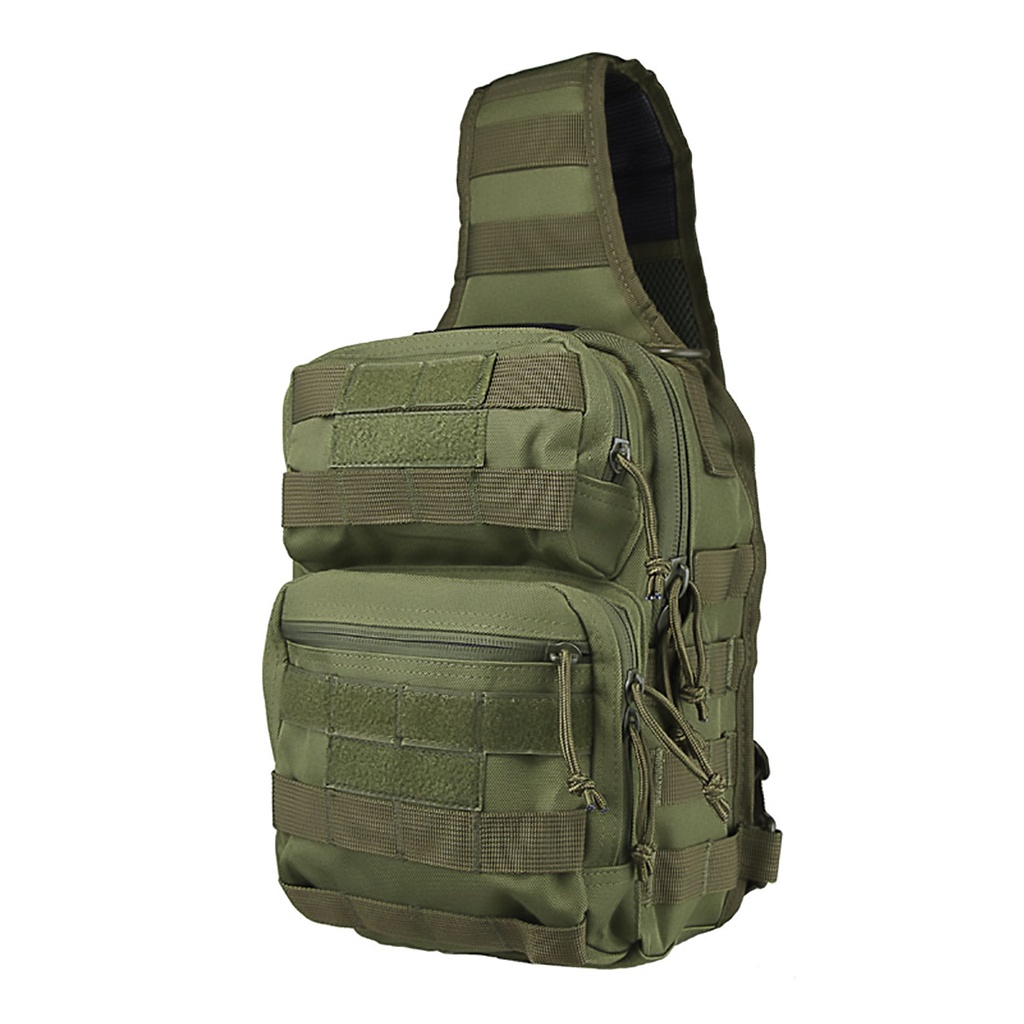
This tactical sling bag is built for people who actually carry. The crossbody design pivots fast to the front, giving rapid access to CCW and EDC gear without digging through a backpack. PALS webbing and hook-and-loop panels let you build a clean, organized loadout that stays put when you move. The padded sling, wide neoprene grab handle, and quick-release buckles keep transitions smooth whether you’re on shift, on the range, or commuting. Compact, modular, and deliberately low profile—this is everyday readiness that just works.
Why This Tactical Sling Bag Exists in a World of Overbuilt Packs
Most tactical bags try to be everything at once: giant, covered in webbing, and overloaded with features you’ll never use. This tactical sling bag goes the other way. It’s compact, fast, and purpose-built for people who actually carry everyday—whether that’s CCW, medical, or essential self-defense tools. The single shoulder sling keeps the bag tight to your body, then pivots forward the moment you need access.
Instead of gimmicks, you get design choices that hold up under real use: solid stitching at every stress point, a clean interior layout that doesn’t fight you, and enough MOLLE/PALS real estate to expand intelligently without turning into a dangling mess.
How a Tactical Sling Bag Should Work Under Stress
A good tactical sling bag does one thing better than a standard backpack: it brings your gear to the fight without coming off your body. This bag is built around that idea. The padded sling rides across your chest or back, then swings in front with a single motion. From there, every pocket opens in a way that keeps contents visible and reachable, instead of forcing you to dig blindly.
The wide neoprene handle on top gives you a stable grab point when lifting from a vehicle floorboard, trunk, or under a desk. Quick-release buckles on the strap let you drop the bag instantly if it gets trapped or grabbed—a small detail that matters when you think in terms of real self-defense scenarios, not just range photos.
Built for CCW and EDC, Not Just Looking Tactical
Plenty of bags call themselves "tactical" because they’re green and have some webbing. This sling bag is laid out for actual concealed carry and everyday defensive tools. Inside, hook-and-loop panels and elastic keep your gear oriented and controlled: holsters, mag carriers, tourniquets, lights, and compact med kits can all be anchored where your hand expects them to be.
Interior Organization That Holds Still When You Don’t
The interior hook-and-loop fields let you build a customized insert layout instead of relying on fixed pockets that may not match your loadout. Elastic keepers tame loose items—spare magazines, pens, chem lights, small tools—so they don’t pile at the bottom. That matters when you’re trying to get a specific item on demand, not just “something” from your bag.
PALS Webbing That Actually Adds Capability
The exterior PALS webbing is true MOLLE-compatible, not decorative. That means you can attach dedicated pouches for medical, comms, or additional magazines without compromising how the bag carries. Because the base pack is compact and boxy, added pouches stay balanced instead of dragging the bag off-center—important if you’re moving fast or wearing it for long shifts.
Carry Reality: How This Sling Bag Rides All Day
If you’ve ever tried to run a full backpack in tight spaces or vehicles, you already know why a tactical sling bag exists. This one is tuned for real-world movement. The form factor stays slim enough to clear doorways, seatbelts, and crowded environments. The sling is padded with a breathable mesh underside, so it doesn’t turn into a hot spot on long walks or patrols.
Right-or-left D-ring carry lets you set it up to favor your draw side and body mechanics. If you’re right-handed and running CCW or tools in the pack, you can configure the sling so that when you swing the bag to your front, zippers, pulls, and compartments line up with your dominant hand. It’s the kind of detail serious carriers notice immediately.
Fast Access Without Visual Signaling
The olive drab / ranger green color leans tactical, but it’s subdued enough that it doesn’t shout "gear nerd" in most environments. That matters if you’re trying to keep a low profile while still having a legitimate defensive and medical loadout on you. The zipper pulls are corded for quiet, fumble-free access—easier to grab with gloves, cold hands, or when your fine-motor skills are slipping under stress.
Build Quality You Can Feel Before It’s Loaded
There’s a difference between a bag built for photos and a bag built for years of actual carry. You can usually find it in the stitching and structure. This tactical sling bag uses reinforced attachment points where the sling meets the body, with bar-tacked webbing in high-stress zones. The panel construction gives the bag a boxy, structured feel that stands up when you set it down, instead of collapsing into a pile your gear disappears into.
Zippers track cleanly around the corners of the compartments, and the paracord-style pulls sit far enough out that you can run them without pinching fabric. When you’re reaching for gear in a defensive moment, this smooth mechanical behavior matters more than extra pockets you’ll never touch.
What This Tactical Sling Bag Does Best for Personal Protection
This bag doesn’t replace training, awareness, or decision-making. What it does is support a realistic personal protection plan by making sure your tools are with you and reachable. For concealed carriers, that might mean staged magazines and a backup method of carry. For medical-minded users, it might be a purpose-built trauma pouch on the PALS field plus a neatly organized interior med insert.
For security professionals and night-shift workers, this tactical sling bag becomes a mobile base: light, gloves, documentation, restraints, and comms each have a defined place. Because the bag pivots into your workspace without coming off your body, you’re less likely to set it down and walk away from your essentials—which is a quiet but real security failure in many environments.
What People Ask Before Buying a Stun Gun for Protection
How effective are stun guns for self defense?
Stun guns can be effective as a close-range self-defense tool, but only when used with realistic expectations and good technique. They’re contact devices: you must physically touch the attacker with the stun gun and maintain contact for at least a second or two to have meaningful effect. The goal isn’t to "zap someone across the room"—that’s Taser territory, not a typical stun gun. In practice, they shine as a surprise counter in a grab or hold, buying you a window to break contact and move to safety.
The real variables that matter are current (amperage), contact time, and where you apply it (large muscle groups and nerve-rich areas respond more). A quality stun gun for self defense should also be paired with verbal skills, movement, and a plan for what you do after you press the trigger. Treated as a piece of a broader protection strategy, they can be very useful; treated as a magic wand, they will disappoint.
Does voltage or amperage matter more in a stun gun?
Voltage marketing is mostly theater. Those "5 million" or "20 million volt" claims are about the open-circuit arc—what you see and hear in the air—not what actually drives effect in a human body. Once the probes are on a person, what matters most is amperage (current) and how long you keep contact. Think of voltage as the pressure that starts the arc and current as the flow that does the work.
A well-designed stun gun for self defense focuses on safe but effective current delivery, a solid contact area, and a power system (battery and circuitry) that can maintain output over multiple uses. That’s also why build quality and reputable manufacturers matter more than whatever giant number is printed on the package. If you’re comparing models, look for honest specs, robust switches, and test fire feel, not just "more volts."
Is this stun gun legal to carry in my state?
Stun gun legality in the United States is highly state—and sometimes city—dependent. Some states allow stun guns for personal protection with few restrictions; others require permits, limit where you can carry, or ban certain models outright. Local regulations can treat a stun gun differently from other defensive tools like pepper spray or firearms.
The responsible approach is straightforward: before buying or carrying a stun gun for self defense, check your state statutes and any relevant city or county ordinances. Many state government websites list weapons regulations clearly, and local law enforcement or an attorney familiar with self-defense law can clarify gray areas. Laws also change, so rely on current official sources rather than old forum posts. Your gear should support your safety, not create unexpected legal problems.
Putting It Together: A Bag That Fits a Real Protection Plan
Whether you carry a stun gun, medical kit, or a more complete defensive loadout, this tactical sling bag is designed to integrate all of it into your daily life without drama. It rides close, pivots fast, and stays organized under movement. The MOLLE/PALS grid and hook-and-loop interior mean you can evolve your setup as your skills and needs change instead of replacing the bag every time.
In self-defense, gear is a force multiplier—not a substitute for awareness and training. This pack respects that. It doesn’t promise to make you invincible; it gives your tools a logical home you can reach reliably when stress is high and time is short. Quiet readiness, clean organization, and fast access—that’s the real advantage this tactical sling bag brings to your personal protection plan.