Grim Sentinel Micro Neck Knife - Black
13 sold in last 24 hours
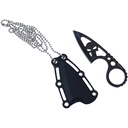
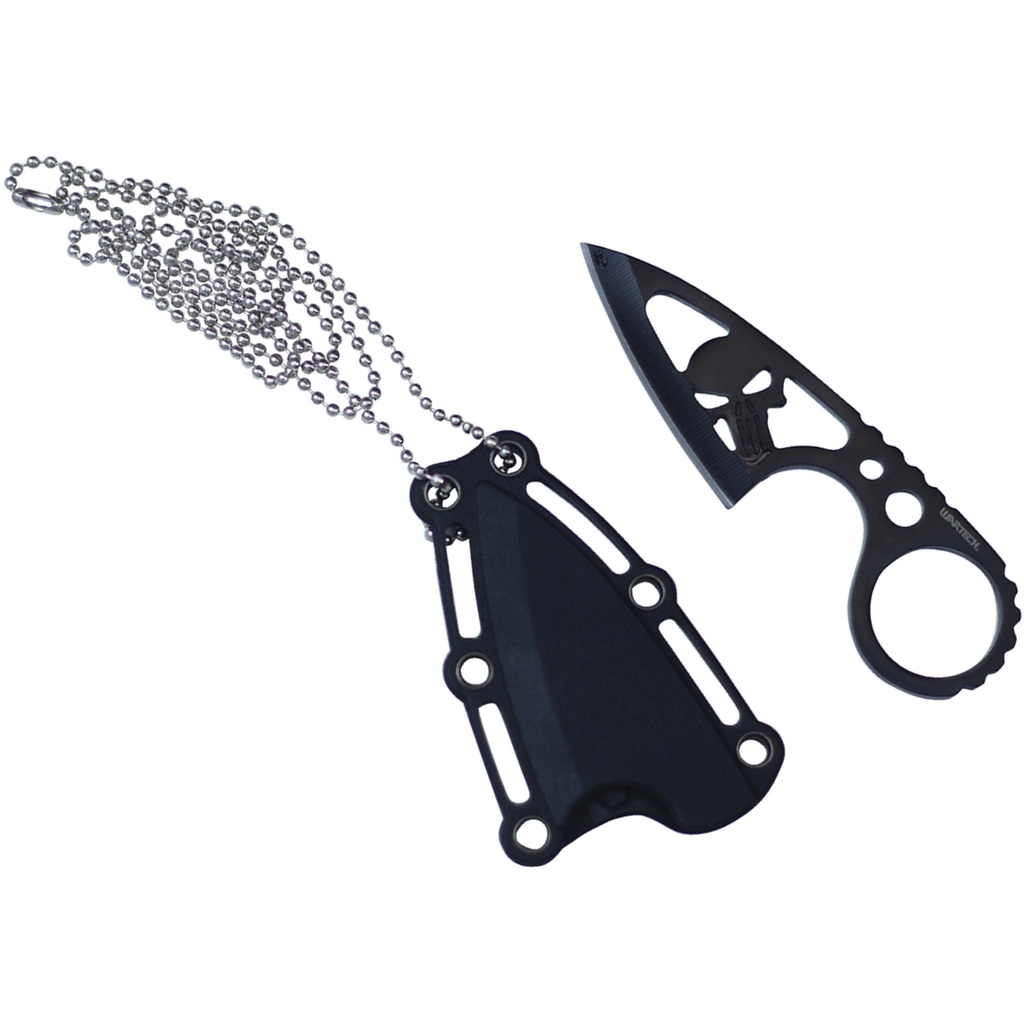
The Grim Sentinel Micro Neck Knife - Black is a slim, fixed-blade backup that trades bulk for instant access. Its skeletonized skull handle and finger ring lock the knife into your grip, while the molded sheath and bead chain keep it close, flat, and quiet under a shirt or gear. At just 4.25 inches overall, it excels as a discreet utility cutter or last-ditch defensive option that disappears until you deliberately draw it.
What the Grim Sentinel Micro Neck Knife Actually Does
The Grim Sentinel Micro Neck Knife - Black is a purpose-built, ultra-compact fixed blade designed to ride where a full-size knife won’t: flat against your chest, under a shirt, on a plate carrier, or laced to a strap. It’s not pretending to be a primary fighting knife or a camp tool. Instead, it’s a fast-access, backup edge for small utility cuts and close-range self-defense when you don’t have time to dig through pockets or bags.
At 4.25 inches overall, this neck knife focuses on three things that matter in real use: secure retention in the sheath, positive grip once drawn, and a profile slim enough to wear all day without printing or bouncing. The skull motif isn’t just decoration—it’s cut into a skeletonized handle that reduces weight while maintaining structural strength.
How a Compact Neck Knife Works for Personal Protection
A neck knife like the Grim Sentinel is about access, not intimidation. For personal protection and self-defense, the tool you can reach quickly is often more valuable than a larger blade you can’t get to under stress. Worn on the included bead chain, this fixed blade hangs handle-down in the sheath, ready to be drawn with a direct, straight pull.
Because it’s a fixed blade, there is no opening mechanism to fumble. No flipper tab, no assisted spring, no lock to fail—just a simple draw and you’re in a working grip immediately. In a self-defense context, this matters: under adrenaline, gross motor movements (grab, pull, brace) are more reliable than fine motor tasks (flick, press, time a deployment).
Build Quality Details That Make This Neck Knife Reliable
With compact defensive tools, shortcuts show up quickly: loose sheaths, bad retention, or slippery handles. This neck knife is built to avoid those failure points. The full-tang fixed blade construction means the steel runs continuously from tip to ring, giving you a rigid spine with no hinge or joint to flex.
Molded Sheath with Real-World Retention
The black molded sheath is shaped specifically to capture the blade profile. You get a positive "click" into place and a consistent draw stroke—firm enough that the knife won’t shake loose under normal movement, yet not so tight that you’re fighting it during a fast pull. Multiple lashing holes let you re-mount it on gear, webbing, or as a backup on a belt if you decide neck carry isn’t your preferred format.
Skeletonized Skull Handle with Finger Ring Control
The skeletonized handle reduces weight without turning the knife into a flex-prone toy. The skull cutout and additional circular relief holes keep the profile thin and light. At the rear, an integrated finger ring gives you a secure anchor point: slide a finger through and the knife stays locked to your hand even if your grip is compromised by sweat, gloves, or adrenaline.
Jimping on the outer edge of the ring adds traction, letting you index the blade and apply directional pressure with more confidence. That’s especially relevant if you’re using this as a last-ditch defensive tool in close quarters.
Carry Reality: How This Neck Knife Rides Day to Day
Ultra-compact fixed blades only help if you can actually carry them. The Grim Sentinel is intentionally small, flat, and dark. The black finish on blade and handle blends into the black sheath, so when worn under a shirt, the outline is minimal and visually quiet. The silver bead chain is the standard for neck knives: light, flexible, and easy to length-adjust or swap out for paracord if you prefer.
Because of the short overall length, this neck knife doesn’t swing heavily or print as obviously as longer rigs. For many users—especially those working late, moving through parking lots, or needing a discreet edge at work—this means you’re more likely to actually wear it, which is the entire point of a neck-carry tool.
Deployment Under Stress
In a self-defense scenario, deployment is simple: clear the cover garment with one hand, establish a grip on the handle or ring, and pull straight down or slightly outward to pop the blade free of the sheath. There’s no orientation guesswork—if you can find the ring, you can index the knife. Once drawn, the compact blade excels at very close distances where a larger tool might be slow to bring into play.
Where This Neck Knife Fits in Your Self-Defense Setup
For personal protection, this neck knife works best as a backup or access-first option, not as your only tool. It pairs well with other defensive tools—flashlight, pepper spray, or a primary folding knife. Its strengths are speed and consistency: same spot on your body, same grip, same draw each day.
If you’re new to carrying a neck knife, treat it like any other defensive gear: practice clear, safe draws with an unloaded or taped edge, work around your typical clothing choices, and decide whether ring-first or handle-first indexing feels more natural for you. The more familiar you are with how it hangs and draws, the more effectively you can use it if a situation ever demands it.
What People Ask Before Buying a Stun Gun for Protection
How effective are stun guns for self defense?
Stun guns can be effective for self defense when used with realistic expectations: they’re close-contact tools, not distance stoppers. Their main role is to create pain, distraction, and sometimes muscular disruption so you can break contact and escape. The important factors are amperage (current), where you make contact (large muscle groups are better), and how long you maintain that contact—brief touches hurt, sustained contact has a better chance of causing stronger effects. They are not magic wands; they work best as part of an overall personal protection plan that includes awareness, distance management, and an exit strategy.
Does voltage or amperage matter more in a stun gun?
Voltage gets the marketing headlines, but amperage does the real work. High advertised voltage mostly tells you the stun gun can arc through clothing and air gaps. The current (amperage) and the design of the contact area are what influence how much effect the device can have on the body. Once you reach enough voltage to jump the gap to the target, adding more doesn’t translate into proportionally more stopping power. When you evaluate a stun gun for self defense, prioritize build quality, consistent output, contact time, and ergonomics over "million volt" claims.
Is this stun gun legal to carry in my state?
Stun gun laws are state- and sometimes city-specific, and they do change. In many states, civilian possession of a stun gun for personal protection and self defense is legal with some restrictions—such as age limits, location bans (schools, government buildings), or permit requirements. A smaller number of states and municipalities impose tighter controls or outright bans. Before buying or carrying a stun gun, check your state statutes and local ordinances, and look for terms like "electronic control device" or "conducted energy weapon" in the legal text. When in doubt, consult an attorney or your local law enforcement’s published guidance rather than relying solely on outdated internet lists.
Carrying with Competence: Putting It All Together
Whether you’re choosing a neck knife like the Grim Sentinel or researching the best stun gun for personal protection, the pattern is the same: skip the hype and focus on what actually works under stress. For this knife, that means a fixed blade that eliminates mechanical failure points, a secure sheath that protects you and the edge, and a carry system that keeps the tool exactly where your hand expects it to be.
If you decide to add a stun gun for self defense alongside this neck knife, treat each tool as part of a layered plan: one for distance, one for close-in control, both backed by awareness and practiced deployment. The goal isn’t to collect gear; it’s to be calm, informed, and ready with tools you understand and can actually use.