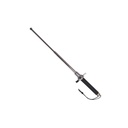
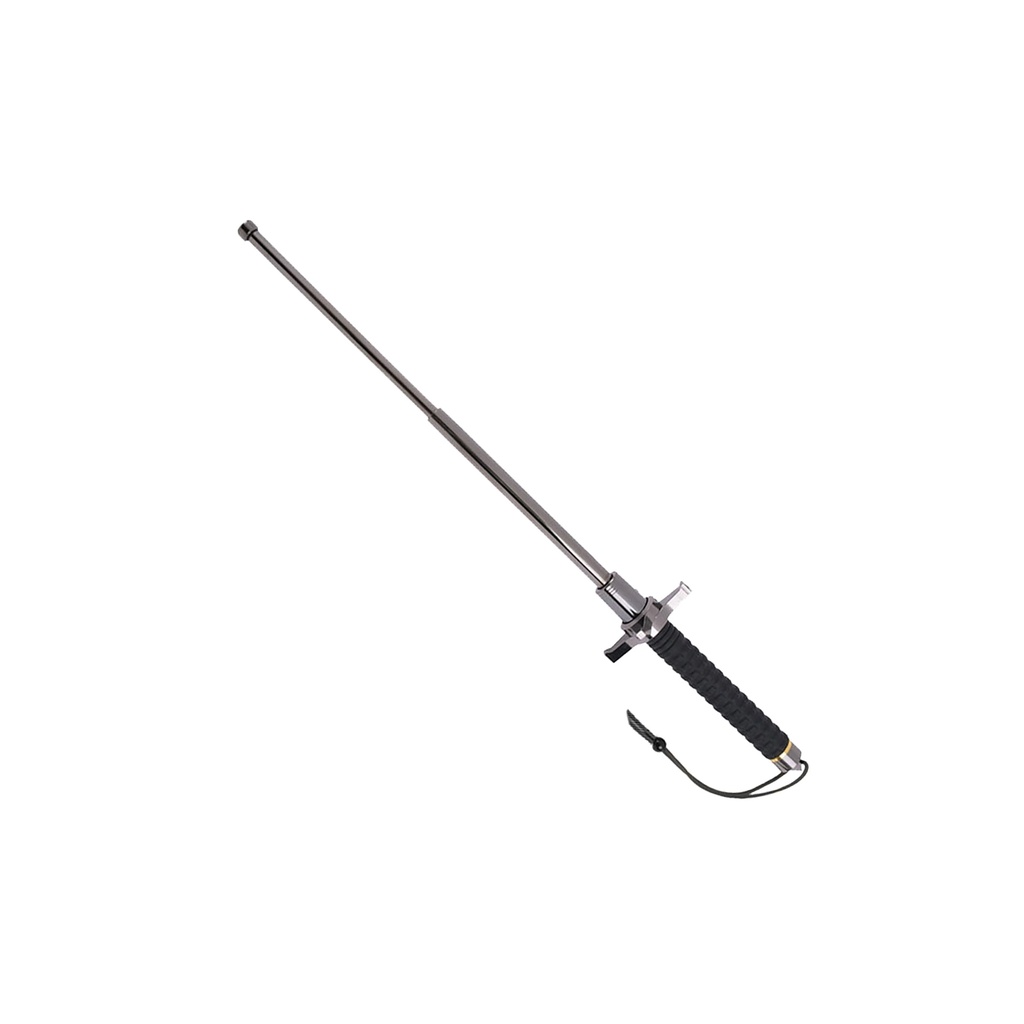

Guarded Reach Telescoping Defense Baton - Black & Steel
5 sold in last 24 hours
The Guarded Reach Telescoping Defense Baton - Black & Steel is built for straightforward personal protection, not flash. Collapsed, it rides compactly on belt or in a bag. With a quick snap, it locks out to 21", giving you distance, control, and a removable crossguard to shield your hand from impact. The ribbed grip and wrist lanyard help you keep hold under stress, while the solid steel shaft delivers reliable structure for trained defensive strikes and blocks.
What This Defense Baton Actually Does for Your Protection
The Guarded Reach Telescoping Defense Baton - Black & Steel is a simple, purpose-built personal protection tool: it gives you extra reach, a protected grip, and a solid structure for trained defensive strikes and blocks. No gimmicks, no fantasy. If you’re looking for a practical alternative or companion to a stun gun for self defense, this expandable baton focuses on control, distance, and durability instead of voltage claims.
Collapsed, it’s compact enough for bag, glove box, or duty belt carry. Extended to 21 inches, it offers a meaningful reach advantage over empty hands, a removable crossguard to protect your knuckles, and a ribbed grip with lanyard to help you keep the baton in your hand when adrenaline spikes.
How an Expandable Baton Works in Real Self-Defense
Where a stun gun for self defense relies on electrical current and close contact, an expandable baton relies on leverage, structure, and targeting. This steel baton uses a three-section telescoping shaft: a sharp, downward or outward snap of the wrist drives the inner sections out until they friction-lock into place at full 21" length.
Once extended, you’re working with three key advantages:
- Reach: You can create or maintain distance, intercepting arms or legs instead of wrestling at close range.
- Structure: The steel shaft gives you a rigid tool for striking large muscle groups or making defensive blocks.
- Control: With training, you can use the baton for simple redirection, pressure, and breaking grips, not just impact.
This is important if you’re comparing a baton vs. stun gun for personal protection: a stun gun for self defense usually requires you to be almost chest-to-chest with someone, while a baton is about managing distance and position before things get that close.
Build Quality That Matters When Protection Is Real
For any self-defense tool, reliability is the real benchmark. This telescoping defense baton is built around a polished steel shaft, a removable hand guard, and a textured grip that favors control over cosmetics. The design is intentionally minimal: fewer moving parts, fewer failure points.
Steel Shaft and Friction Lock Construction
The three-section polished metal shaft is designed to deploy with a firm snap and stay extended through friction lock. That means no complicated buttons or springs to fail when your hands are sweaty or gloved. When it’s time to close, you simply drive the tip straight down on a firm, safe surface to unlock the sections and collapse them back into the handle.
Because this is a physical-impact protection tool, your own training and technique matter more than any marketing number. Unlike stun guns, there’s no amperage or voltage to consider here—the "power" comes from body mechanics, targeting, and the baton’s ability to stay rigid and in your hand.
Hand Guard, Grip Texture, and Lanyard
The removable guard is a practical feature borrowed from classic nightstick design. It sits between your hand and the shaft, helping shield your knuckles from strikes, walls, or sudden impacts. If you prefer a slimmer profile, the guard can be removed, but most users who anticipate real defensive use will keep it installed.
The ribbed, black handle provides a secure purchase even if your grip is less than perfect under stress. The attached wrist lanyard offers a backup: if the baton is jostled or partially knocked free, the lanyard helps prevent it from leaving your control entirely—an underrated protection detail for both civilians and security professionals.
Carrying This Baton for Personal Protection
With any self-defense tool, carry format is as important as the tool itself. A stun gun for self defense that lives at the bottom of a bag isn’t much better than not having one; the same rule applies to an expandable baton.
This 21" model is a practical middle ground for everyday protection:
- Collapsed size: Compact enough for a bag, backpack, or vehicle console, and suitable for dedicated baton pouches on a belt.
- Deployment: Draw with a full-hand grip, bring it clear of your body, and snap downward or outward to extend.
- Environment: Works best where you have enough space to move—parking lots, entryways, sidewalks, or workplace exteriors.
If you’re already considering the best stun gun for personal protection, think of this baton as a complementary option: the baton manages distance and visible deterrence; a stun gun (where legal) can be a last-resort close-contact tool if someone closes that distance despite your efforts.
Protection Reality: What This Baton Can and Cannot Do
Honest protection advice: no baton, no stun gun, and no single tool is a magic solution. The Guarded Reach Telescoping Defense Baton is effective when you pair it with a few key elements:
- Basic training: Learn simple, gross-motor strikes to large muscle groups (thighs, arms) and blocks, not intricate martial arts.
- Clear intent: A baton is a defensive tool: create distance, disengage, and get to safety, not chase or punish.
- Context awareness: You need enough space to deploy and swing; cramped environments may favor other tools.
Where stun guns for self defense focus on causing pain or temporary neuromuscular disruption via electrical current, a baton focuses on mechanical disruption and psychological deterrence. Many confrontations de-escalate the moment a would-be attacker realizes you have reach, structure, and the willingness to protect yourself.
What People Ask Before Buying a Stun Gun for Protection
How effective are stun guns for self defense?
Stun guns can be effective, but only under the right conditions. They require solid contact on the body and enough time (usually a few seconds) for the current to do its job. Amperage and contact time matter more than raw "million volt" marketing numbers. Stun guns are close-contact tools; they don’t create distance. That’s where an expandable baton like this one changes the equation: it lets you manage space and intercept an attack earlier, often before someone can put hands on you.
Does voltage or amperage matter more in a stun gun?
Amperage matters more. Voltage is largely about how easily the current can arc across clothing or small gaps—once you’re past a certain threshold, extra "millions of volts" are mostly marketing. Amperage, combined with contact time and where you place the stun gun, determines how much disruption it actually causes. If you’re comparing tools, look for honest information about current, build quality, and battery reliability instead of just voltage claims. With this baton, you sidestep that entire issue by using a purely mechanical, non-electrical defensive tool.
Is this stun gun legal to carry in my state?
Laws vary widely. Some states and cities heavily regulate or ban stun guns; others treat them like any other personal protection device. The same is true for batons: in some jurisdictions, an expandable baton is restricted to law enforcement or licensed security, while in others it’s legal for civilian carry at home or in a vehicle. Before buying any stun gun for self defense or an expandable baton like this, check your state and local laws, plus any workplace or campus policies. When in doubt, consult official state statutes or ask a qualified local attorney or instructor.
Carrying With Competence: Putting This Baton Into Your Protection Plan
The real goal isn’t owning more gear; it’s moving through your day with quiet confidence. The Guarded Reach Telescoping Defense Baton - Black & Steel is for people who prefer straightforward tools: solid steel, a guarded grip, and enough reach to matter.
Pair it with a realistic plan: know where it rides (bag, belt, vehicle), practice drawing and extending it safely, and invest a little time in simple self-defense training that covers both verbal boundaries and physical response. If you also carry a stun gun for personal protection where legal, they can complement each other—one manages distance, the other addresses close-in threats.
Instead of relying on hype or huge voltage numbers, you end up with a calm, data-backed setup: tools you understand, methods you’ve practiced, and a protection mindset that’s about getting home safe, not looking tactical.