
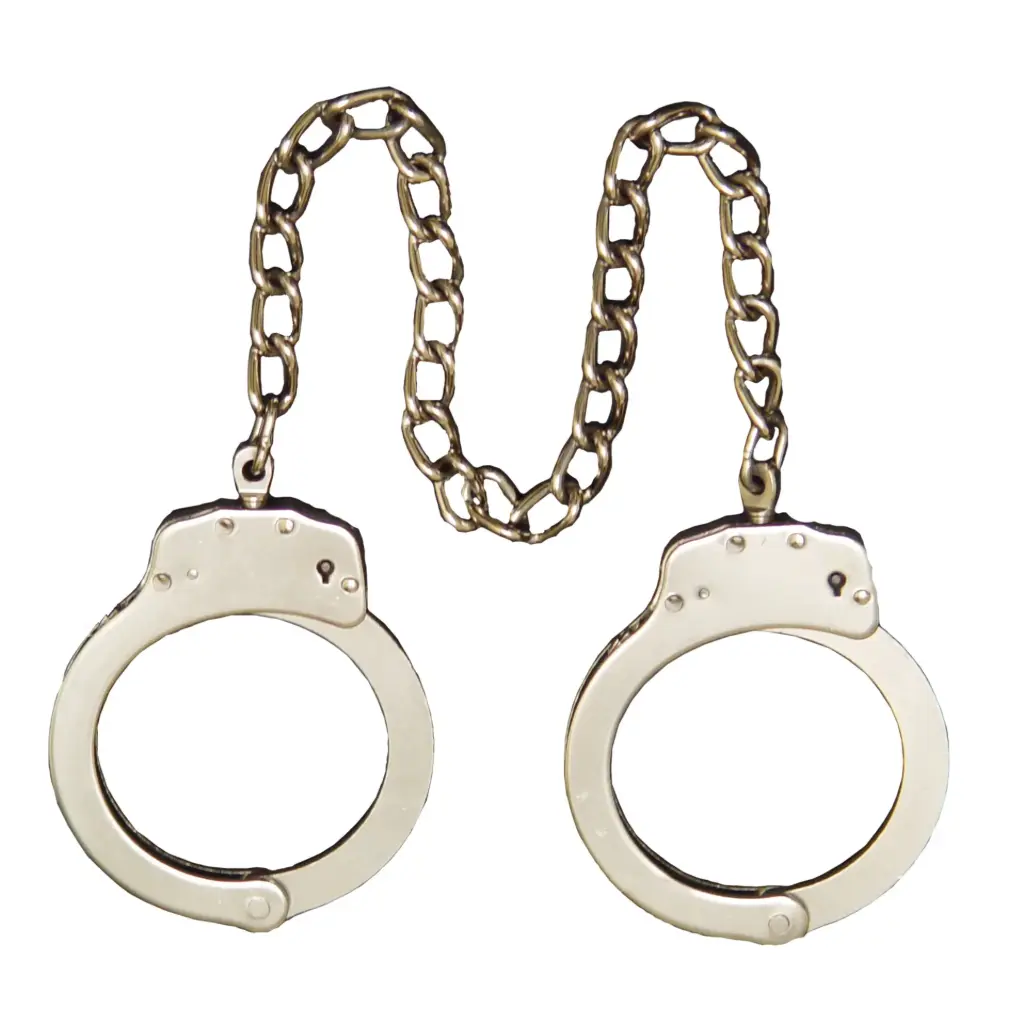


Guardian Grip Transport Leg Restraints - Nickel Plated
5 sold in last 24 hours
Guardian Grip Transport Leg Restraints deliver professional-grade control in a simple, proven design. Built from nickel-plated steel, these leg cuffs use an 18-inch chain to limit stride while still allowing controlled movement during escort or transport. The smooth swing-through cuffs and adjustable locking mechanism support consistent, repeatable application in real-world custody environments. Ideal for law enforcement, corrections, and professional security teams who need dependable lower-body restraint without unnecessary bulk or gimmicks.
Professional Leg Restraints Built for Real-World Control
The Guardian Grip Transport Leg Restraints - Nickel Plated are designed for one job: giving you consistent, predictable control of a subject’s movement during escort and transport. No gimmicks, no decorative hardware—just a solid pair of professional leg cuffs connected by an 18-inch chain that limits stride while still allowing safe, guided walking.
Where some restraint gear leans into tactical styling, these leg restraints stay firmly in the professional lane. Nickel-plated steel, standard swing-through cuffs, and a familiar keyway create a system most law enforcement, corrections, and security professionals can pick up and use immediately.
How Professional Leg Cuffs Work in Custody Environments
Leg cuffs are not about immobilizing someone completely; they are about controlling pace and direction. By securing each ankle in a cuff and linking them with a measured-length chain, you reduce stride length, making it harder to sprint, kick effectively, or change direction abruptly.
The Guardian Grip Transport Leg Restraints use swing-through cuffs: the cuff arm swings over the ankle, clicks through the ratchet, and locks into place. Once secured, the nickel-plated steel construction keeps the shape and tension you set, supporting consistent restraint across multiple applications. An 18-inch chain provides enough slack for stair navigation and vehicle entry while still enforcing a shortened, controlled step.
Why These Guardian Grip Leg Cuffs Are Reliable Restraints
With leg restraints, reliability is about predictable mechanics and durable materials. These cuffs use nickel-plated steel throughout—the cuffs and the 18-inch chain—balancing corrosion resistance with the strength needed to handle daily use in transport, holding, and movement between secure areas.
Durable Nickel-Plated Steel Construction
The nickel finish does more than just look clean. It helps resist surface corrosion from sweat, weather, and routine cleaning solutions. That matters because leg cuffs often see hard surfaces, dirty environments, and repeated contact with footwear. The smooth, polished surfaces also reduce snagging on socks or pant hems, which supports quicker, more controlled application.
Consistent Swing-Through Cuff Mechanism
The swing-through design means you don’t have to align moving parts under stress. You place the cuff around the lower leg just above the ankle, swing the arm over, and let the ratchet engage. That familiarity matters to professionals who already use similar mechanisms on wrist cuffs and want matching muscle memory in their leg restraint system.
Carry, Deployment, and Use in the Field
Because these are leg cuffs with an 18-inch chain, they are usually staged rather than worn. In practice, that means keeping them in a dedicated pouch, transport kit, or vehicle restraint bag so they’re easy to reach when a subject needs lower-body control.
Staging and Access for Escorts and Transfers
For escorts and transport, the Guardian Grip Transport Leg Restraints are best kept either pre-opened (both cuffs partially set for quick placement) or fully closed and stored in a pouch that allows fast retrieval. The chain length keeps the set compact enough to stack with handcuffs or waist restraints in a transport kit.
Application Considerations for Safety and Control
Effective use is about more than simply locking the cuffs. Proper placement above the ankle, checking for excessive tightness, and confirming lock engagement all affect both security and safety. These cuffs use an adjustable locking mechanism that allows you to fine-tune fit so the restraint is secure without cutting into the skin. When used with appropriate footwear and clothing, they support controlled movement while reducing the risk of tripping during careful escort.
Build Details That Matter in Professional Leg Restraints
Leg restraints are judged by whether they do their job quietly and consistently. The Guardian Grip system focuses on the details that actually influence that outcome.
- Nickel-plated steel body: Provides the strength and surface hardness necessary for repeated use and cleaning.
- 18-inch connecting chain: Purpose-built to limit stride while allowing step-by-step movement under supervision.
- Swing-through cuffs: Familiar operation for officers and security personnel used to standard handcuffs.
- Adjustable locking mechanism: Supports secure fit on a range of leg sizes within appropriate restraint guidelines.
Legal and Policy Context for Leg Cuff Use
Unlike consumer self-defense tools, leg restraints sit squarely in the professional and institutional policy space. Whether you’re in law enforcement, corrections, or contracted security, the primary questions are typically: “Is this design compatible with our existing procedures?” and “Does this match the restraint profile we’re authorized to use?”
The Guardian Grip Transport Leg Restraints are designed to fit into standard chain restraint protocols used by many agencies. Their conventional appearance and mechanism align well with established training on leg shackles and transport restraints. Actual authorization, however, depends on your agency or company’s specific use-of-restraint policies, training requirements, and local regulations governing custody and transport.
What People Ask Before Buying a Stun Gun for Protection
Many professionals who handle restraint gear also evaluate non-lethal self-defense tools for personal carry, especially stun guns for self defense. The questions below address those concerns directly, cutting through common marketing claims so you can make informed decisions about any self-defense or protection tools you add alongside your transport restraints.
How effective are stun guns for self defense?
A stun gun for self defense is a close-contact tool. Its effectiveness depends on three main factors: amperage (current), where you make contact, and how long that contact lasts. A realistic stun gun delivers enough current to cause pain, muscle disruption, and a startle response, but it is not a magic “one-touch knockout” device. Used well—driven firmly into muscle groups, held for several seconds, and combined with immediate escape or control tactics—a quality stun gun can create a critical opening to break contact. Used casually, in short taps or on thick clothing, its effect can be minimal. Thinking of a stun gun as part of a broader personal protection plan, not as the entire plan, is the most realistic and effective mindset.
Does voltage or amperage matter more in a stun gun?
Voltage gets the big headlines, but amperage does the real work. High voltage helps a stun gun arc across small gaps and light up for a visual deterrent, but the current (amperage) is what actually affects the body. Once you reach enough voltage to push electricity through clothing and skin, adding “millions more volts” mostly becomes marketing theater. For practical self defense, you want a stun gun with controlled, effective amperage, a solid contact area, and a power source that can maintain output—plus a form factor you can actually deploy under stress. A well-built, moderate-voltage unit with reliable current and a secure grip will usually outperform a cheaply made “10 million volt” device in real-world use.
Is this stun gun legal to carry in my state?
Stun gun laws vary widely by state and sometimes by city. Some states treat a stun gun almost like any other personal protection device, while others require permits, restrict carry in certain locations, or limit who can purchase one. The practical approach is simple: check your state statutes and, if applicable, county or city codes for terms like “stun gun,” “electronic control device,” or “conducted energy weapon.” Many states allow possession but regulate carry in schools, government buildings, or specific venues. If you are already working in law enforcement or security, your agency may have its own policy on off-duty carry that sits on top of state law. Always verify current regulations before buying or carrying.
Carrying Restraints and Self-Defense Tools with Confidence
The Guardian Grip Transport Leg Restraints - Nickel Plated give you a straightforward, professional way to control lower-body movement in custody environments. They don’t try to be more than they are: well-built leg cuffs with an 18-inch chain that support secure, controlled escort and transport.
When you pair reliable restraint tools like these with clear policies, proper training, and honest information about self-defense options such as stun guns, you get more than gear—you get a system. A system where every tool has a defined role, and every user understands both its capabilities and its limits. That’s the kind of quiet, competent control that keeps people safer on both sides of the restraints.