Breakwater Control Monkey Fist Protection Keychain - Teal Paracord
6 sold in last 24 hours
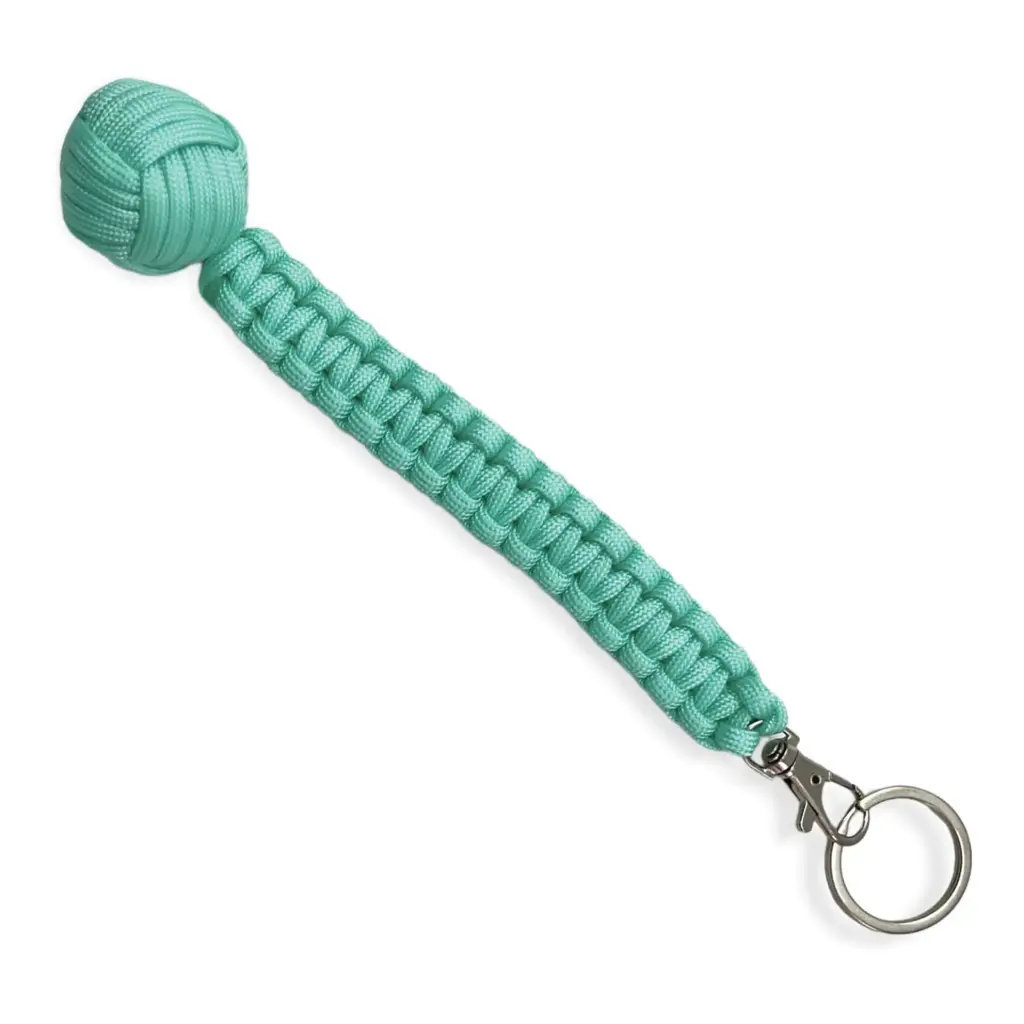
This defense keychain is built for calm, controlled impact—not intimidation theater. The teal paracord monkey fist wraps a 1-inch stainless steel core on an 8–8.5 inch body, giving you usable reach and predictable swing. A split ring and snap hook make it easy to stage on keys or a bag so it’s actually where you need it. Beyond personal protection, it can break glass in an emergency and the paracord adds real utility to your everyday carry.
What This Defense Keychain Actually Does
The Harbor Knot Impact Monkey Fist Keychain is a compact impact tool built around a simple idea: if you’re going to carry something for personal protection, it should be predictable, controllable, and look at home on your keys. No batteries, no voltage marketing, no drama—just a tightly wrapped 1-inch stainless steel core in a monkey fist knot, backed by an 8–8.5 inch paracord handle you can actually grip under stress.
Where stun guns and other electronic self-defense tools depend on charge, contact time, and battery life, this defense keychain depends on physics and your ability to move it. It’s not about pain compliance; it’s about creating a sharp, focused impact that lets you stun, disrupt, and break contact long enough to move to safety.
How Impact Defense Keychains Work in Personal Protection
Most people first look at stun guns for self defense because they’re marketed as high-voltage solutions to a scary problem. The reality is simpler and less glamorous: in close quarters, almost anything that concentrates force into a small area can be an effective personal protection tool if you can land it on a vulnerable target. That’s exactly what this monkey fist keychain is designed to do.
The 1-inch stainless steel core gives this defense keychain enough mass to matter. The monkey fist knot distributes that mass evenly so it doesn’t shift or deform on impact. The paracord handle, finished in a flat cobra weave, lets you index your grip without needing to look down. You get a compact, repeatable striking arc you can swing from a keyring hold or a full fist wrap, depending on your dexterity and training.
Build Quality That Holds Up When Carried Every Day
With any self-defense tool—whether it’s a stun gun or a non-electronic impact device—reliability matters more than marketing language. This design leans on proven materials instead of gimmicks:
Tight Monkey Fist Knot and Stainless Core
The monkey fist knot is tightly and evenly wrapped around a 1-inch stainless steel core. That core does three important things: it adds weight for meaningful impact, keeps the striking end consistently round, and resists corrosion from sweat and weather. There’s no shifting sand or soft filler to mush out over time; what you feel in your hand on day one is what you’ll feel a year later.
Durable Teal Paracord and Hardware
The braided teal paracord handle is more than an aesthetic choice. Paracord is abrasion-resistant, flexible without feeling flimsy, and forgiving on your hands compared to bare metal. The flat cobra weave adds thickness so the handle doesn’t cut into your fingers when you swing. A steel split ring and compact snap hook connect directly to the paracord, giving you two attachment points: one for your keys, one for quick-clip access on a bag, belt loop, or lanyard.
Carry Reality: How This Defense Keychain Rides Day to Day
The best self-defense gear—stun gun, spray, or impact tool—is the one you actually carry. This monkey fist keychain is built to disappear into your normal routine without looking tactical or aggressive.
At 8–8.5 inches overall, it rides long enough to give you usable reach but short enough to stay manageable on a keyring. The teal color reads as modern and approachable, not like something you borrowed from a SWAT belt. That matters in workplaces, campuses, and public spaces where you want to feel prepared without broadcasting that you’re carrying a weapon.
Deployment Under Stress
Under stress, fine motor skills degrade. That’s where simple carry formats shine. With this keychain, your deployment mechanics are straightforward: grab your keys, slide your grip down the braided section, and let the weighted monkey fist hang free. There are no switches, safeties, or buttons to find in the dark. If you can grab it, you can use it.
Where This Fits Next to a Stun Gun for Self Defense
If you’re researching the best stun gun for personal protection, it’s worth understanding where a defense keychain like this complements or, in some cases, replaces an electronic option. A stun gun can be effective, but only if you maintain solid contact on the right parts of the body for long enough to disrupt muscle function. That’s a tall order in a chaotic, moving conflict—especially if clothing or poor contact reduces effectiveness.
This monkey fist keychain takes a different approach. It doesn’t depend on voltage, amperage, or battery life. Its “effectiveness curve” is straightforward: the better your targeting (hands, forearm, collarbone, face in extreme situations), the more disruptive the impact. It will not “drop” someone the way stun gun marketing sometimes implies. What it can do—and do reliably—is create sharp pain, shock, and a flinch response that opens space for you to break away.
Many experienced self-defense instructors recommend pairing a simple impact tool like this with another option (such as pepper spray or a well-chosen stun gun) so you have layers of protection and a backup if electronics fail or contact is hard to maintain.
What People Ask Before Buying a Stun Gun for Protection
How effective are stun guns for self defense?
Stun guns can be effective for self defense, but usually not in the instant “zap and drop” way marketing suggests. Their impact depends on several factors: contact time, where you touch the attacker, how thick their clothing is, and the device’s actual current output, not just advertised voltage. In real-world terms, that means you have to get very close, establish solid contact, and keep it there for a few seconds. That’s why many people also carry a simpler defense tool—like this monkey fist keychain—that doesn’t depend on electronics or precise grip alignment and can still create enough pain and surprise to help you break contact.
Does voltage or amperage matter more in a stun gun?
Voltage sells; amperage does the work. Extremely high voltage claims (“millions of volts”) are mostly marketing theater. You only need enough voltage to arc through clothing and skin oils. After that, it’s the current (amperage) and contact time that determine how much the stun gun disrupts muscle and nervous system function. A lower-voltage unit with solid current output, good contact area, and a reliable power source is usually more useful than a “10 million volt” device with weak current. This is one reason many protection-focused buyers supplement or replace stun guns with low-tech options like this paracord monkey fist, which trades electrical disruption for simple, repeatable impact.
Is this stun gun legal to carry in my state?
Stun gun laws vary widely by state—and sometimes by city. Some jurisdictions treat them much like other self-defense tools with minimal restrictions; others require permits or ban them outright. Defense keychains like this monkey fist generally fall under impact tool or keychain categories, which can still be regulated, especially in places with strict rules on concealed weapons or striking instruments. The responsible move is to check three layers: state law, local city/municipal codes, and any rules for workplaces, campuses, or transit systems you use. When in doubt, consult your local statutes or a qualified legal resource and err on the side of low-profile, clearly lawful carry.
Carrying with Clarity: Building a Practical Protection Plan
Whether you ultimately choose a stun gun for self defense, a defense keychain like this monkey fist, or a layered setup, the goal is the same: have something you can access quickly, use under stress, and justify legally and ethically. This teal paracord monkey fist keychain earns a place in that plan by being simple, durable, and socially low-profile. It won’t run out of charge, it doesn’t depend on amperage specs, and it rewards basic practice: drawing it from your pocket, indexing your grip on the braided handle, and visualizing where you’d strike if you had to create a window to escape.
That’s the heart of practical personal protection—clear understanding over hype, tools you actually carry, and skills you’ve thought through before you ever need them.