Heritage Mosaic Field Pro Hunting Knife - Red Bone Damascus
8 sold in last 24 hours
A hunting knife that feels like it’s already earned a place on your belt. The 4.5-inch full-tang Damascus clip-point blade gives you bite and control for field dressing and camp chores alike. Red wood and natural bone scales with brass accents fill the hand with a secure, classic grip, while the fitted leather sheath keeps it ready on your hip. Built to work hard, look good doing it, and still be worth passing down after seasons of use.
Heritage Mosaic Design: A Field-Proven Hunting Knife That Looks Like an Heirloom
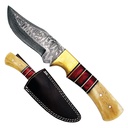
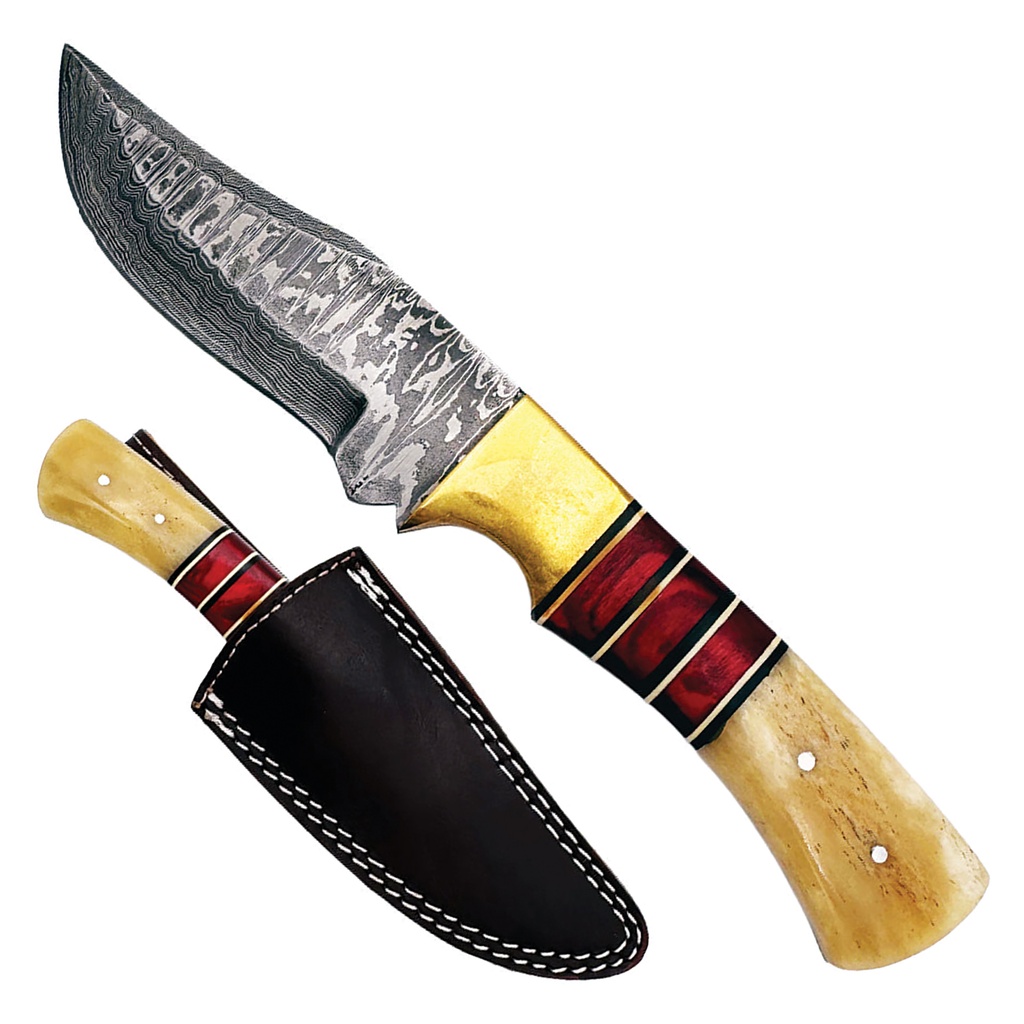
The Heritage Mosaic Field Pro Hunting Knife - Red Bone Damascus is built for hunters and outdoorsmen who want a fixed blade that actually works hard in the field, not just in photos. At 9 inches overall with a 4.5-inch Damascus clip-point blade, it balances control and cutting power for field dressing, camp chores, and general outdoor use—while the red bone and wood handle gives it the kind of character most knives don’t earn until years later.
Fixed Blade Hunting Knife Built for Real Field Use
This is a traditional fixed blade hunting knife, not a shelf queen. The blade length sits in the sweet spot for processing game—long enough for clean, confident cuts, short enough to maneuver inside the cavity without feeling clumsy. At about 14 ounces with a full tang, it has enough mass to do real work while still staying manageable on your belt all day.
The included leather sheath rides on your belt so the knife is where you expect it, when you need it. No plastic clips to snap, no zippers to fumble. Just a straightforward draw from a formed leather pouch you can re-holster by feel, even with cold or gloved hands.
Why Damascus Steel Matters on a Hunting Knife
The Damascus blade isn’t just for looks. Pattern-welded steel, done correctly, gives you a blade that combines toughness and edge-holding in a way simple mono-steel often doesn’t. The visible wave and pool pattern is the tell: layered steels forged, folded, and etched so the structure shows through.
For you, that means a hunting knife that can take a fine edge for detailed cuts and still stand up to bone contact, light prying, and seasonal use without feeling delicate. It’s the kind of blade you sharpen before the season, touch up as needed, and expect to be ready again next year.
Clip-Point Profile for Controlled Field Dressing
The clip-point blade shape gives you a fine, controllable tip for careful work—opening up an animal without punching through organs, trimming connective tissue, and making precise cuts where you need them. The belly of the blade offers enough curve for skinning and slicing, while the straight section closer to the handle lets you push-cut cleanly through tougher material.
Full-Tang Strength You Can See
The steel runs the full length of the handle, visible along the spine and pommel. That full-tang construction is what you want in a fixed blade hunting knife: no mystery joints, no hidden weak spots. When you twist, lever, or bear down on the knife, you’re loading solid steel from tip to butt, not a narrow joint buried under handle material.
Handle Ergonomics: Red Wood, Natural Bone, and Brass
The handle is where this knife’s “heritage” character really shows. Red wood and natural bone segments are separated by brass spacers and finished to a polished, palm-filling contour. It’s traditional materials done in a way that still feels secure when you’re actually working.
The curved profile walks your hand into a natural grip, with the front section and bolster helping index your fingers in place. The combination of textures—smoother bone, slightly warmer-feeling wood, cool brass—gives enough tactile feedback that you can adjust your grip by feel alone.
Secure Grip for Wet or Bloody Hands
Real hunting knives have to work when your hands are wet, cold, or slick. The contouring of this handle, combined with the full tang and brass bolster, gives you ridges and shape changes your hand can lock against, even when traction isn’t ideal. You’re not relying on aggressive texture that chews up your skin—just smart ergonomics that keep the knife anchored.
Leather Sheath for Reliable Belt Carry
The dark brown leather sheath with contrast stitching is built for simple, predictable carry. It threads onto a belt and holds the knife in a consistent position at your side. When you reach for your hunting knife, you find the same angle, the same draw, every time. Over time, the leather will mold to both the knife and your habits, making re-sheathing nearly automatic.
Practical Use Cases: From Field Dressing to Camp Chores
This hunting knife is tuned for field work, but that doesn’t limit it to one task. In real use, a good fixed blade ends up doing everything from breaking down game to trimming cord, prepping kindling, and handling food at camp. The 4.5-inch blade length is long enough to baton small kindling, carve tent stakes, or slice meat and vegetables without feeling oversized for close-in tasks.
Because the weight sits low in the hand and the balance point is close to the guard, you get fine control near the edge for detailed cutting, but still enough forward presence that slicing through thicker material doesn’t feel like a fight. It’s a general-purpose field knife with hunting at its core.
What People Ask Before Buying a Hunting Knife Like This
How strong is a full-tang Damascus hunting knife?
A properly made full-tang Damascus hunting knife is very strong for its intended use: cutting, slicing, light prying, and field dressing. The layered construction, combined with the tang running the entire handle length, gives a good balance of toughness and edge retention. It’s not a pry bar or a wedge, but for game processing and camp chores it’s more than capable, and the full tang means you’re loading solid steel rather than a narrow hidden joint.
Is a 4.5-inch blade enough for hunting and field dressing?
For most North American game, a 4.5-inch blade is in the ideal range. It’s long enough to open the cavity, reach where you need to, and make clean skinning cuts, while still being short enough to control inside the animal without risking accidental punctures. Longer blades can feel clumsy in tight spaces; shorter blades can require more passes. This length hits a practical balance.
What maintenance does a Damascus hunting knife need?
Damascus steel, especially pattern-welded carbon steels, should be treated like other high-carbon blades. Clean and dry it after use, especially after contact with moisture, blood, or acidic material. A light coat of oil before storage helps prevent rust and preserves the etching that makes the pattern visible. Sharpen it with a stone or quality sharpener as you would any field knife, touching up the edge as needed rather than waiting until it’s completely dull.
Carrying a Fixed Blade with Confidence
Choosing a fixed blade hunting knife is about more than pattern and handle materials. It’s about whether the knife disappears on your belt until needed, then feels immediately familiar in your hand. This Heritage Mosaic Field Pro does exactly that: predictable belt carry in a leather sheath, full-tang strength you can trust, and a blade profile that matches what hunters actually do in the field.
Over time, the leather will break in, the handle will pick up small marks from use, and the Damascus pattern will become something you recognize instantly when you draw it. That’s what makes a good hunting knife worth keeping—and why this one is built to be used hard, admired up close, and eventually handed to the next person who’ll take it into the field.
| Blade Length (inches) | 4.5 |
| Overall Length (inches) | 9 |
| Weight (oz.) | 14 |
| Blade Color | Silver |
| Blade Finish | Patterned |
| Blade Style | Clip Point |
| Blade Edge | Plain |
| Blade Material | Damascus Steel |
| Handle Finish | Polished |
| Handle Material | Wood, Bone, Brass |
| Theme | Damascus |
| Handle Length (inches) | 4.5 |
| Tang Type | Full |
| Carry Method | Leather |
| Sheath/Holster | Leather |