Heritage Twin Damascus Pocket Knife - White Bone
4 sold in last 24 hours
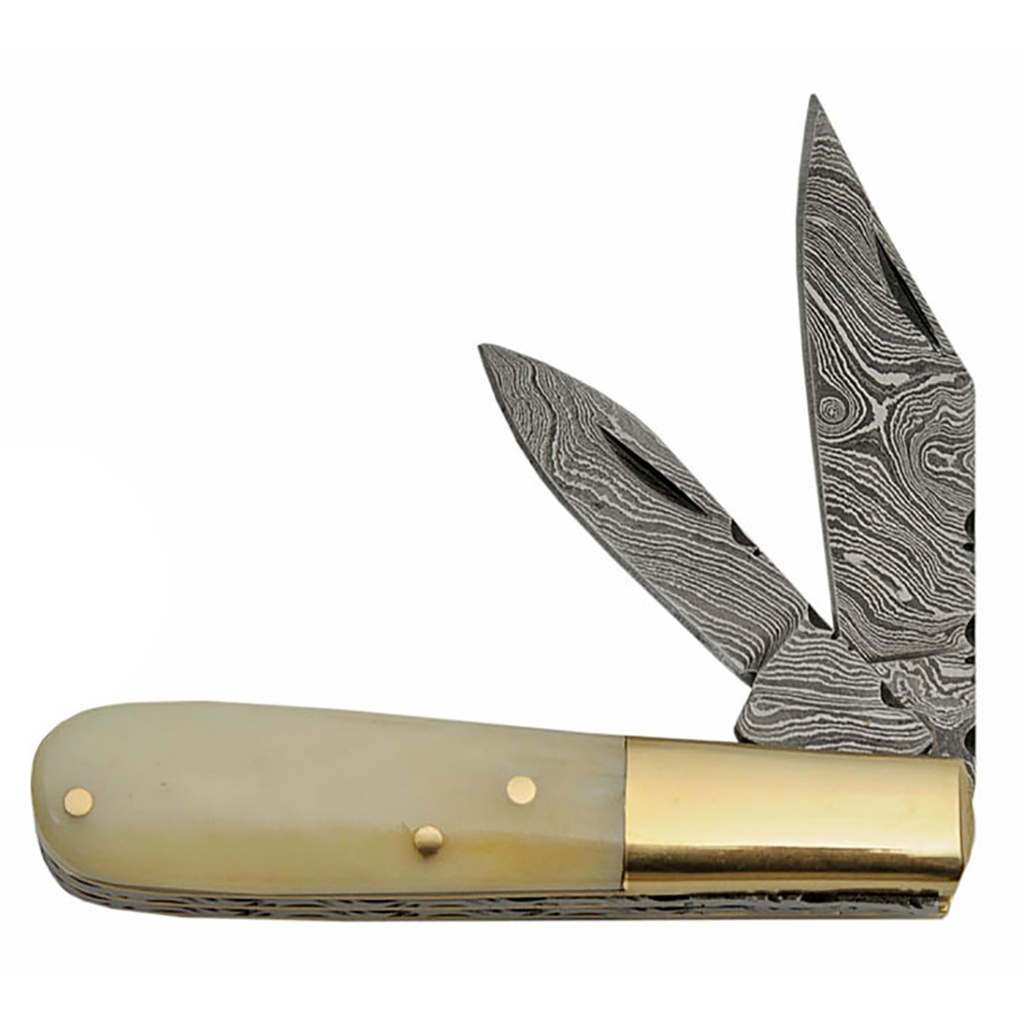
The Heritage Twin Damascus Pocket Knife – White Bone pairs classic style with everyday practicality. Two Damascus steel blades give you versatile cutting options in a compact 3.5" closed slipjoint design. The smooth white bone handle, brass bolster, and decorative fileworked liners deliver a refined, collectible look that still rides easily in a pocket. Ideal as a gentleman’s EDC or gift, this traditional folding knife blends old-world materials with functional dual-blade utility.
What This Pocket Knife Actually Is – No Hype, Just Details
The Heritage Twin Damascus Pocket Knife - White Bone is a traditional slipjoint pocket knife built for people who appreciate real materials and everyday utility more than tactical marketing. You get two genuine Damascus blades in a compact, 3.5-inch closed format, with a smooth white bone handle and brass hardware that feel like a classic gentleman’s carry rather than a disposable tool.
This is not a stun gun or a self-defense gadget. It’s a compact folding knife designed for light everyday cutting tasks, collection, and gift-giving. If you want something that looks and feels like an heirloom but is priced and sized for daily pocket carry, this is the lane this knife lives in.
How This Twin-Blade Damascus Pocket Knife Works in Daily Carry
This folding knife uses a traditional slipjoint mechanism with nail-nick openings on both blades. There’s no spring assist and no lock button to worry about. You open the blade by catching the nail nick and rotating it out; the backspring provides resistance and a firm open position without a locking system.
Closed, it rides at 3.5 inches – small enough for a front pocket, coin pocket, or organizer pouch. Open, you get about 6 inches overall length, giving enough blade to handle typical pocket-knife work: opening packages, light whittling, cord cutting, and everyday utility tasks.
Why Two Damascus Blades Matter in a Pocket Knife
Versatile Dual-Blade Setup
You get two blades: a larger clip-point style blade and a smaller pen-style blade. In practical terms, that means you can keep one edge fresher for cleaner cuts (letters, packages, food prep) and use the other for rougher tasks (tape, zip-ties, light carving). For anyone who actually uses their pocket knife, a second blade is more useful than most novelty features.
Damascus Steel with Character
Both blades feature a bold Damascus pattern that gives each knife a unique look. Visually, that layered steel patterning is what makes this stand out from standard stainless pocket knives. Functionally, Damascus in this context is about character and craftsmanship aesthetics more than extreme hard-use performance. It will do normal pocket-knife tasks just fine, but it’s not meant to be abused like a prying tool.
Build Quality: Bone, Brass, and Filework That Feel Like an Heirloom
White Bone Handle for Classic Grip and Style
The handle uses smooth white bone scales pinned over brass liners. Bone has been used on pocket knives for generations because it looks good, wears in with time, and provides a warm, organic feel in the hand. The off-white tone contrasts cleanly with the darker Damascus pattern and gold-toned brass for a classic, almost dress-knife appearance.
Brass Bolster and Decorative Liner Filework
A polished brass bolster anchors one end of the handle, balancing the visual weight of the patterned blades. Along the spine, the brass liners show decorative filework – those small, carved patterns you see when the knife is closed. That filework doesn’t change how the knife cuts, but it’s the sort of detail collectors and gift buyers notice immediately. It moves this from "just another pocket knife" into the "worth showing someone" category.
Carry Reality: Where This Knife Fits in Your Life
Because this is a slim, traditional slipjoint, it carries comfortably in a front pocket without a clip. It’s the kind of knife that disappears until you need it, and when you do open it, it looks more like a gentleman’s tool than a tactical blade. That makes it more socially acceptable in office, shop, or casual settings where aggressive-looking knives might draw the wrong kind of attention.
The rounded handle shape and 3.5-inch closed length fit naturally in the palm for light cutting work. There’s no finger groove or aggressive texturing – this is built for controlled, normal cutting tasks, not heavy-duty batoning or prying. If you’re realistic about what a small pocket knife should do, this lines up with that expectation.
What People Ask Before Buying a Stun Gun for Protection
How effective are stun guns for self defense?
Stun guns can be effective for self defense at very close range when used correctly: solid contact, targeting large muscle groups, and maintaining contact for several seconds. They are pain-compliance tools, not magic fight-enders. Factors that matter more than advertised voltage include amperage (current), contact time, and how reliably you can access and deploy the device under stress. A stun gun for self defense is most useful when paired with basic situational awareness and a simple plan for escape once you create an opening.
Does voltage or amperage matter more in a stun gun?
Amperage matters more. The high "million volt" numbers you see in stun gun marketing are mostly hype and don’t tell you much about real-world effectiveness. What actually matters is the current (amperage), how well the contacts bite through clothing, and whether the device can deliver that current consistently. A well-built stun gun with modest advertised voltage but solid amperage, good contact area, and a reliable power source will outperform a flashy “10 million volt” gadget with weak internal components.
Is this stun gun legal to carry in my state?
Stun gun laws vary by state and sometimes by city. Some locations treat a stun gun for self defense like a standard personal protection tool with minimal restrictions; others require permits, limit where you can carry, or ban them entirely. Before buying, check your state and local regulations for terms like "stun gun," "electronic control device," or "conducted energy weapon." When in doubt, look up your state statutes or consult local law enforcement or an attorney so you know exactly where you stand legally.
Knife vs. Stun Gun: Different Tools, Different Roles
The Heritage Twin Damascus Pocket Knife - White Bone is best viewed as a classic everyday carry cutting tool and collectible, not a dedicated self-defense platform. A stun gun for self defense is designed to disrupt an attacker’s ability to continue by targeting the nervous and muscular systems with electrical current. A small slipjoint knife, by contrast, excels at controlled tasks like opening boxes, trimming cord, or handling small daily chores.
For most practical users, the smartest approach is layering tools: a legal defensive option (like a stun gun, pepper spray, or alarm) plus a compact pocket knife for utility. Each tool does what it’s designed to do, and you’re not trying to force a gentleman’s pocket knife into a role it wasn’t built for.
Practical Takeaway: Where This Knife Belongs in Your Kit
If you want a traditional pocket knife that looks like it could have been handed down but is affordable enough to carry and actually use, the Heritage Twin Damascus Pocket Knife - White Bone fits that role well. Two Damascus blades give you versatility, the bone and brass construction gives you a classic feel, and the compact slipjoint format keeps it pocket-friendly.
Pair this with a well-chosen stun gun for self defense or other personal protection tool, and you have a realistic everyday setup: a reliable cutting tool for the tasks you actually face daily, and a purpose-built defensive option you’ve researched and know how to use. That combination – honest expectations, appropriate tools, and a bit of forethought – is what practical personal protection really looks like.