High-Contrast Retention-Drill Training Gun Replica - Black/Red Rubber
6 sold in last 24 hours
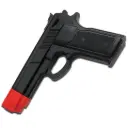
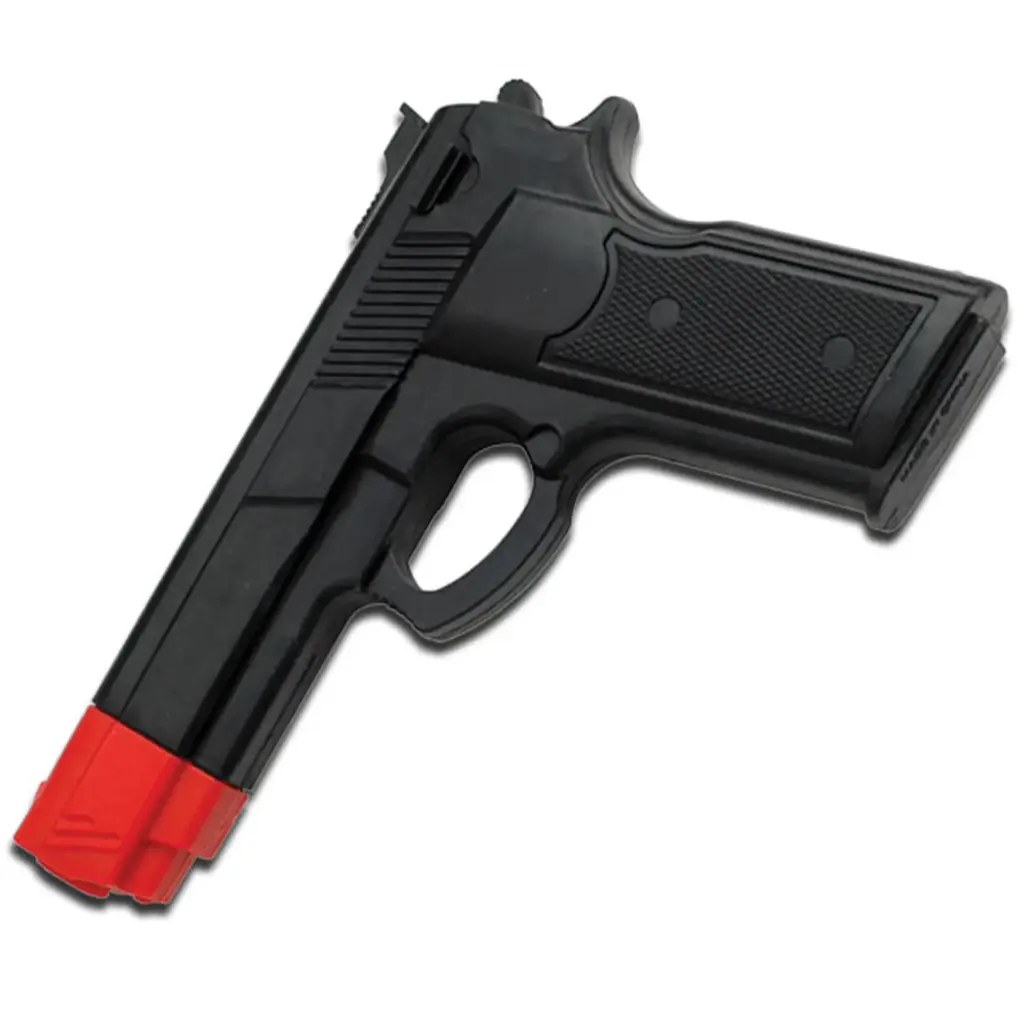
This high-contrast rubber training gun is built for serious retention drills, draw-stroke work, and scenario training—without a single round in the room. The holster-true semi-auto profile lets students run their real carry rigs while the bold black-and-red design clearly marks it as a non-firing training tool. Durable rubber construction is impact-safe for contact work, making it ideal for dojos, CCW classes, and law-enforcement training that demand realistic defensive handling with unmistakable safety.
What This Rubber Training Gun Actually Does in Defensive Training
This rubber training gun isn’t a toy and it isn’t a shortcut. It’s a full-size, holster-true handgun replica built so instructors and students can run real retention drills, draw practice, and close-range scenarios without any live-fire risk. The high-contrast black body with a bright red muzzle makes its purpose obvious from across the room: training only, impact-safe, zero chance of a negligent discharge.
For anyone serious about defensive skills, this kind of dedicated training pistol becomes the bridge between dry theory and real-world carry habits. You get the shape, grip, and draw of a duty-style handgun, while keeping the environment controlled, safe, and repeatable.
How a Rubber Training Gun Builds Real Self-Defense Skills
Real defensive handling is mostly about what happens before a shot is ever fired: awareness, access, draw stroke, and weapon retention under pressure. A rubber training gun lets you test all of that honestly. You can work from concealment, from duty rigs, against resisting partners, and in crowded training spaces—places where a live firearm has no business being out of a holster.
This training replica is molded as a semi-auto handgun silhouette with a defined trigger guard, beavertail, and slide profile. That matters because your grip, indexing, and draw mechanics are all built around these landmarks. Every rep with this rubber gun grooves the same motions you’ll use with your real carry pistol, without ever loading a magazine.
Build Quality That Supports Hard Retention Drills
Retention training is rough on gear. You’re clinching, grabbing, twisting, and sometimes taking falls with the gun trapped between bodies. A flimsy plastic prop won’t last—and can actually create bad habits when students subconsciously "go easy" to avoid breaking it.
Durable Rubber Construction for Impact-Safe Contact
The High-Contrast Retention-Drill Training Gun Replica is molded from dense, resilient rubber. Edges are slightly rounded for safer contact, but the overall frame remains rigid enough to hold its shape inside duty holsters and concealment rigs. That combination is what you want for real retention drills: safe to take a hit, stiff enough not to collapse in a grab or during a scramble.
The non-moving, solid barrel and slide mean there are no small parts to snap off during force-on-force style scenarios. Instructors can run disarm drills, ground entanglements, and weapon takeaway work without worrying about breaking the training tool every other class.
Holster-True Profile for Realistic Carry Practice
A training gun is only as good as its fit to real-world gear. This replica follows a full-size semi-auto duty pistol outline, making it compatible with a wide range of OWB and some IWB holsters designed for similar framed handguns. That lets students run genuine draw-stroke and reholstering practice from their actual carry position, not from some generic or improvised rig.
Because the profile is close to a typical defensive handgun, it also works cleanly in retention holsters used by law enforcement and security professionals, so you can practice clearing hoods, snaps, and tension systems without a live firearm in play.
High-Contrast Color for Clear Safety in Training Spaces
One of the quiet safety failures in defensive training is using props that look too similar to real firearms, especially in mixed environments with observers, new students, or shared ranges. This rubber training gun solves that visually.
The body is a matte black to echo the feel and look of a duty gun in the hand, but the muzzle and forward section are a bold red block that screams "training tool" at a glance. That high-contrast pattern reduces the chance of confusion in multi-gun environments and reassures bystanders, staff, and facility owners that what they’re seeing is a non-firing replica.
For dojos, community centers, and classrooms where live weapons are prohibited, this visual clarity is often the difference between being allowed to teach defensive gun work or being shut down.
Carrying and Using This Training Gun in Self-Defense Practice
Daily carry skills can’t be built with a gun sitting in a safe. This rubber training pistol gives you a stand-in that can live in your holster during dry practice sessions, class work, or scenario drills, so you can repetitively train what you actually carry—without risk.
Because it’s a solid rubber replica with no moving parts, there’s no maintenance or cleaning needed. It tolerates being dropped, slammed into mats, and used for controlled impact in disarm drills. You can integrate it into:
- Retention drills: Fight over the gun from the holster or during a grab without worrying about muzzle direction or trigger safety.
- Draw-stroke refinement: Practice garment clears, grip establishment, and presentation in tight spaces.
- Scenario training: Run realistic defensive setups with training partners in dojos or classrooms where live firearms are prohibited.
Instructors can move freely between students, physically adjust grips and positions, and even allow contact work around the gun, knowing there’s no chamber, no magazine, and no live-fire capability.
What People Ask Before Buying a Stun Gun for Protection
How effective are stun guns for self defense?
Stun guns can be effective self-defense tools in very specific circumstances: close range, direct contact with the attacker’s body, and enough contact time to let the current work. Unlike this rubber training gun, which is for skill development only, a stun gun for self defense is designed to disrupt muscle control and pain tolerance temporarily. Its effectiveness depends less on advertised voltage and more on amperage (current), contact area, and your ability to keep it pressed on the target for at least one to three seconds. They’re best thought of as one tool in a layered personal protection plan, not a magic-stop device.
Does voltage or amperage matter more in a stun gun?
Voltage gets the headlines, but amperage does the work. Voltage is essentially the pressure that helps the current jump between probes; once you have enough to arc through clothing, more doesn’t help much. Amperage—the actual amount of current flowing—is what affects the body. Responsible stun gun makers focus on safe but effective current levels combined with good contact design and reliable power delivery. Any "million volt" marketing that doesn’t mention current, contact time, and build quality is leaving out the information that really matters.
Is this stun gun legal to carry in my state?
Stun gun legality is state- and sometimes city-specific. Many states allow stun guns for personal protection with few restrictions, while others require permits, restrict carry in certain locations, or ban them outright. Before buying a stun gun for self defense, check your state statutes and any local ordinances—often under terms like "electronic control device" or "conducted energy weapon." Also confirm any rules for schools, government buildings, and workplaces. When in doubt, consult your local law enforcement or an attorney familiar with weapons laws in your jurisdiction.
Putting It Together: A Safer Path to Defensive Competence
If you’re serious about personal protection, you separate tools into two groups: training tools that build skill, and defensive tools you’d trust in a real encounter. This High-Contrast Retention-Drill Training Gun Replica sits firmly in the first group—and that’s its strength. It gives you a realistic, holster-true stand-in for your defensive handgun that’s unmistakably non-lethal and safe for contact work.
Use this rubber gun to pressure-test your draw, retention, and close-range decision-making. Then, if you choose to carry a stun gun, firearm, or any other self-defense tool, you’ll be bringing real, pressure-tested skills to the table instead of just gear. That’s how competent, calm, prepared people approach personal protection.