Himalayan Lineage Field Kukri Knife - Brass & Leather
5 sold in last 24 hours
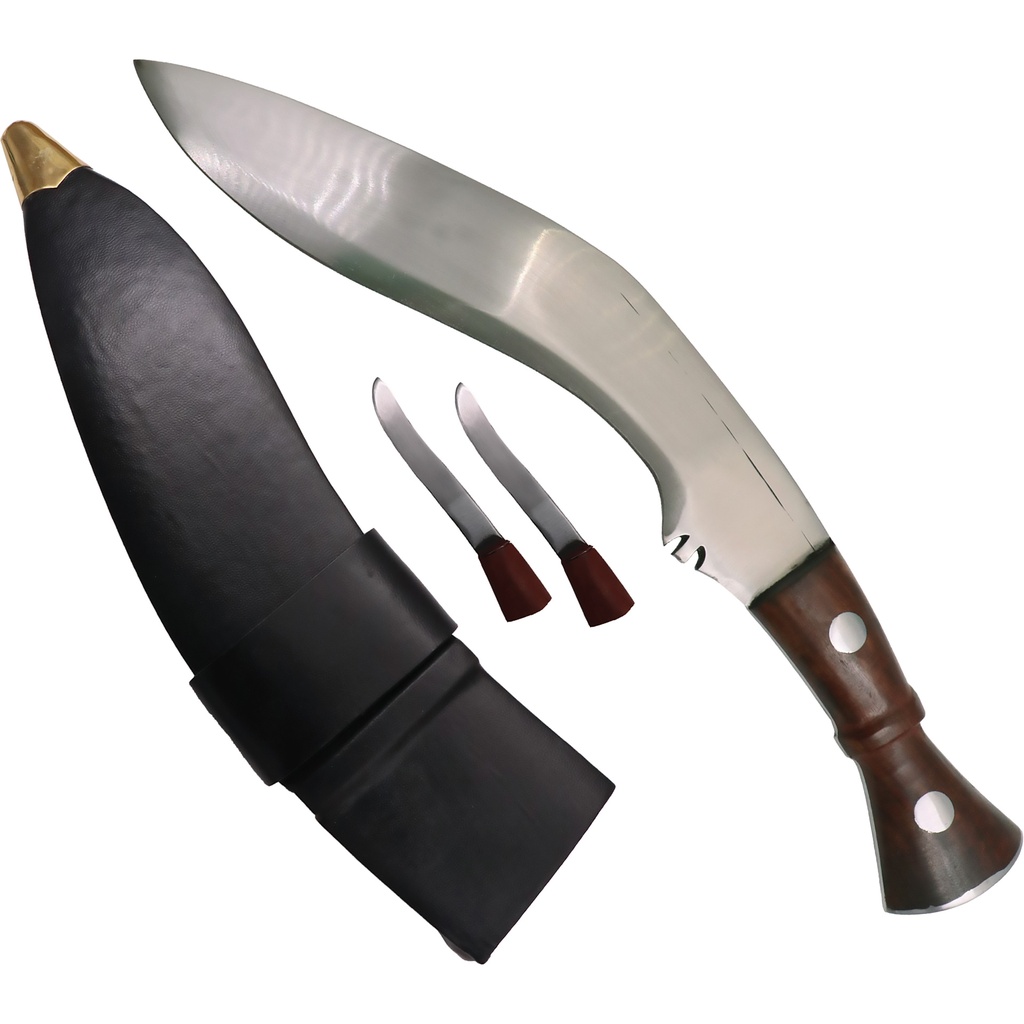
This Himalayan Lineage Field Kukri Knife brings classic Gurkha design into practical use. A 12-inch polished carbon steel blade carries weight forward for deep chopping, while the brass-accented handle and leather belt sheath keep it secure at your side. The included karda and chakmak companion blades handle fine tasks and touch-ups without pulling out the main knife. Whether you’re clearing brush, working camp chores, or building a collection around real-world designs, this kukri is built to be used, not just admired.
What This Kukri Knife Actually Does Well
The Himalayan Lineage Field Kukri Knife is a full-size working tool built in the classic Gurkha pattern. That forward-curved 12-inch blade isn’t for show; it shifts weight toward the tip so the knife bites deep when chopping and splitting, yet still carves and slices cleanly when you choke up on the grip. If you want a fixed blade that can move from camp chores to heavier field work while still honoring traditional Gurkha lines, this kukri is designed for exactly that.
How a Gurkha Kukri Blade Works in Real Use
The kukri’s power comes from its geometry and weight distribution, not from gimmicks. Instead of a straight survival knife that forces you to muscle every cut, this blade curves forward and widens toward the tip. When you swing, gravity and blade mass do more of the work. On wood, brush, and bone, that means deeper cuts with less effort and better control.
The inner curve near the handle acts like a draw knife for controlled slicing, notching, and carving. The belly of the blade handles heavy chopping and clearing. The sweet spot is where the curve and mass come together; that’s where you’ll feel the kukri “lock in” and track smoothly through the cut.
Build Quality: Carbon Steel, Brass Hardware, Leather Carry
This is a fixed blade knife built around a polished carbon steel kukri profile. Carbon steel is chosen because it takes a keen edge and can be field-sharpened easily, especially useful with a working knife that will see wood, cordage, and possibly bone. The trade-off is that it needs basic care: wipe it dry after use, avoid long exposure to moisture, and oil lightly if it’s going back into storage for a while.
Blade and Edge Details
The 12-inch blade gives you the reach and momentum that define a true kukri. The plain edge runs clean from the handle to the tip, with no serrations to complicate sharpening. The polished finish reduces drag through softer material and also makes it easier to inspect the edge for damage or dull spots in the field.
Handle, Pommel, and Control
The handle combines polished brass with a flared, bell-shaped pommel for retention. That flared end matters when you’re chopping; it lets you relax your grip slightly without risking the knife slipping free. Large circular pins secure the handle, giving a visual cue that the scales are solidly affixed. The contouring encourages a hammer grip for power swings, but you can slide your hand closer to the blade for finer work.
Companion Blades: Karda and Chakmak for Practical Tasks
Alongside the main kukri, the sheath carries two smaller blades in the traditional style: the karda and the chakmak. These are not decorative extras; they’re practical tools that extend what this fixed blade set can do.
Karda: Small Utility Blade
The karda is a small, simple cutting blade intended for finer work. Use it for food prep, light carving, opening packaging, or any task where pulling the full 17-inch overall length knife would be excessive or awkward. This preserves the main edge for heavier work while keeping daily tasks quick and convenient.
Chakmak: Field Touch-Up and Utility
The chakmak traditionally serves as a sharpening and maintenance tool. In a modern context, it lets you dress the edge between major uses, straighten minor rolls, and keep the kukri cutting efficiently without unpacking a full sharpening kit. Together, the karda and chakmak mean you can handle most camp and field cutting chores without abusing the main blade.
Carry Reality: Leather Belt Sheath for Field or Display
This kukri is not a pocket piece; it’s a full-size fixed blade that lives on your belt or in your gear. The black leather sheath includes a belt loop for hip carry and fitted pockets for the karda and chakmak. A brass-capped tip reinforces the sheath against the weight and curve of the blade, protecting both the edge and your leg.
For practical field carry, expect it to ride best on a solid belt with some structure. It’s a 17-inch overall length knife, so sitting in vehicles and moving through dense brush will require some adjustment in how you wear it. Many users position a kukri slightly behind the hip for more natural movement and easier draw with the dominant hand.
This Specific Kukri’s Effectiveness in the Field
Effectiveness for a large fixed blade comes down to three things: cutting power, control, and durability under real use. This Himalayan Lineage Field Kukri performs by combining a forward-weighted 12-inch carbon steel blade with a secure flared pommel and a sheath system that keeps the tool accessible.
For chopping and clearing small branches, the kukri’s weight-forward design gives you more power per swing than a comparably sized straight knife. For camp tasks, you can choke up on the handle and use the inner curve for controlled carving, notching, and food prep. The companion blades let you offload finer work from the main edge, preserving it for what the kukri does best—hard, decisive cuts.
Durability is supported by the full-size carbon steel blade and pinned handle construction. As with any carbon steel working knife, long-term performance depends on basic user care: avoid prying, don’t twist the blade in hard material, and maintain a sensible edge angle suited to chopping rather than pure razor-thin slicing.
What People Ask Before Buying a Knife Like This
How effective is a kukri for real outdoor and field use?
A kukri is highly effective for outdoor use if you understand what it’s designed to do. Compared to a straight survival knife, the forward-curved blade chops above its weight, making it ideal for clearing brush, limbing small branches, splitting kindling, and general camp work. The curved profile also lets you carve and slice with control when you move your grip closer to the blade.
Where it’s less ideal is in tight, confined spaces or delicate tip work; it’s a large, powerful tool first and a fine-detail cutter second. That’s why the included karda is useful—small tasks go to the small knife, heavy work goes to the kukri, and you keep both tools in their best roles.
How do I maintain a carbon steel kukri and keep it reliable?
Carbon steel rewards small, consistent care. After use, especially in damp or dirty conditions, wipe the blade dry and remove sap, soil, or food residue. A light coat of oil before storage helps prevent rust. If you see surface discoloration, it’s often just a patina forming, which is normal; active red rust, however, should be removed promptly.
Sharpen the main edge with a stone or system suited to larger blades. Aim for a robust working edge rather than a fragile razor polish; a slightly more obtuse angle will hold up better to chopping. The chakmak and other field tools can help touch up the edge between full sharpenings.
Is this kukri better as a working tool or a display piece?
It’s built to serve both roles. The polished blade, brass hardware, and traditional companion knives give it strong visual and historical appeal for display. At the same time, the carbon steel blade, practical belt sheath, and full-size working geometry make it ready for actual use in the field.
If you plan to work with it regularly, treat it like any serious outdoor tool: learn how it swings, practice controlled cuts before pushing it hard, and maintain the edge. If it lives mostly on the wall, basic oiling and occasional inspection will keep it ready should you decide to take it into the field.
Carrying and Using This Kukri with Confidence
Owning a large fixed blade like this Himalayan Lineage Field Kukri Knife is less about theatrics and more about understanding what it’s good at and how to handle it. Its design has been refined over generations for real-world tasks: chopping, clearing, cutting, and camp work that demand both power and control.
Learn where the blade’s sweet spot is for chopping. Practice using the inner curve near the handle for fine cuts. Get used to drawing and resheathing from the leather belt sheath until it’s smooth and deliberate. With a bit of familiarity and basic maintenance, this kukri becomes a dependable, heritage-inspired tool that earns its place in your kit as well as in your collection.
| Blade Length (inches) | 12 |
| Overall Length (inches) | 17 |
| Blade Color | Silver |
| Blade Finish | Polished |
| Blade Style | Kukri |
| Blade Edge | Plain |
| Blade Material | Carbon Steel |
| Handle Finish | Polished |
| Handle Material | Brass |
| Theme | Gurkha |
| Handle Length (inches) | 5 |
| Pommel/Butt Cap | Brass pommel |
| Carry Method | Belt sheath |
| Sheath/Holster | Leather |