Honor Guard Rescue Assisted Knife - Brown Pakkawood
14 sold in last 24 hours
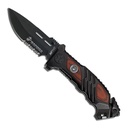
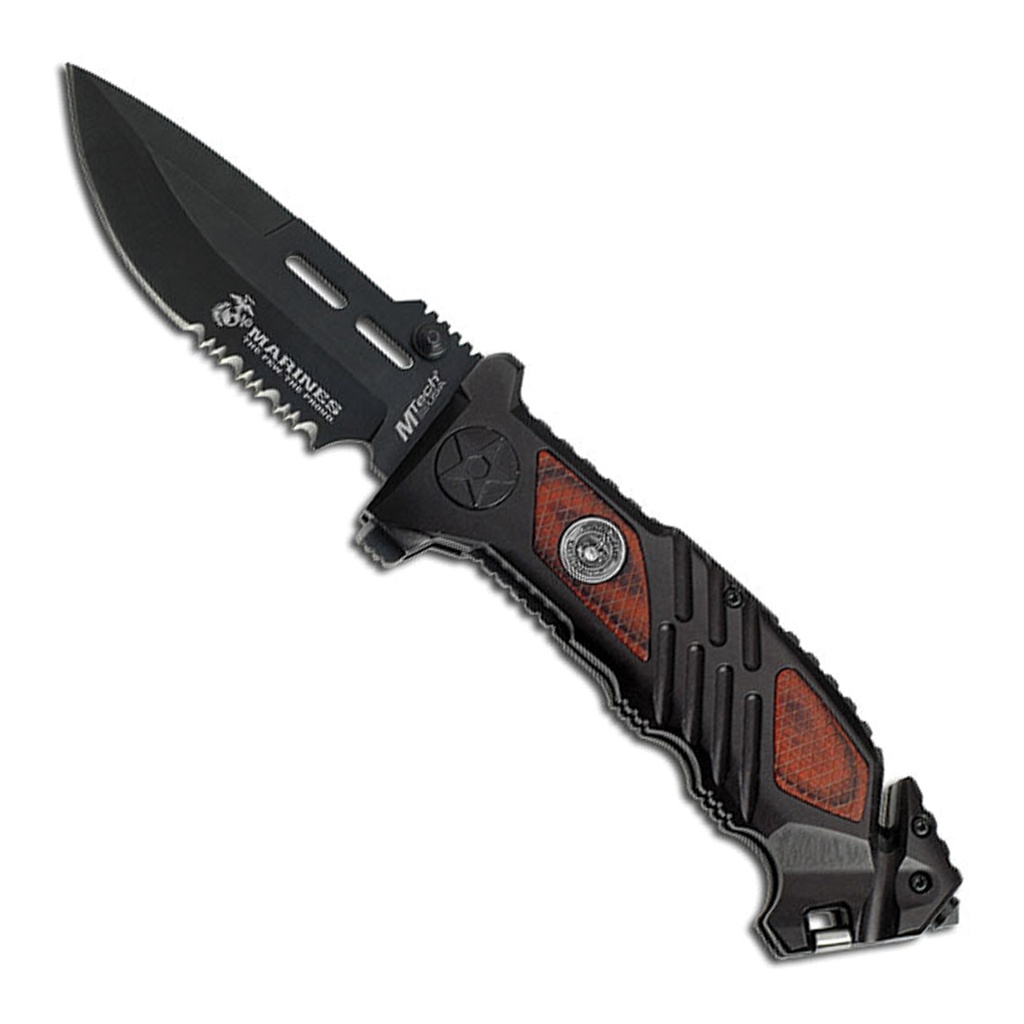
This spring-assisted folding knife blends Marine-inspired rescue features with everyday practicality. A black matte 440 stainless partially serrated blade snaps open fast, while a liner lock holds it secure. Brown pakkawood inlays add warmth and control to the textured handle. A glass breaker and seat belt cutter turn it into a capable emergency tool, with a pocket clip for steady EDC carry. At 5 inches closed and 9 inches overall, it’s built for those who appreciate service heritage and want a rescue-ready knife in their pocket.
What This Spring-Assisted Rescue Knife Actually Does
The Honor Guard Rescue Assisted Knife - Brown Pakkawood is built as a practical, duty-inspired everyday carry knife with real rescue features, not a fantasy prop. You get a spring-assisted folding blade that opens quickly with one hand, a solid liner lock that keeps it in place under pressure, and two emergency tools — a glass breaker and seat belt cutter — integrated into the handle. It’s sized and shaped for reliable pocket carry, with enough blade to do real work and enough control to use it safely.
Anchorpoint on the Belt: A Practical EDC Folding Knife
This assisted opening knife is designed as a working EDC tool first and a tactical-style piece second. At 5 inches closed and 9 inches overall with the blade deployed, it sits in that useful middle ground: large enough to handle cutting tasks and emergency use, but still practical for daily pocket carry.
The partially serrated drop-point blade in black matte 440 stainless steel gives you two cutting zones: a plain edge for controlled slicing and a serrated portion that bites through tougher materials like rope, webbing, or heavy packaging. That’s exactly what you want in a glovebox, on-duty, or everyday carry knife that might be called on to cut a stuck belt or stubborn cord.
How the Spring-Assisted Mechanism Really Works
Unlike a fully automatic knife, this is a spring-assisted folding knife. That means you start the opening movement manually — using the thumb slot or opening cutout in the blade — and an internal spring takes over to snap the blade the rest of the way open. You stay in control, but the deployment is fast and consistent once you’ve practiced a bit.
A liner lock engages when the blade is fully open, bracing the blade against closing during use. That lock type is widely used because it’s simple, reliable, and easy to operate one-handed: just push the liner aside with your thumb and fold the blade closed. For real-world carry, that balance of speed, simplicity, and familiarity matters more than any tactical buzzword.
Build Quality That Holds Up to Daily Carry
The Honor Guard Rescue Assisted Knife uses 440 stainless steel for the blade — a proven steel for everyday and duty-style knives. It resists rust reasonably well with normal care and takes a serviceable edge that’s easy to touch up with basic sharpening tools. This is a practical steel choice for someone who wants a blade they can maintain themselves.
Handle Design and Grip Confidence
The handle is where this knife sets itself apart. Black, textured scales are inlaid with warm brown pakkawood, giving both traction and a more traditional look. Pakkawood is a stabilized wood composite: it brings the feel of wood but adds durability and resistance to moisture compared to untreated natural wood.
Deep finger grooves, surface texturing, and jimping (those small ridges along the spine) are there for one reason: to keep the knife anchored in your hand. Whether you’re opening a box or using the glass breaker in an emergency, a secure grip matters more than any decorative detail.
Marine-Themed Aesthetic with a Purposeful Edge
The US Marines branding and emblem on the blade and handle, combined with the star-shaped pivot accent, give this assisted opening knife a clear service-inspired character. For some buyers, that Marine theme connects to personal experience. For others, it simply signals a duty-ready mindset — gear chosen for work, not for show. The look reinforces the intended role: a rescue-capable EDC knife that feels at home in a patrol car, on a duty belt, or in a prepared citizen’s pocket.
Rescue Features: Glass Breaker and Seat Belt Cutter
Two details transform this from a standard spring-assisted knife into a rescue-oriented tool. At the pommel, a pointed glass breaker gives you a focused impact point for striking tempered glass — think side windows on vehicles — in an emergency. Deploying it correctly means striking near a corner of the glass, with firm, controlled force, while keeping your support hand well clear.
Just ahead of the glass breaker, an integrated seat belt cutter provides a protected, hook-style cutting edge. Slide the trapped belt or strap into the hook and pull; the recessed blade bites into webbing while keeping the cutting edge partially shielded from fingers and nearby occupants. In a confined space, that design is much safer than swinging a full open blade blindly.
Carry Reality: How This Assisted Knife Rides Day to Day
Weighing in at a bit over 7 ounces and measuring 5 inches closed, this is a substantial spring-assisted folding knife. It feels like a piece of real equipment, not a featherweight. A metal pocket clip on the reverse side anchors it to a pocket, belt, or gear panel so it rides consistently in the same place — which is critical if you ever need it when stress is high.
The size and weight make the most sense for people who are comfortable with a more robust EDC: security personnel, night shift workers, first responders, and anyone who prefers a knife that feels solid in hand. For glovebox or vehicle-mounted carry as an emergency tool, that extra heft is an asset, not a drawback.
What People Ask Before Buying a Stun Gun for Protection
Even though this product is a spring-assisted rescue knife, a lot of the same practical questions that people ask about a stun gun for self defense show up here too: effectiveness, build quality, legality, and how to carry it so it’s genuinely useful under stress. Those concerns translate directly into knife selection — just with a different tool and use case.
How effective are stun guns for self defense?
Effectiveness depends on three main factors: contact time, where you place the stun gun, and the device’s electrical current (amperage), not just advertised voltage. A solid stun gun for self defense can disrupt muscle control and create a pain barrier if you maintain firm contact on major muscle groups or nerve-rich areas for several seconds. They are close-contact tools, not distance weapons, so they work best when paired with movement, verbal commands, and a plan to disengage. Just like carrying a rescue knife, training and realistic expectations matter more than box claims.
Does voltage or amperage matter more in a stun gun?
Voltage sells units; amperage stops people. Most “million volt” marketing is theater — you only need enough voltage to jump the gap between electrodes. Once that arc is made, amperage (current) and contact time determine how much disruption the stun gun actually causes. A well-built stun gun for self defense will focus on safe but effective current, reliable contact points, and a battery that can sustain output, not inflated voltage numbers on the packaging.
Is this stun gun legal to carry in my state?
Stun gun laws vary by state and sometimes by city. Some locations treat a stun gun for personal protection like any other self-defense tool with minimal restrictions; others require permits or ban them entirely. The only responsible approach is to check your state statutes and local ordinances before you buy or carry. The same goes for knives: length limits, assisted opening rules, and where you can legally carry change by jurisdiction. When in doubt, look up your state’s weapon laws or speak with a knowledgeable local authority.
Carrying with Competence: Knife and Stun Gun Mindset
Whether you carry a rescue-ready assisted knife like the Honor Guard or a stun gun for self defense, the fundamentals of responsible protection are the same. Choose gear that’s reliable, that you can deploy under stress, and that fits your daily life. Learn how it works before you trust it. Practice drawing and using it safely, and understand the legal framework where you live.
This spring-assisted folding knife gives you a capable cutting tool, emergency glass breaker, and seat belt cutter in one package, with a Marine-themed, duty-ready design. Paired with realistic training and a calm, prepared mindset, it fits into a broader personal protection plan built on competence, not hype.
| Blade Length (inches) | 3.75 |
| Overall Length (inches) | 9 |
| Closed Length (inches) | 5 |
| Weight (oz.) | 7.12 |
| Blade Color | Black |
| Blade Finish | Matte |
| Blade Style | Drop Point |
| Blade Edge | Partial-Serrated |
| Blade Material | 440 Stainless Steel |
| Handle Finish | Anodized |
| Handle Material | Pakkawood |
| Theme | Marine Theme |
| Safety | Seat belt cutter |
| Pocket Clip | Yes |
| Deployment Method | Spring-assisted |
| Lock Type | Liner lock |