Midnight Skullguard Self-Defense Push Dagger - Black
10 sold in last 24 hours
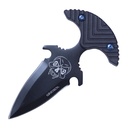
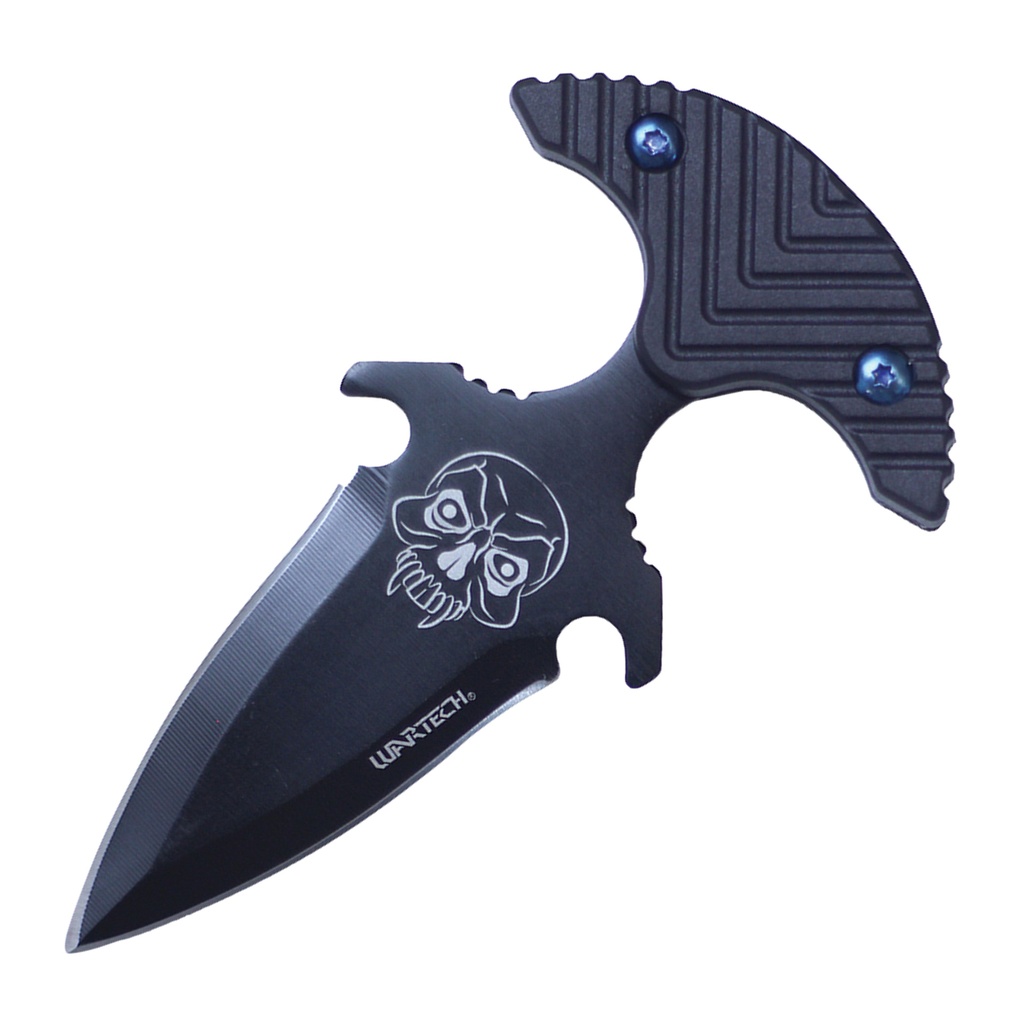
The Midnight Skullguard Self-Defense Push Dagger - Black is built for close control, not show. Its blackout double-edge spear point and bold skull graphic pair with a textured T-handle that locks into your grip for instinctive, straight-line thrusts. Stainless steel construction and a nylon sheath keep this push dagger ready for discreet carry on a belt or in a bag. For buyers who want a compact self-defense knife that feels decisive and secure in the hand, this design tells its story at a glance.
What the Midnight Skullguard Self-Defense Push Dagger Actually Does
The Midnight Skullguard Self-Defense Push Dagger - Black is a compact close-quarters self-defense knife designed for one thing: controlled, straight-line power from a secure grip. This isn’t a fantasy piece or a wall-hanger. It’s an 8-inch fixed blade push dagger built to sit low in its nylon sheath until you need a decisive option at arm’s length.
Instead of trying to be a general-purpose utility knife, this push dagger specializes in retention and leverage. The T-handle nests between your fingers so the blade tracks with your natural punching motion. That makes it a serious tool for personal protection buyers who understand that in a self-defense situation, grip security and simple mechanics matter more than flashy features.
How a Push Dagger Works in Close-Quarters Self Defense
A push dagger like the Midnight Skullguard is all about biomechanics. You’re not swinging a long blade or worrying about edge alignment on a slash. You’re using a neutral, almost instinctive motion: think short, straight-line pushes from your shoulder and body weight, with the handle locked into your palm.
The double-edge spear point blade on this self-defense push dagger is symmetrical, so there’s no “right side” to align. Under stress, that matters. If you can close your hand around the T-handle, the blade is already oriented correctly. The finger guard shape and the textured synthetic handle help keep your hand from sliding, even if your grip isn’t perfect because adrenaline is high.
In practical terms, that means this self-defense dagger is designed for very close range—inside arm’s length—where fine motor skills start to degrade. It gives you a simple, repeatable motion rather than a technique-heavy tool that assumes training you might not have.
Build Quality: What Makes This Push Dagger Reliable
The Midnight Skullguard Self-Defense Push Dagger - Black uses a stainless steel fixed blade with a blackout matte finish and a bold white skull graphic. The skull-forward design is obvious, but under that artwork the practical details are what matter for personal protection:
- Fixed blade construction – no moving parts, pivots, or springs to fail under pressure.
- Double-edge spear point profile – optimized for penetration and straight-line thrusting rather than slicing tasks.
- Full tang into the T-handle – the steel extends into the handle, secured with blue anodized screws for structural integrity.
- Textured synthetic T-handle – grooves and contouring improve retention and reduce slip in a tight grip.
For a self-defense tool at this size and price point, stainless steel is a practical choice: it’s corrosion-resistant enough for typical belt or bag carry, holds an edge decently, and is easy to maintain. You’re not buying a safe queen; you’re buying a push dagger that can ride in a sheath without demanding constant attention.
Carry Sheath and Discreet Deployment
This push dagger ships with a nylon sheath that covers the blackout blade and skull graphic fully, so you’re not advertising what you’re carrying. Nylon is light, durable, and flexible enough to mount on a belt or tuck into a bag or gear panel. For self-defense buyers, that means two things: the dagger is protected from casual contact, and your fingers find the T-handle first when you reach for it.
The straight, compact profile of the sheath supports vertical belt carry or stash-and-draw from a bag pocket. Either way, your hand closes over the T-handle in a natural fist, ready for a clean pull.
Grip Security Under Stress
In real self-defense situations, adrenaline compresses fine motor skills. The Midnight Skullguard’s T-handle and deep grooves are designed to keep setup simple: fingers slide around the handle, knuckles seat against the guard, and the blade extends in line with your forearm. There’s no flip, no liner lock, no orientation check—just a straightforward, locked-in punch grip.
Why This Push Dagger Works as a Personal Protection Companion
Choosing a self-defense push dagger isn’t about looking aggressive; it’s about having a tool that fits your reality. The Midnight Skullguard’s 8-inch overall length hits a useful middle ground. It’s large enough to give real reach and leverage, but compact enough to conceal in its sheath without printing loudly under normal clothing.
The blackout matte finish cuts down glare and visual noise. The skull art is bold when drawn, but disappears in carry. That makes it a viable option for people who want a distinctive piece that doesn’t scream for attention until it’s actually in hand.
For security personnel, night-shift workers, or anyone who regularly moves through parking lots, alleys, or isolated workspaces, this self-defense dagger fills a specific role: a close-quarters backup tool that doesn’t depend on batteries, moving parts, or precise technique. You either have it and can grip it, or you don’t. That binary simplicity is often what you want in a worst-case scenario.
How to Integrate This Push Dagger into Your Everyday Protection Plan
On its own, no knife—or any single tool—is a complete self-defense plan. The Midnight Skullguard Self-Defense Push Dagger is best thought of as one part of a layered approach that might also include awareness, avoidance, verbal skills, and possibly non-lethal options.
If you carry this push dagger for personal protection, a few practical habits make a difference:
- Consistent carry position – choose one spot (belt side, inside a bag compartment) and keep it there so your hand doesn’t have to “search” under stress.
- Dry practice drawing – with the push dagger sheathed and in a safe environment, rehearse reaching, gripping the T-handle, and establishing a strong stance.
- Respectful storage – when not carried, keep it sheathed and stored securely, especially around children or untrained users.
Thinking this way—systematically, like testing any other piece of gear—turns a cool-looking dagger into a known, familiar tool you can actually access and control when it counts.
What People Ask Before Buying a Stun Gun for Protection
How effective are stun guns for self defense?
Stun guns, when we’re talking honestly, are contact tools: they must touch the attacker to do anything. Their effectiveness comes from delivering enough current (amperage), over enough contact time, to disrupt muscular control or at least create a pain response that lets you break contact and escape. A fraction of a second might cause pain and flinch, while sustained contact can lead to loss of balance or temporary incapacitation.
Compared to a self-defense push dagger like the Midnight Skullguard, a stun gun is generally considered a less-lethal option, but it’s more dependent on battery charge, electrode placement, clothing thickness, and your ability to maintain contact. Both tools have roles; the key is understanding that stun guns aren’t magic wands—they’re close-range devices whose success depends on real-world factors, just like any other self-defense gear.
Does voltage or amperage matter more in a stun gun?
Voltage numbers in stun gun marketing are mostly theater. You’ll see “millions of volts” thrown around because the big number sounds impressive. In practical self-defense terms, voltage mainly affects how easily the spark jumps across gaps or through clothing. Once that barrier is crossed, it’s current—amperage—that does the actual work on the body’s nervous and muscular systems.
A realistically effective stun gun focuses on safe but meaningful amperage output, electrode design, contact area, and reliable battery performance. Those are the factors that drive practical self-defense effectiveness, not the headline voltage claim. The same gear mindset that helps you evaluate a self-defense push dagger’s steel, grip, and sheath should guide how you look at stun gun specs: ignore hype, prioritize function.
Is this stun gun legal to carry in my state?
Stun gun legality in the United States is a patchwork of state and local rules that change over time. Some states treat stun guns like other self-defense tools with minimal restrictions; others impose age limits, permitting, or outright bans in certain cities or for specific locations like schools or government buildings.
The practical approach is straightforward: check your state laws, then drill down to city or county ordinances. Look for terms like “electronic control device,” “conducted energy weapon,” or “stun gun” in the statutes. If you’re already carrying a self-defense push dagger like the Midnight Skullguard, you should apply the same discipline to your stun gun research—verify legality from current sources rather than relying on assumptions or outdated forum posts.
Carrying with Clarity and Confidence
Whether you’re evaluating the best stun gun for personal protection or choosing a dedicated self-defense push dagger, the mindset should be the same: understand what the tool can do, what it can’t, and what it demands from you. The Midnight Skullguard Self-Defense Push Dagger - Black is honest about its role. It’s a compact, fixed blade designed for close control, secure grip, and straightforward mechanics when things are already too close for comfort.
Pair that with disciplined carry habits, basic self-defense training, and a realistic understanding of your environment, and you end up with something more valuable than any marketing claim: calm, informed readiness. The gear becomes the extension of a plan, not a talisman. That’s where personal protection tools—whether a stun gun or a push dagger—actually earn their keep.