
Nightwatch Discreet Impact Control Slapper - Black Leather
11 sold in last 24 hours
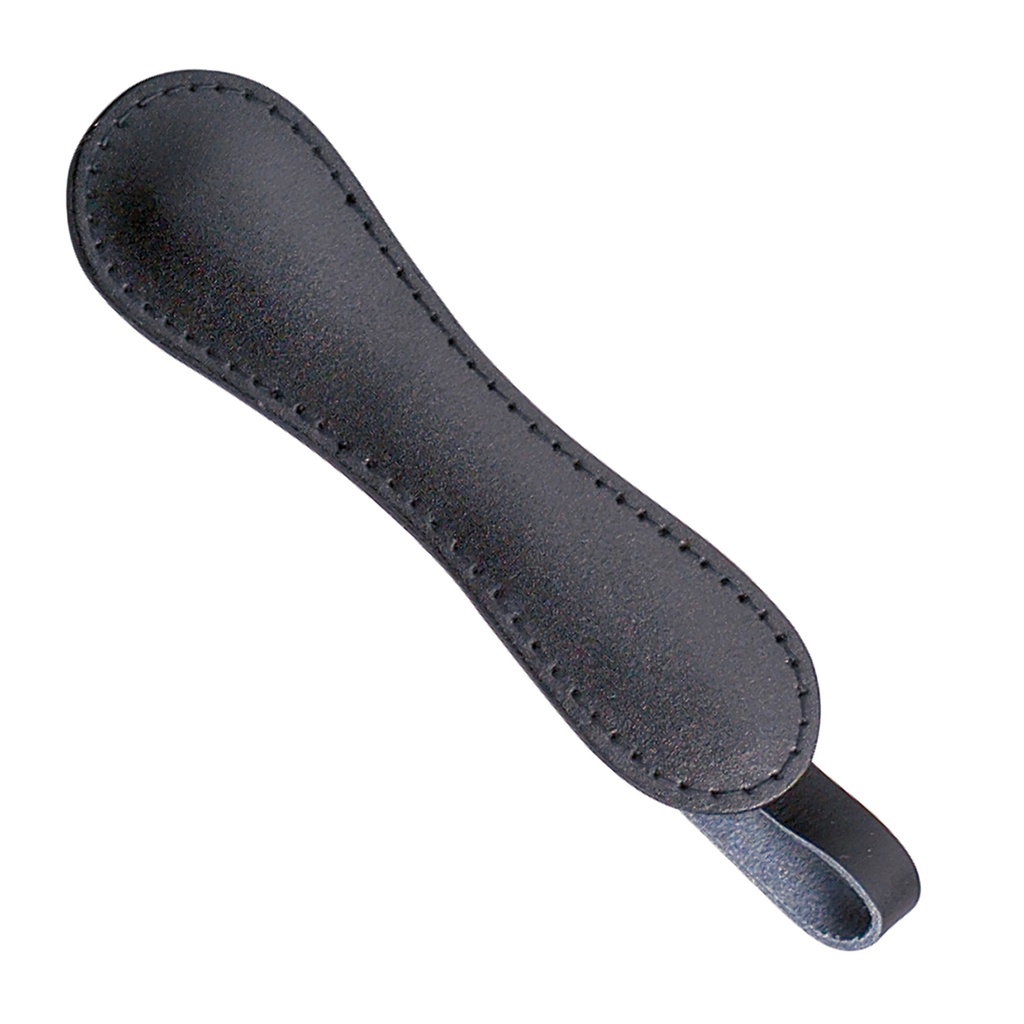
The Nightwatch Loop-Control Leather Slapper is a classic impact tool built for quiet, confident control. At 8.5 inches, it fills the palm without printing, while the stitched black leather and curved contact face keep energy focused where it counts. The integrated loop handle locks it into your grip for retention under movement. Discreet in appearance but purpose-built in feel, this leather slapper suits security work, night-shift carry, or anyone who prefers a simple, low-profile defensive option over flashy gear.
What This Leather Slapper Actually Does for Personal Protection
The Nightwatch Loop-Control Leather Slapper is not a gadget and not a toy. It’s a compact impact tool modeled on traditional law-enforcement saps—built to concentrate force, stay in your hand, and give you a simple, reliable option for personal protection when space and discretion matter. At 8.5 inches with a curved contact face and wrist loop, this leather slapper trades drama for control: it’s about putting focused impact exactly where you intend, while staying low-profile in everyday carry.
Why Choose a Slapper for Personal Protection Instead of a Stun Gun?
Many people start their self-defense search with a stun gun for self defense because that’s what the ads push. But impact tools like this leather slapper solve a different problem: no batteries, no electronic failure points, no worry about amperage or voltage, and no need for prolonged contact. If you’re in tight quarters, working security, or moving through parking lots and stairwells, a compact slapper offers immediate, mechanical reliability—if you can close your hand around it, it works. That makes it one of the best tools for personal protection when simplicity and dependability are your priorities.
How a Leather Slapper Actually Works in Self-Defense
A leather slapper is a focused-impact tool. The wider, curved striking end is designed to spread the contact just enough to avoid cutting, while still concentrating energy far more than an open hand or fist. You’re not swinging wildly; you’re delivering short, controlled strikes to create pain, distraction, and compliance so you can disengage or take control.
Unlike a stun gun for self defense, which depends on proper electrical contact and often sustained contact time, a slapper depends on proper targeting and body mechanics. You get the most from it when you:
- Keep the tool close to the body rather than windmilling it
- Use short, direct strikes rather than big, telegraphed swings
- Target muscles, limbs, or bony areas instead of the head
- Combine impact with movement—creating space to escape
This is where a compact 8.5-inch design shines: it’s easy to anchor in a solid grip and hard for someone to strip from your hand when used with the wrist loop.
Nightwatch Loop-Control Leather Slapper Protection Effectiveness
Effectiveness in personal protection isn’t about looking intimidating; it’s about what you can deliver under stress. This leather slapper’s design choices all support that:
- Curved contact face to keep impact focused and predictable
- Compact 8.5-inch length that stays controllable in tight spaces
- Loop handle that anchors the tool and resists being stripped
- Flat, palm-filling profile that encourages a secure, consistent grip
- Black leather exterior that looks discreet, not provocative
This isn’t about swinging harder; it’s about delivering enough pain and disruption to break an assault’s momentum and get you a window to move. In the same way amperage matters more than voltage in a stun gun, control matters more than raw force in an impact tool. This slapper is engineered on the control side of that equation.
Build Quality You Can Feel
Good personal protection tools feel intentional in the hand. Here, the stitched perimeter gives the slapper structure and durability, keeping the internal weight stable so the striking face behaves consistently over time. The leather exterior offers just enough texture to stay seated in your grip without catching on clothing as it’s drawn from a pocket or bag.
There are no moving parts, no electronic guts, and nothing to charge. That simplicity is the build-quality advantage: maintenance is essentially inspection—check the stitching, check the loop, and you’re ready to carry.
Carry and Deployment in Real-World Use
For practical self-defense, how you carry a tool matters as much as what it can theoretically do. This leather slapper is short enough to ride in a jacket pocket, duty vest, or bag organizer without printing aggressively. The flat profile lies against the body, while the loop can be hooked over a finger as you casually carry it in-hand when moving through higher-risk areas like parking lots or loading docks.
Under stress, deployment needs to be one simple motion: hand closes, tool comes out, loop slides over wrist, and you’re immediately in a workable grip. That beats fumbling with switches or safety buttons in the dark.
What People Ask Before Buying a Stun Gun for Protection
How effective are stun guns for self defense?
Stun guns can be effective for self defense in specific conditions: you must get good contact on the attacker’s body, maintain that contact for long enough, and have a device that delivers adequate current (amperage), not just impressive-sounding voltage numbers. They’re best at creating pain and disruption at close range, not at instantly “dropping” someone like in the movies.
That’s why many security professionals and night-shift workers carry layered tools—a stun gun for self defense if they’ve trained with it, plus a simple impact option like this leather slapper as a no-battery, no-fumble backup. The more you depend on electronics, the more you need a mechanical option to cover failure points.
Does voltage or amperage matter more in a stun gun?
Voltage gets all the marketing headlines, but amperage is what matters for real-world effectiveness. High voltage is mainly about piercing clothing and skin resistance; the actual disruptive effect on the nervous system comes from the current. A low-current device can claim “millions of volts” and still deliver very little functional stopping power.
By contrast, a leather slapper sidesteps that entire issue. There are no voltage or amperage specs to decode—its effectiveness comes from mass, leverage, and your ability to place controlled strikes. That honesty is why many serious protection buyers look beyond voltage claims and consider simple impact tools alongside their electronic options.
Is this stun gun legal to carry in my state?
With stun guns and impact tools alike, legality depends heavily on your jurisdiction. Some states regulate or restrict electronic stun guns; others have specific rules around batons, saps, and similar impact devices. This Nightwatch Loop-Control Leather Slapper falls into the impact-tool category, not the stun gun category, so you’ll want to check local laws on batons, slappers, or saps specifically.
The practical approach is straightforward: look up your state and city ordinances, search for terms like “impact weapon,” “billy,” “sap,” or “slapper,” and, if you’re in a gray area, talk with a local attorney or knowledgeable firearms/self-defense instructor. If you’re working in security, also check your employer’s policy—some require specific training or certification for impact tools.
Carrying This Leather Slapper with Confidence
Real personal protection isn’t about owning the most dramatic-looking tool; it’s about carrying something you understand and can actually use. The Nightwatch Loop-Control Leather Slapper rewards simple, consistent practice: drawing from your usual carry location, establishing a solid grip, and delivering short, direct strikes while creating space to break contact.
Whether you pair it with a stun gun for self defense or carry it as your primary impact tool, the value here is reliability. No batteries to charge, no power switch to find in the dark—just a discreet, palm-sized slapper that does exactly what it looks built to do. Learn how it moves, respect what it can and cannot do, and it becomes a calm, low-profile part of your everyday readiness rather than a piece of gear you hope you never have to figure out on the fly.