Operator Skin Precision Butterfly Knife - Black/Silver
14 sold in last 24 hours
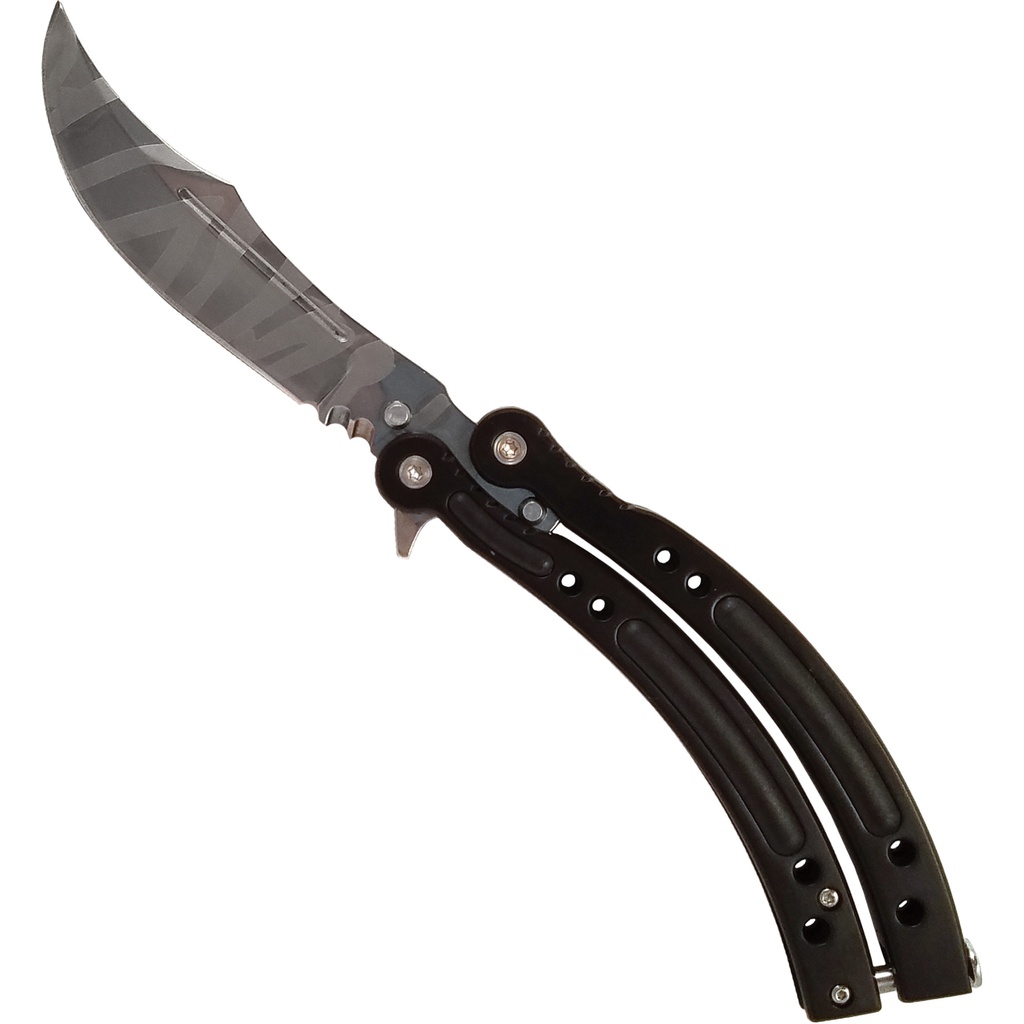
The Operator Skin Precision Butterfly Knife brings video game style into real-world flipping. Its 3.375-inch trailing-point blade and matte black steel handles echo the clean lines of in-game skins while staying practical enough for daily carry. At 9.625 inches open with balanced weight and smooth pivots, it feels stable for control work yet fast enough for flow tricks. Pair it with a trainer for safer practice, then swap to this live-edge version when your skills catch up.
What the Operator Skin Precision Butterfly Knife Actually Does Well
The Operator Skin Precision Butterfly Knife - Black/Silver looks like it came straight out of a game loadout screen, but it’s built to flip, cut, and carry in the real world. At 9.625 inches overall with a 3.375-inch trailing-point blade, it’s long enough for confident control without feeling clumsy in the hand. The matte black steel handles and silver blade give you that tactical, skin-inspired look while still functioning as a solid everyday butterfly knife.
This isn’t a stun gun for self defense or an impact weapon. It’s a live-edge butterfly knife designed for people who enjoy flipping, collecting, and carrying a knife that feels like a real-world version of their favorite digital skins. The value here is balance, build, and visual appeal—not hyped-up protection claims.
How This Butterfly Knife Works in Real Use
A butterfly knife (also called a balisong) is all about how it moves. The dual handles rotate around the pivots, allowing you to open and close the knife through controlled flips instead of a simple thumb-stud or assisted mechanism. On the Operator Skin Precision Butterfly Knife, the pivots and hardware are visible and accessible, which matters for both tuning and longevity.
Closed, the knife sits at 6 inches—compact enough for pocket or pack carry. Open, the 3.375-inch trailing-point blade gives you a long, sweeping edge with an aggressive belly. That curve makes it efficient at slicing tasks and gives a dramatic, game-style profile when displayed or used for performance flipping.
Balanced for Flipping and Control
The length and steel handle construction give this butterfly knife a predictable, slightly forward-biased feel. That matters if you’re practicing openings, behind-the-back transfers, or simple index-finger rolls. It has enough weight to carry momentum but not so much that you feel like you’re fighting the knife during direction changes.
Blade Geometry with a Purpose
The trailing-point blade isn’t just for looks. The pronounced belly increases the usable cutting edge, and the tip rides high, which can make precision point work easier when you’re doing detailed slicing. Combined with the matte finish and striped pattern, it reads as a performance blade that still does ordinary cutting tasks without fuss.
Build Quality Details That Actually Matter
With any butterfly knife, the real test is whether it loosens up, rattles apart, or binds after actual use. The Operator Skin Precision Butterfly Knife uses a dual-pivot construction with visible screws, making it serviceable and adjustable if you’re the type who likes to fine-tune tension.
Steel Handles with Cutouts for Grip and Flow
The matte black steel handles are cut with oval insets and round holes. Those design choices aren’t just cosmetic—they reduce a bit of weight, provide reference points for grip, and give the knife a more agile feel in motion. The matte finish also helps with traction compared to slick, polished metal, especially if your hands get sweaty during long practice sessions.
Secure Latch and Tang Control
A rear latch lets you lock the handles closed for pocket carry or open for display. The extended tang flipper section at the base of the blade offers a reliable contact point during certain openings and closures, and spine jimping near the tang gives your thumb a place to bite in when you want deliberate, controlled moves instead of fast spins.
Carry Reality: Where This Knife Fits in Your Setup
In daily life, this butterfly knife functions as a hybrid: part collectible, part fidget tool, part cutting tool. The 6-inch closed length rides best in a pocket, bag, or pack rather than clipped on a waistband (there’s no pocket clip). That makes it more of a conscious carry item—you decide when it comes with you, and where you’ll use it.
For many buyers, this knife pairs well with a more straightforward EDC blade or a dedicated stun gun for self defense if personal protection is a concern. The butterfly knife is the piece you flip, show, and enjoy; the stun gun or other defensive tool is what you’d rely on for actual self-defense scenarios.
Effectiveness: Where This Knife Shines—and Where It Doesn’t
As a cutting and flipping tool, the Operator Skin Precision Butterfly Knife is effective because of its blade shape, balanced weight, and solid construction. The steel blade and handles give it enough durability for regular use and practice, and the live edge offers real cutting performance for everyday tasks like opening boxes, slicing cord, or light utility work.
As a self-defense tool, however, it’s not the most practical first choice. Butterfly knives take time and repetition to operate confidently under stress. A stun gun for self defense, a fixed blade, or even a simple, fast-deploying folder is usually more realistic if your priority is personal protection. This knife should be chosen primarily for skill-building, style, and collection value, not as your only defensive option.
What People Ask Before Buying a Stun Gun for Protection
Even though this product is a butterfly knife, many buyers shopping this category are also considering a stun gun for self defense. It’s worth answering the core stun gun questions clearly so you can make an informed protection plan that might include both tools.
How effective are stun guns for self defense?
A stun gun can be effective for self defense in specific circumstances, but it’s not a magic force field. It’s a close-contact tool—you have to get the stun gun directly on the attacker’s body and maintain contact, usually for 1–5 seconds, to create enough pain and muscle disruption to break their focus or drive them away. The more solid the contact and the higher the current (amperage), the more likely it is to do something useful.
What stun guns do well is create a window: a few seconds where the attacker is reacting to pain and involuntary muscle contractions instead of you. That window is for escape, not for “winning a fight.” If you’re choosing between this butterfly knife and a stun gun for self defense, understand that the stun gun is easier to use under stress but still requires distance management, targeting, and a plan to disengage.
Does voltage or amperage matter more in a stun gun?
Voltage sells stun guns; amperage makes them work. High voltage helps the electrical charge jump through clothing and skin, but once contact is made, it’s the current (amperage) and contact time that determine how much pain and muscle interference you actually get. That’s why serious self-defense instructors roll their eyes at “ten million volt” marketing claims.
When you’re evaluating a stun gun for self defense, look for:
- Honest amperage information or at least a reputation for real-world effectiveness
- Good contact area on the electrodes
- Reliable battery performance so output doesn’t sag
- A form factor you can grip securely under stress
If a product shouts voltage and hides everything else, assume it’s marketing first, protection second.
Is this stun gun legal to carry in my state?
Stun gun legality in the U.S. is state-specific and sometimes city-specific. Some states treat stun guns and Tasers much like other defensive tools with age restrictions; others require permits or restrict carry in certain locations like schools or government buildings. A few local jurisdictions still have bans or tight controls.
Before you buy a stun gun for self defense, check three layers:
- State law: Whether civilian possession and carry are allowed
- Local ordinances: City or county-level restrictions
- Carry context: Rules for schools, courthouses, airports, and workplaces
For butterfly knives, the same principle applies. Some states allow them freely, others restrict blade length, and a few classify balisongs under switchblade-style laws. Always verify current regulations where you live and where you travel.
Putting It All Together: A Realistic Role in Your Kit
The Operator Skin Precision Butterfly Knife - Black/Silver is best thought of as a skill and style piece first, utility blade second, and only a distant third as a defensive option. It rewards practice with smooth, satisfying motion, and its game-inspired look makes it an instant conversation piece in any collection.
If personal safety is a serious concern, pairing this knife with a dedicated stun gun for self defense—or another straightforward defensive tool—gives you a more complete setup. The stun gun handles immediate, close-contact protection; the butterfly knife handles skill, style, and everyday cutting jobs. That division of roles is how professionals think about gear: each tool does what it’s actually good at.
Walk away from the hype, understand what each tool can really do, and you’ll build a carry setup that matches your reality instead of the marketing copy. That’s how you end up confident, prepared, and still able to enjoy the gear you carry.
| Blade Length (inches) | 3.375 |
| Overall Length (inches) | 9.625 |
| Closed Length (inches) | 6 |
| Blade Color | Silver |
| Blade Finish | Matte |
| Blade Style | Trailing Point |
| Blade Edge | Plain |
| Blade Material | Steel |
| Handle Finish | Matte |
| Handle Material | Steel |
| Theme | Video Game |
| Latch Type | Latch |
| Is Trainer | No |