Phantom Arc Precision Throwing Axe - Earth-Tone Grip
9 sold in last 24 hours
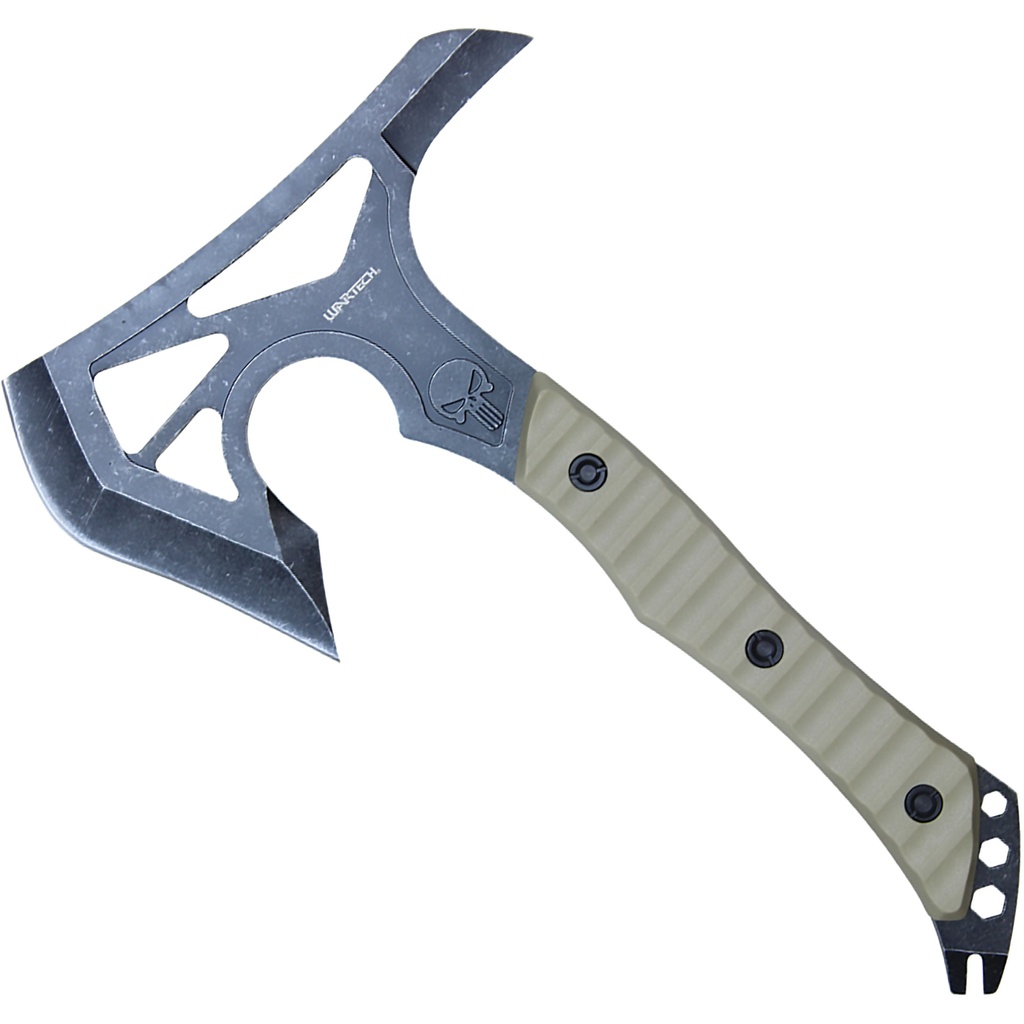
A good throwing axe doesn’t fight you in the air. The Phantom Arc Precision Throwing Axe is balanced through its skeletonized head, full tang, and earth‑tone textured grip so it tracks cleanly from release to target. The wide bearded edge bites and sticks, while the forked steel pommel and stonewashed finish shrug off range abuse. A nylon sheath makes it easy to pack for league nights, backyard practice, or any display that calls for modern tactical style with real throwing performance.
Phantom Arc Precision Throwing Axe - Earth-Tone Grip
The Phantom Arc Precision Throwing Axe is built for people who actually throw, not just hang gear on a wall. The skeletonized head, full-tang construction, and textured earth-tone grip are all there for one reason: to give you a throwing axe that rotates cleanly, sticks consistently, and holds up to real practice sessions.
Why This Throwing Axe Feels Balanced in the Air
Balance is what separates a frustration piece from a range favorite. On this throwing axe, the wide bearded head is lightened with large cutouts and a circular void. That stripped weight is re-distributed through the full tang and handle, so the center of gravity lands in a predictable, repeatable spot along the grip. You feel that the first time you send it downrange.
Instead of an oversized, front-heavy camp axe pretending to be a thrower, this design trims steel where it doesn’t help the throw, leaving mass where it matters for rotation and impact. The result is a throwing axe that wants to fly flat, making it easier to dial in your distance and step count.
Head Design Built for Sticking, Not Show
The head shape is where most people first judge a throwing axe, but the real question is simple: does it bite and stay in the target? Here, the wide bearded edge offers a generous cutting surface, while the pointed beard and subtle top spike create multiple angles that can catch and hold in wood. That means slightly off-angle throws still have a chance to stick instead of bouncing out.
A stonewashed gray finish on the steel helps hide scuffs and range rash, so it keeps looking like a serious tool even after repeated impacts. The skeletonized cutouts are not just cosmetic—they reduce weight up front and tune the rotation, helping the throwing axe complete its arc cleanly instead of nosing over too early.
Full-Tang Strength You Can Abuse
This is a full-tang throwing axe: one continuous piece of steel runs from head to pommel. That matters when you’re putting it into targets all afternoon. Full-tang construction resists the handle loosening, cracking, or shifting that you see in cheaper, pinned wooden handles. The steel tang remains visible along the handle line, a constant reminder that the backbone of this tool is a single solid piece.
Forked Pommel for Secondary Tasks
At the rear, the forked steel pommel adds utility without compromising the primary purpose. It can serve as a light impact or pry point for camp chores or range setup tasks, and the exposed metal gives you a second contact area if you like to experiment with different grip positions or throwing styles. It also contributes to overall balance by adding measured weight at the tail.
Grip and Carry: Control from Release to Recovery
The earth-tone grip is more than a color choice. The textured, ribbed scales give your hand a consistent purchase, even when your palms are sweaty or you’re throwing in light rain. A grip that’s too slick forces you to clench, which ruins a smooth release; this one lets you keep a relaxed, repeatable hold so the throwing axe leaves your hand cleanly at the same point in the motion.
The muted tan color and black hardware lean into a modern tactical look, but they also make this throwing axe practical for outdoor or range environments where you don’t want something bright and flashy. When you retrieve it from the target or sheath, the texture and contour give you immediate orientation—edge direction is easy to feel, not just see.
Nylon Sheath for Range Days on the Move
A nylon sheath comes standard, so this throwing axe can travel safely to the backyard target, the league lanes, or a camp setup. The sheath covers the cutting edge and key contact points, protecting both the blade and whatever else rides in your bag. For anyone stocking a shop or range, that sheath is also a signal of completeness: the buyer walks out with a ready-to-carry setup, not a project that still needs accessories.
Who This Throwing Axe Is Really For
This design is aimed at practical throwers and shops that cater to them. If you want a wall-hanger with ornate engraving, this isn’t it. If you want a throwing axe you can take to the backyard, learn a consistent rotation, and then keep using as your groupings tighten up, this fits.
Backyard hobbyists will appreciate how quickly they can find a working distance. League throwers get a modern, tactical-styled option that still behaves predictably on the line. Retailers get a piece that looks aggressive enough to catch eyes but is honest about what it offers: a balanced, durable throwing axe built for use.
What People Ask Before Buying a Throwing Axe
How balanced should a throwing axe be?
For most throwers, a well-balanced throwing axe will rotate predictably with a relaxed, consistent throw. You’re looking for a center of gravity that doesn’t sit so far forward that the head drags through the air, but not so far back that it feels like a hammer on a stick. The Phantom Arc’s skeletonized head and full-tang design are tuned to land that middle ground, which makes it easier to adjust your distance and stick throws regularly.
Is a bearded head good for throwing?
Yes, a bearded head can be excellent for a throwing axe when the edge geometry is done correctly. The extended lower beard on this design increases the vertical zone that can bite into the target, giving slightly high or low throws more chance to stick. It also shifts some mass lower on the head, which can aid in stable rotation. What matters is that the beard is sharp enough to penetrate and that the overall profile doesn’t wedge out of the wood too easily—both boxes this axe checks.
Can I use this throwing axe for light camp or utility work?
While it’s purpose-built as a throwing axe, the full-tang steel, stonewashed head, and forked pommel do make it capable of light camp and utility tasks like splitting kindling, knocking in tent stakes, or minor prying. That said, if your priority is heavy chopping or sustained wood processing, a dedicated camp axe or hatchet is more efficient. Think of this as a throw-first, task-second tool: it holds up to real use, but its geometry is optimized for flight and sticking, not pure chopping power.
Practical Confidence Every Time You Step to the Line
A good throwing axe turns guessing into adjustment. With the Phantom Arc Precision Throwing Axe, you get a balanced head, full-tang durability, and a textured earth-tone grip that supports consistent throws instead of fighting them. The skeletonized design refines the rotation, the bearded edge supports solid sticking, and the nylon sheath makes carrying straightforward.
Whether you’re setting up a backyard target, walking into league night, or stocking shelves for customers who want tools they can actually use, this throwing axe offers something simple and valuable: predictable behavior. Once you learn how it moves, it rewards practice with cleaner arcs, tighter groups, and fewer surprises on impact.