Pocket Sentinel T-Grip Push Dagger - Green ABS
15 sold in last 24 hours
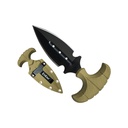
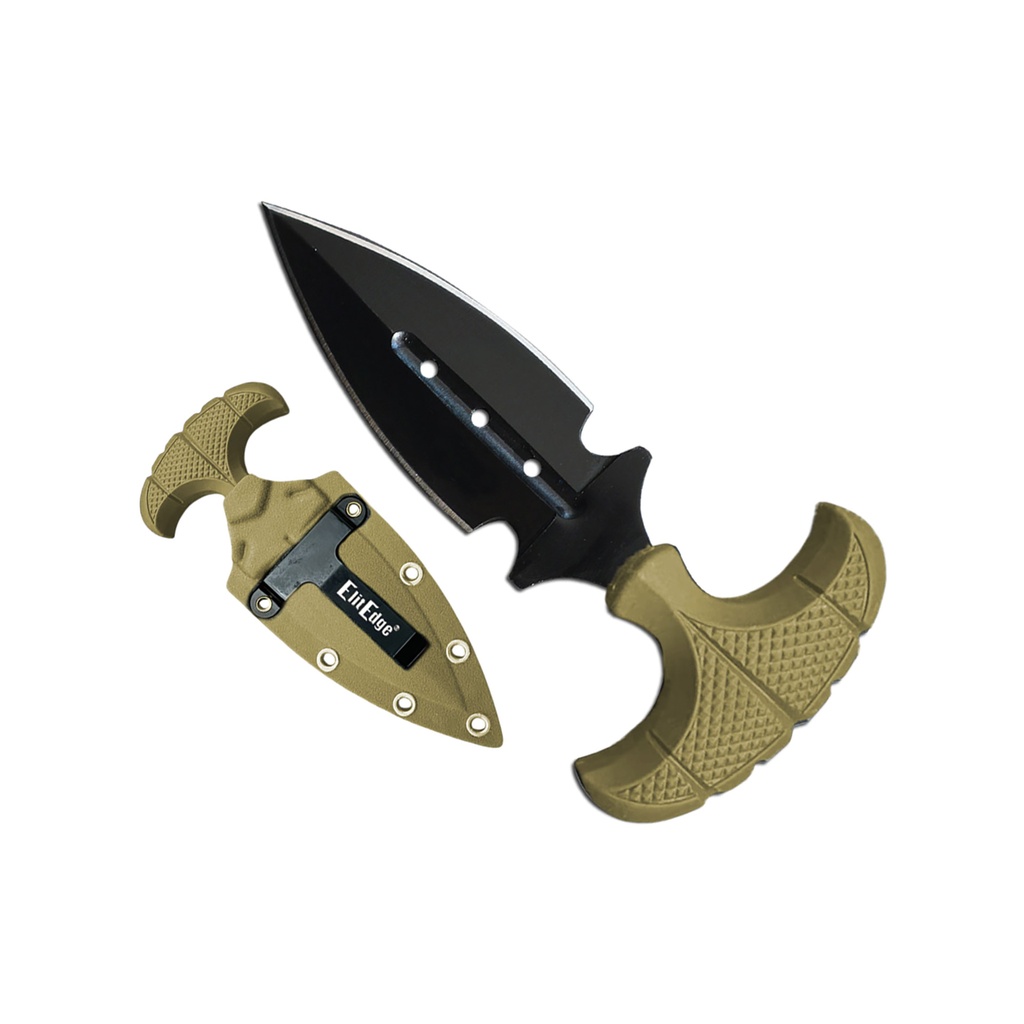
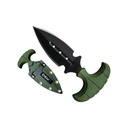
Moments decide outcomes; control decides you. The Pocket Sentinel T-Grip Push Dagger plants a textured green ABS handle in your palm and a black 440 stainless double-edge at the point of contact. Its slim ABS clip-case rides at the pocket’s edge, not buried in a bag, so draw and indexing stay simple under stress. At just 2.7 oz, this fixed push dagger feels steady, not bulky—built for close, directional power when you need a compact last-line defensive tool.
What This Push Dagger Is Actually Built To Do
The Pocket Sentinel T-Grip Push Dagger is designed for one job: controlled, close-quarters defense when you don’t have time or space for anything complicated. No springs, no moving parts, no gimmicks—just a fixed push dagger that locks into your palm and delivers directional force with as little wasted motion as possible.
Where a stun gun for self defense depends on battery charge, amperage, and contact time, this tool depends on grip, edge geometry, and how fast you can access it from its clip-case sheath. It’s a compact, last-line option for people who think about real personal protection rather than gear theater.
Design Breakdown: How This Push Dagger Works In Hand
This isn’t a display piece. Every visible detail on the Pocket Sentinel is pointed at secure handling under pressure. Understanding those details is what separates a random knife purchase from a deliberate defensive choice.
Locked-In T-Handle for Directional Control
The textured green ABS T-handle seats between your fingers with a natural fist grip. Instead of relying on finger holes or complicated ergonomics, it uses a straightforward T-frame and diamond-pattern texture so you can orient the blade by feel alone. That matters when your attention is on distance, angles, and exits—not on which way the blade is facing.
Ergonomic finger grooves help index your hand the same way every time, reducing the chance of slipping or twisting if your grip is wet, gloved, or rushed.
Fixed 440 Stainless Double-Edged Blade
The black 440 stainless blade is a fixed spear-point with a central ridge and double edges. Fixed means no deployment mechanism to fail—what you draw is immediately ready. 440 stainless is a proven, practical steel for defensive blades: corrosion-resistant enough for daily carry, tough enough for short, high-stress use, and easy to maintain with basic sharpening tools.
The double-edged profile and narrow spear point focus force in a small contact area. In stun gun language, you might call that maximizing "contact effectiveness"—but here it’s about mechanical penetration, not electrical current. The central ridge adds stiffness so the blade feels solid, not flimsy, when pressure runs straight through your fist.
Clip-Case Carry: Why Access Matters More Than Size
A defensive tool you can’t reach in time is just extra weight. This is where the Pocket Sentinel’s ABS clip-case sheath matters more than the blade length on a spec sheet.
Low-Profile ABS Sheath With Pocket Clip
The matching green ABS sheath tracks the blade closely, minimizing bulk. A black metal clip bolts to the sheath, giving you pocket or belt-edge carry without needing a separate rig. This keeps the push dagger riding consistently in one orientation so your hand learns exactly where and how to grab it.
For self defense, that consistency beats novelty every day. Instead of fumbling through a bag or fishing around a waistband, you index the clip, follow the sheath, and drive straight into a full grip.
Retention and Draw Under Stress
The sheath’s job is simple but critical: hold the push dagger securely during day-to-day movement, yet release cleanly when you commit to the draw. With this style of fixed push dagger, you want a clear, linear motion—no flips, no buttons. Thumb or finger on the sheath, pull, and the T-handle fills your palm.
Because the knife weighs only 2.7 oz, the clip doesn’t have to fight heavy leverage. That keeps the draw smooth and reduces the risk of pulling the entire sheath out with the knife when you’re in a hurry.
Push Dagger vs. Stun Gun for Self Defense
Many people shopping for personal protection bounce between a stun gun for self defense and a compact blade like this. The two tools work on completely different principles, and understanding that helps you decide what actually fits your reality.
A stun gun relies on electrical current to disrupt muscle control or at least create pain and hesitation. Its effectiveness is rooted in amperage, contact time, and placement—not the “million volt” numbers in marketing. You must stay in contact with your target, often longer than movies suggest, and batteries, switches, and safety mechanisms all have to work perfectly.
A push dagger like the Pocket Sentinel is mechanical, not electrical. There’s no battery to charge and no current to manage. Its effectiveness comes from leverage, edge sharpness, point geometry, and your ability to maintain distance and angles. It is also a lethal-force tool, which has serious legal and moral implications that stun guns sometimes avoid depending on jurisdiction and context.
Professionals often carry both: a non-lethal tool like a quality stun gun or spray for primary use, and a compact blade as a last-ditch, when-everything-else-fails option. If you think in layers of defense, this push dagger clearly belongs in the close-quarters, last-resort layer.
Real-World Use: Where This Push Dagger Fits in Personal Protection
Carrying the Pocket Sentinel T-Grip Push Dagger is less about fantasy scenarios and more about specific, realistic roles.
- Backup defensive blade when you already carry a primary folding knife or stun gun for self defense.
- Close-quarters option where space is limited—confined areas, tight hallways, or situations where long sweeping motions aren’t realistic.
- Strong-hand or off-hand carry thanks to the symmetrical T-handle, giving you flexibility if one hand is occupied or compromised.
This is not a multipurpose camp or utility knife. You buy a push dagger like this for a very narrow job: directional defensive pressure at extremely short range. The more clearly you understand that, the more responsibly—and effectively—you can integrate it into your self-defense plan alongside non-lethal options like pepper spray or a properly chosen stun gun.
What People Ask Before Buying a Stun Gun for Protection
How effective are stun guns for self defense?
Stun guns can be effective for self defense, but not in the movie way. Pain-compliance on a motivated attacker is unreliable; the real stopping power is in higher amperage models used with solid contact and a few continuous seconds on vital muscle groups or large nerve areas. Clothing thickness, the attacker’s physiology, and your ability to maintain contact all matter.
Compared to a fixed push dagger, a stun gun is generally considered a less-lethal option, but it also demands more hands-on control. Many instructors suggest pairing a stun gun for personal protection with good movement skills and a clear escape plan rather than expecting it to “drop” someone instantly.
Does voltage or amperage matter more in a stun gun?
Amperage matters more. Voltage is mostly marketing once you’re above the threshold needed to arc through clothing. High advertised voltage numbers—“millions of volts”—sound impressive but don’t tell you much about real-world effect.
What counts is controlled current (amperage), reliable contact points, and a battery that can deliver that current consistently. A well-built stun gun for self defense with realistic amperage and solid internal components will outperform a flashy “high-voltage” device with weak current delivery. Think of it like this push dagger: edge geometry and grip matter more than how aggressive the paint job looks.
Is this push dagger legal to carry in my state?
Push dagger laws vary widely by state, and sometimes by city or county. Some jurisdictions treat push daggers and similar concealed fixed blades as prohibited weapons; others allow them with blade-length limits or specific carry restrictions. In a few places, a stun gun for self defense is actually easier to carry legally than a push dagger.
Before you carry the Pocket Sentinel—or any comparable fixed push dagger—check your state statutes and, ideally, local ordinances. Look specifically for terms like “dirk,” “dagger,” “push knife,” and “concealed fixed blade.” When in doubt, consult an attorney familiar with weapons law in your area rather than relying on forum hearsay.
Carrying With Intention: Building a Realistic Protection Setup
Whether you choose a stun gun, a push dagger, or both, the mindset should be the same: simple, proven tools you’ve actually trained with, carried legally, and thought through in advance. The Pocket Sentinel T-Grip Push Dagger brings a compact, mechanical last-resort option to that mix—fixed blade, consistent grip, predictable draw.
If you pair it with a well-chosen stun gun for self defense, you get layers: a less-lethal, current-based tool up front and a close-quarters blade as a final backup. Learn your local laws, practice safe draw and indexing with an inert trainer if possible, and carry in the same place every time. That’s how practical personal protection moves from gear shopping to real capability.