Control-Link Wrist-Pin Stun Gun - Black
14 sold in last 24 hours
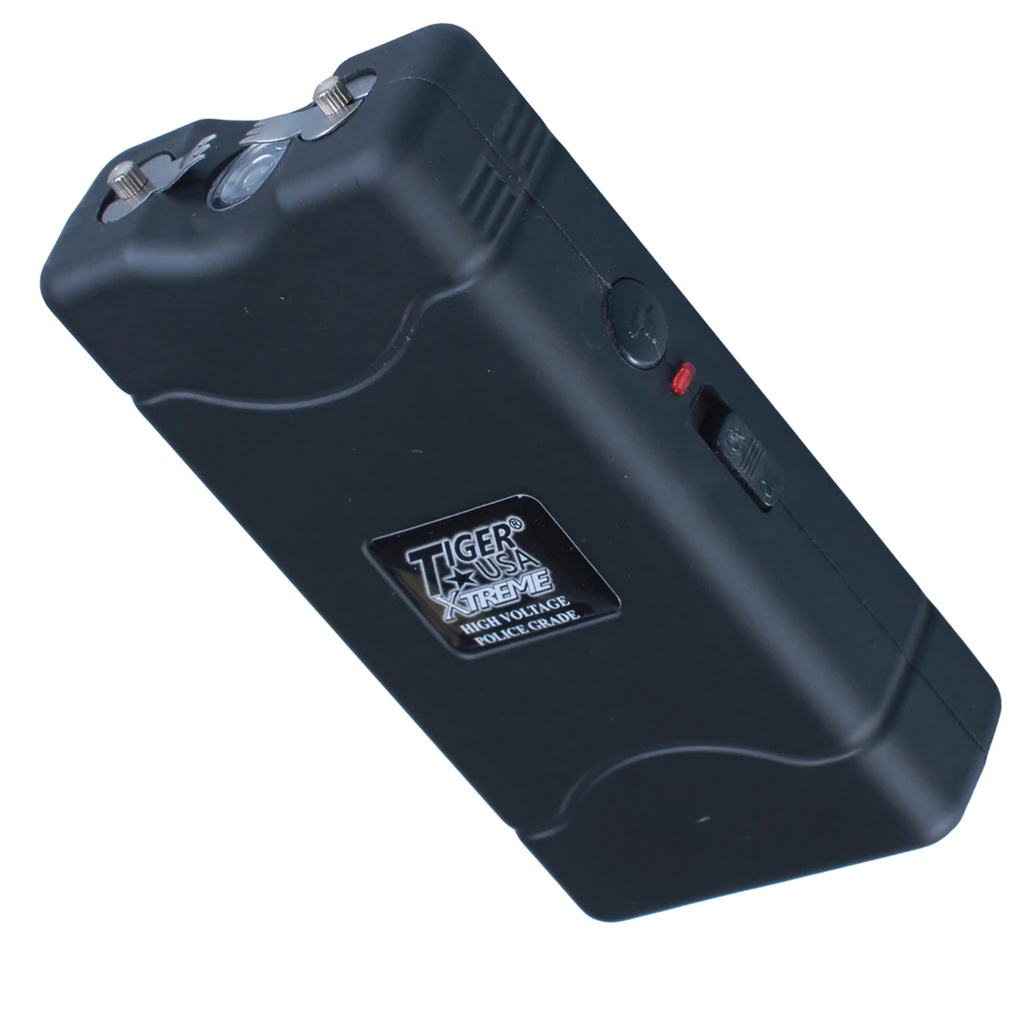
This stun gun for self defense is built around one critical idea: you keep control. The PulseGuard pairs a forward-facing flashlight with a wrist-strap disable pin that kills the stun function the moment it’s pulled away. A red indicator confirms when it’s armed, and the compact black body sits naturally in the hand for close-range personal protection. Instead of chasing marketing voltage numbers, this design focuses on contact, retention, and a simple control layout you can actually run under stress.
PulseGuard Disable-Pin Stun Gun for Self Defense: Built for Control, Not Hype
The PulseGuard Disable-Pin Stun Gun - Black is a compact, no-drama stun gun for self defense designed around one priority: you stay in control of the tool, even when the situation starts to slip. Instead of shouting about “millions of volts,” this personal protection device focuses on what actually matters in a real encounter—secure grip, reliable current delivery, and a disable-pin wrist strap that shuts the stun function off if someone rips it out of your hand.
How Do Stun Guns Work for Real-World Personal Protection?
To understand whether a stun gun is effective for self defense, you need the basics of how it works—without the marketing fog. A stun gun stores energy in its power source and releases it as a high-voltage, low-amperage electrical discharge across two metal contact points. When those contacts press firmly against an attacker, current passes through muscle tissue and the nervous system.
Voltage is mainly about how easily the current can jump through clothing or skin. Once you’re already making solid contact, amperage (current) and contact time matter far more than any “96 million volt” headline. In practical terms:
- Voltage helps the stun gun arc and bite through light clothing.
- Amperage is what actually affects muscle control and pain response.
- Contact time (how long you hold it on target) determines how much disruption you cause.
The PulseGuard is a close-range control tool. It will not “knock someone across a room,” but with firm contact on a major muscle group and a few seconds of discharge, it can create pain, distraction, and in many cases temporary muscular disruption—enough of a window to break contact and move to safety.
Why This Stun Gun for Self Defense Is About Retention and Control
Many people shopping for the best stun gun for personal protection worry about one realistic scenario: what if someone takes it away and turns it on me? The PulseGuard answers that directly with its disable-pin wrist strap. The lanyard attaches to your wrist; the pin locks into the stun gun body. If the device is snatched or dropped and the strap pulls free, the pin disconnects and the stun function is disabled.
In other words: if it leaves your hand, it stops working as a stun gun. That’s exactly the kind of control-focused design self-defense instructors like to see in an electronic self-defense tool.
Disable-Pin Wrist Strap: A Simple, Critical Safety Layer
The disable-pin wrist strap turns this from a generic stun gun into a more professional personal protection option. You don’t have to think about it under stress—if the strap is on your wrist, the system is active; if it’s pulled away, the internal circuit is cut. That reduces the risk of having your own stun gun used against you, a concern that often gets glossed over in marketing copy.
Red Armed Indicator and Straightforward Controls
The PulseGuard’s red indicator light clearly shows when the stun gun is armed and ready. Paired with a simple sliding switch and a single activation control, you don’t have to memorize a complicated sequence. Under adrenaline, simple is safer. You see the red light, you know the device is live; you press and make contact. That kind of clarity matters more than any printed voltage rating.
Build Quality and Carry Format: What Makes This a Reliable Stun Gun
For a stun gun for self defense to be worth carrying, it has to do three things consistently: ride comfortably, sit naturally in the hand, and fire when you need it. The PulseGuard checks those boxes with a compact rectangular profile, subtle grip contours, and a forward-facing flashlight that keeps the orientation obvious even in low light.
- Compact black housing – easy to stash in a bag, jacket pocket, or keep behind a counter without drawing attention.
- Forward-facing flashlight – lets you orient the stun gun correctly and illuminate what’s in front of you before you commit to contact.
- Minimal seams and solid body – fewer weak points, more confidence that it will hold up to daily carry.
You’re not buying a toy; you’re buying a personal protection tool. That means prioritizing a design that is simple, durable, and repeatable every time you draw and use it.
Carry Reality: How This Stun Gun Fits Into Daily Life
In real-world self defense, the best stun gun to carry is the one you actually have on you and can reach quickly. The PulseGuard’s compact, matte-black profile works well for:
- Night walks and commutes – slip it into a coat pocket with the lanyard on your wrist as you move through parking lots or side streets.
- Behind-the-counter security – store it in a consistent, reachable spot near a register where staff can grab it quickly.
- Bag or purse carry – it’s boxy enough that you can index it by feel and know which end faces forward.
The integrated flashlight also has everyday utility. Even if you never use the stun function, a forward-facing light is useful for checking dark vehicles, doorways, or walkways—without pulling out your phone and distracting yourself.
Voltage vs. Amperage: Cutting Through Stun Gun Marketing Claims
You’ll see big numbers like “96 million volts” printed on devices like this. As a practical protection buyer, here’s the honest translation: once a stun gun clears the basic threshold to arc and penetrate light clothing, more claimed voltage doesn’t automatically mean better self defense performance. The critical factors are:
- Enough voltage to arc reliably across the contacts and bite through clothing at close range.
- Useful amperage (current) to create pain and muscular disruption where you make contact.
- Contact time and placement – driving the contacts firmly into large muscle groups (thigh, hip, upper arm) for at least a second or more.
The PulseGuard delivers a high-voltage, low-amperage discharge suitable for personal protection, but its real value is the combination of current, contact area at the twin prongs, and the retention-focused disable-pin design. That’s what separates a serious stun gun for self defense from a novelty spark show.
What People Ask Before Buying a Stun Gun for Protection
How effective are stun guns for self defense?
Stun guns can be effective personal protection tools when used with realistic expectations and proper tactics. They are contact-distance devices—you must be close enough to press the contacts into an attacker. Used correctly on large muscle groups with firm pressure and a few seconds of contact, a stun gun like the PulseGuard can create intense pain, muscle disruption, and a crucial moment to break away.
They are not magic wands and won’t reliably drop every person instantly. Factors like clothing thickness, substance use, pain tolerance, and contact time all matter. Self-defense professionals treat a stun gun as one tool in a larger safety plan: awareness, avoidance, good positioning, and a clear escape path.
Does voltage or amperage matter more in a stun gun?
Voltage gets the headlines; amperage does the work. You need enough voltage to allow the arc to jump between the contacts and through clothing, but beyond a certain point, extra advertised voltage is mostly marketing. What determines the actual self-defense effect is:
- Amperage (current) delivered through the body.
- How solid your contact is with the attacker’s body.
- How long you maintain that contact.
The PulseGuard doesn’t rely on voltage hype as its selling point. Its practical effectiveness comes from its current, straightforward controls, contact-focused design, and disable-pin wrist strap that helps you keep the device safe and on your side.
Is this stun gun legal to carry in my state?
Stun gun laws in the United States vary by state, and sometimes even by city or county. Many states allow stun guns for personal protection with few restrictions; others may require age limits, permits, or prohibit them in certain locations (schools, government buildings, etc.). A smaller number of jurisdictions regulate or restrict civilian possession more heavily.
Before carrying the PulseGuard or any stun gun for self defense, you should:
- Check your state statutes and local ordinances for “stun gun,” “electronic control device,” or “conducted energy weapon.”
- Verify any age, permit, or location restrictions.
- Review your employer’s policies if you plan to carry at work.
This isn’t legal advice, but a practical reminder: do a quick legal check where you live and where you plan to carry so your self-defense plan doesn’t create avoidable legal problems.
Carrying the PulseGuard With Confidence and Competence
A good stun gun for self defense doesn’t just ride in your pocket—it fits into a practiced plan. With the PulseGuard Disable-Pin Stun Gun - Black, that plan might look like this:
- You attach the disable-pin wrist strap before stepping into a higher-risk area (parking garages, late-night walks, closing a shop).
- You carry it in-hand or somewhere you can draw it in one motion, with the flashlight ready to orient you.
- You’ve taken a few minutes at home to practice arming, disarming, and making contact on a training target so the motions are familiar.
That’s how you turn a compact device into a real personal protection asset: by understanding how it works, what it can and cannot do, and how to integrate it into your everyday self-defense habits. If you want a stun gun that prioritizes control, retention, and straightforward operation over marketing fireworks, the PulseGuard is built for exactly that role.