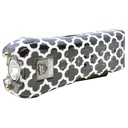
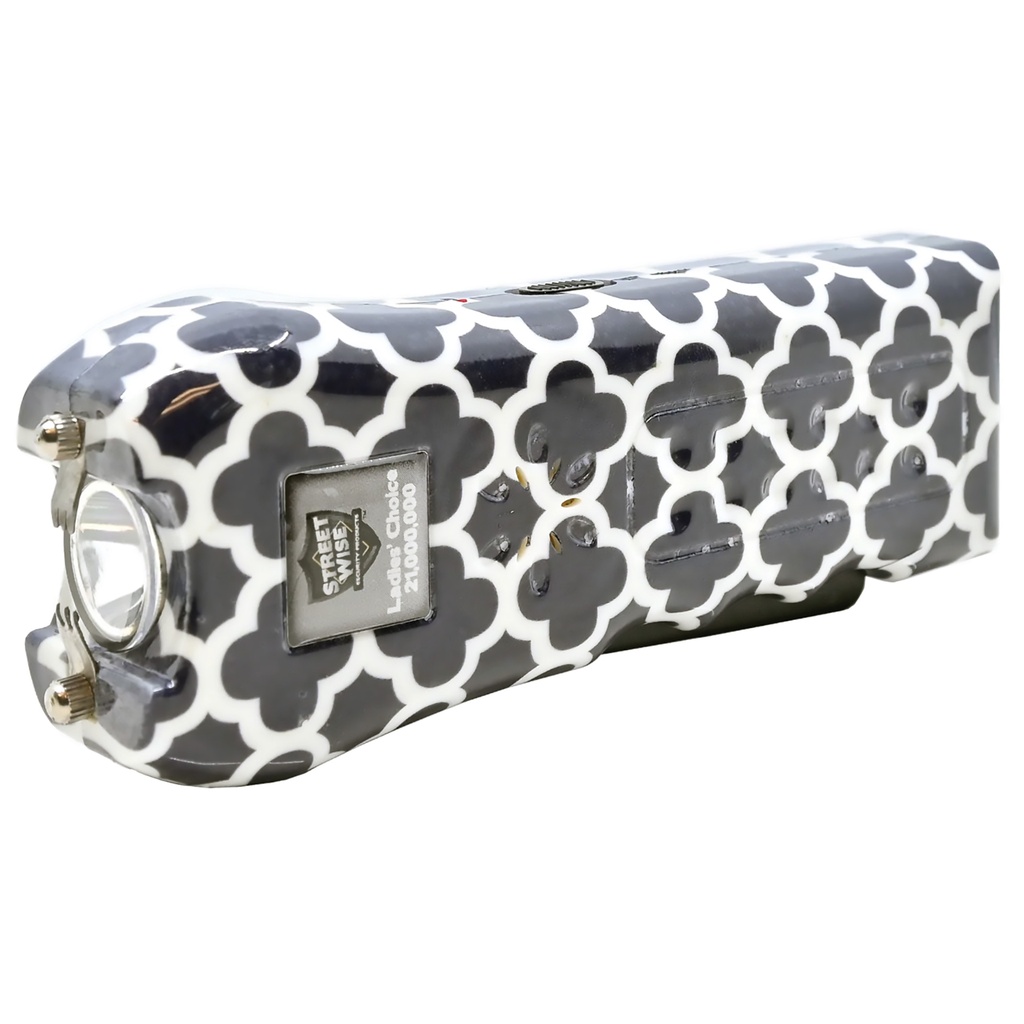
Quatrefoil Sentinel Discreet Stun Gun for Self Defense - Navy Pattern
5 sold in last 24 hours
This stun gun for self defense is built for women who want real protection without tactical theatrics. The Navy Quatrefoil design carries like a stylish accessory, while the squeeze-to-activate stun, 120 dB alarm, and bright flashlight work together as layered personal protection. Finger grooves, a disable pin, and built-in charger focus on reliability over “million volt” hype. It rides quietly in its holster until needed, then deploys fast, giving you a calm, practical tool instead of a gimmick.
Quatrefoil Sentinel: A Stun Gun for Self Defense Without the Hype
The Quatrefoil Sentinel Women’s Stun Gun for self defense is built for people who want real personal protection, not scare tactics on the package. It looks like a refined Navy quatrefoil accessory, but underneath the pattern is a compact, non-lethal stun gun designed to be carried daily, found quickly, and used under stress without fumbling.
Instead of shouting about “millions of volts,” this design focuses on what actually matters in a stun gun for personal protection: reliable current delivery, contact time, grip, and controls you can operate in real life—walking to your car, leaving work late, or crossing a dark parking lot.
How This Stun Gun for Self Defense Actually Works
A stun gun works by delivering an electrical charge through metal contact points on the front of the device. When pressed firmly against an attacker’s body, that charge interferes with their normal neuromuscular signals, causing pain, muscular disruption, and a powerful flinch response. The more solid the contact and the longer the contact time, the more effective the stun gun becomes.
The Quatrefoil Sentinel combines that core function with a bright flashlight and 120 dB alarm, giving you three layers of self defense in one small tool:
- Flashlight – lets you see and also lets you pre-stage the stun gun in your hand without drawing attention.
- Alarm – 120 dB is loud enough to draw attention, disrupt focus, and sometimes end a situation before physical contact happens.
- Stun Contact – metal contact points at the front deliver the electrical charge when you squeeze to activate.
Think of it as a layered personal protection tool: identify, deter, then, only if needed, make direct contact.
Voltage vs. Amperage: What Makes a Stun Gun Effective
Most stun gun marketing focuses on voltage claims in the “millions.” That makes for big numbers, but it is not what makes a stun gun effective for self defense. Voltage mainly describes the electrical pressure needed to jump the gap between the contacts and clothing or skin. Once contact is made, amperage and contact time are what matter for real-world effect.
In practical terms:
- Voltage: helps the charge arc and get through clothing. After a certain point, more voltage adds marketing drama, not more stopping power.
- Amperage (current): determines how much work that electricity does in the body. Even low amperage, if focused and applied for a few seconds, can cause pain, intense muscle contraction, and disorientation.
- Contact time: a half-second touch is a pain and flinch; multiple seconds on a major muscle group can cause overwhelming discomfort and temporary impairment.
This stun gun for personal protection is designed around dependable current delivery and a control layout that makes it easier to maintain contact under stress. The ergonomic finger grooves help you keep the stun gun anchored in your hand, so your energy goes into good contact placement instead of just hanging on to the device.
Design & Build: Why This Stun Gun Is Reliable for Personal Protection
The Quatrefoil Sentinel doesn’t look like a tactical brick. It looks like something that belongs in a modern purse or bag—which makes you more likely to carry it consistently. But the details are focused on reliable self defense, not fashion alone.
Ergonomic Finger Grooves for Confident Grip
The molded finger grooves along the underside are a small but important detail. Under stress, fine motor skills degrade. A smooth rectangle is easy to fumble, especially with sweaty or cold hands. These grooves give you repeatable hand placement and let you orient the stun gun by feel, even in the dark or at the bottom of a bag.
A secure grip helps you do the two things that matter in a stun gun for self defense: drive the front contact points into a solid target area (hip, thigh, abdomen, arm) and maintain contact for at least one to three seconds if necessary.
Squeeze-to-Activate Control Under Stress
Instead of a tiny button that you have to “hunt for,” this stun gun uses a squeeze-to-activate method once the safety is set. That means once it’s in the ready position, you simply close your hand to fire the charge. In real-world self defense, anything that reduces steps between “threat” and “output” increases your odds of using the tool effectively.
The squeeze activation also makes it easier to use in a natural fist-like grip, rather than an awkward fingertip press that can shift your aim and reduce contact pressure.
Carry Reality: How This Stun Gun Fits Into Everyday Protection
A stun gun for personal protection is only useful if you actually carry it. The Navy Quatrefoil design and compact shape are intentional: it looks like a sleek accessory, not a piece of overt tactical gear. That makes it easier to keep in your hand, on a walk, or staged at the top of your bag without feeling like you’re making a scene.
- Included holster lets you clip or stage the stun gun in a consistent place—inside a purse, in a console, or on a belt.
- Built-in charger means you don’t have to track a separate cord type; it’s simple to plug in and top off regularly.
- Disable pin adds a safety layer: if someone yanks the stun gun away and the pin is pulled, the stun function is disabled.
This is especially valuable in close-range self defense, where there’s always a chance of a grab or struggle. The disable pin means the stun gun is more dangerous in your hand than in theirs.
Specific Protection Effectiveness: What This Stun Gun Can and Cannot Do
Used correctly, this stun gun for self defense can create enough pain, muscle disruption, and surprise to break an attacker’s focus and give you a window to escape. It excels in close-range encounters where you can make solid contact on a major muscle group or the side of the torso.
Important realities:
- It is non-lethal; it’s made to stop, distract, and create an opening, not to permanently injure.
- Heavy clothing can reduce effectiveness; aim for areas with less padding if possible (hip, side, thigh, arm).
- Short bursts cause pain; longer contact (one to three seconds or more) can cause intense disorientation and potential loss of balance.
- Like all self-defense tools, it is not magic; your awareness, movement, and willingness to act decisively matter.
Think of this as part of a personal protection plan, not a force field. Its biggest advantage is that it can be carried openly in your hand as a normal-looking item, pre-staged with the flashlight on, so you’re not digging in your bag after something has already gone wrong.
What People Ask Before Buying a Stun Gun for Protection
How effective are stun guns for self defense?
Stun guns are situationally effective. At close range, with firm contact on the body and enough contact time, they can cause intense pain, muscle contraction, and a powerful flinch response that disrupts an attack. Many confrontations end as soon as someone realizes the target is not passive, especially when a loud crackling stun sound and a 120 dB alarm are involved.
They are less effective at a distance (they’re contact tools, not projectiles), and thick winter clothing can reduce their impact. Used as intended, paired with good awareness and a clear escape plan, they’re a solid non-lethal option for self defense.
Does voltage or amperage matter more in a stun gun?
Amperage matters more for effectiveness. Voltage mainly helps the electricity arc and push through clothing and air gaps; beyond a reasonable threshold, ever-higher voltage numbers are mostly marketing. Amperage is the current that actually affects muscles and nerves.
For a buyer, this means: don’t choose based on “millions of volts” on the box. Instead, look for a stun gun with proven reliability, good contact design, a grip you can hold under stress, and controls (like squeeze activation) that let you maintain solid contact. The Quatrefoil Sentinel is built around those practical factors rather than voltage theater.
Is this stun gun legal to carry in my state?
Stun gun and TASER-style device laws vary by state and sometimes by city. Many states allow stun guns for personal protection, but some require age limits, permits, or restrict carry in certain locations (schools, government buildings, etc.). A few municipalities have additional rules or bans.
Before carrying this stun gun for self defense, check:
- Your state statutes on “stun guns,” “electronic control devices,” or “conducted energy weapons.”
- City or county ordinances where you live and where you regularly travel.
- Any restrictions on concealed carry versus open carry, if applicable.
When in doubt, verify with current local law or an attorney. Laws change, and staying informed is part of responsible self defense.
Carrying With Confidence: Turning This Stun Gun Into a Real Tool
Owning a stun gun for personal protection is not the same as knowing how to use it. To turn the Quatrefoil Sentinel into a real tool, take a few simple steps:
- Practice the grip with the device off: draw from your holster or bag, find the finger grooves and squeeze control by feel.
- Dry run the sequence: flashlight on, alarm ready, then stun activation—enough times that it feels routine.
- Choose a consistent carry spot so your hand goes to the same place every time.
- Set a charging routine (for example, once a week) so you’re not carrying a dead battery.
Used this way, the Navy Quatrefoil Sentinel stops being just a stylish gadget and becomes a quiet, dependable part of your everyday protection plan—calm, informed, and ready if you ever need it.