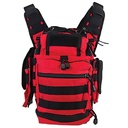
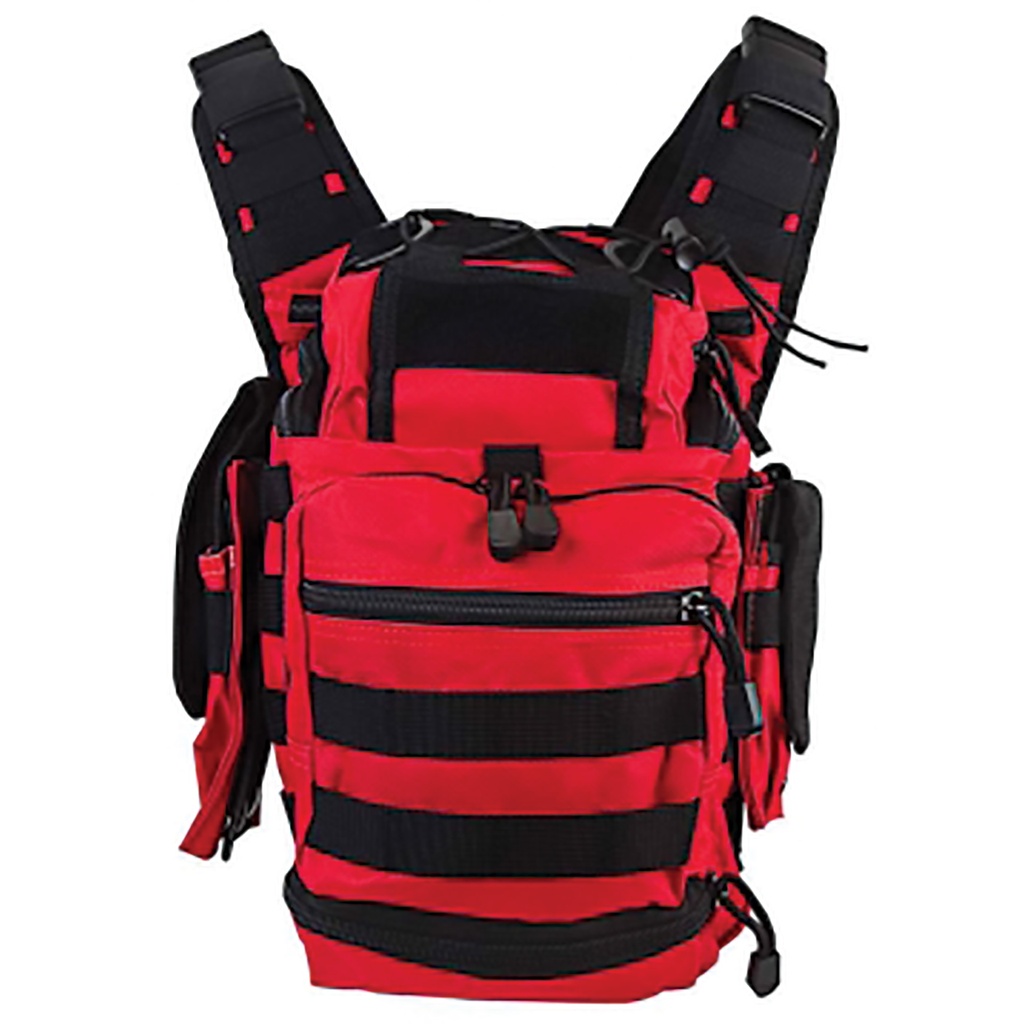
Redline Command Rapid-Access First Responder Gear Bag - PVC Red
13 sold in last 24 hours
This first responder utility bag is built for the kind of days when clutter costs time. The high‑vis red PVC shell, front MOLLE grid, and seven clearly defined compartments keep medical, admin, and defensive tools indexed and ready. A concealed carry pocket and mag pouches secure your self‑defense setup, while the padded shoulder strap and grab handle let you transition from vehicle to scene in one motion. It’s a compact, mission‑focused gear bag designed so your hands always know exactly where to go.
What the Redline Command First Responder Utility Bag Actually Does
The Redline Command Rapid-Access First Responder Gear Bag is built for the moments when you can’t afford to dig for gear. It doesn’t try to be everything; it does one job extremely well: keep your medical, admin, and self-defense tools logically organized, protected, and ready to deploy under stress. The high-vis red PVC body makes the bag easy to spot in a crowded vehicle or low light, while the black MOLLE grid and compartment layout turn chaos into an ordered, repeatable system you can trust.
Structured for Real-World Response, Not Just Storage
This isn’t a casual backpack; it’s a compact first responder utility bag designed around how people actually work out of a bag in emergencies. Seven distinct compartments let you separate categories: trauma supplies, diagnostics, gloves and disposables, admin tools, and self-defense gear. Instead of one large void where gear drifts to the bottom, each zone keeps its contents stable and predictable, so you don’t have to think about where things are when your focus needs to be on the problem in front of you.
Seven Compartments That Behave the Same Every Time
The front and top zippered pockets handle smaller, high-frequency items you reach for constantly. Side pockets secure bulkier or category-specific tools. A dedicated concealed carry pocket and integrated mag pouches keep defensive equipment in a consistent, protected position—critical if you carry for personal protection on duty or during response work. This layout is about building muscle memory: open the same zipper, find the same tool, every single time.
High-Visibility Shell with Tactical Organization
The bright red PVC shell does two things very well: it stands out in cluttered environments, and it wipes clean after use in harsh or messy conditions. The black MOLLE webbing on the front lets you expand or reconfigure the bag with extra pouches, sheaths, or a small trauma kit, without sacrificing the streamlined, compact profile. It looks tactical, but more importantly, it functions like gear meant for real-world calls and long shifts.
Carry Format: How This Utility Bag Works in Motion
Gear that rides well gets used; gear that fights you gets left behind. This first responder utility bag is built to stay with you.
- Single removable padded shoulder strap for cross-body or shoulder carry when moving between vehicle and scene.
- Top grab handle for fast snatch-and-go carry when seconds matter.
- Compact, boxy profile that stows cleanly in a trunk, ambulance compartment, or under a desk without collapsing or spilling content.
The strap padding and attachment points are built for repeated on/off cycles, not just occasional weekend use. In tight quarters—inside a vehicle, in a hallway, or at a crowded event—you can stow the strap and work directly off the bag using the grab handle and front-facing access.
MOLLE Grid for Mission-Specific Loadouts
The four rows of front MOLLE webbing let you tune the bag for your role. EMTs may mount external tourniquet and trauma pouches; security or protection professionals might add a dedicated radio, flashlight, or OC spray holder. The MOLLE system keeps those add-ons locked in and indexed without enlarging the main compartments or mixing critical items together.
Protection-Ready: Self-Defense Carry Inside a First Responder Bag
Many buyers use this style of first responder utility bag as a discreet hub for both medical and personal protection gear. This model supports that use with a concealed carry pocket and mag pouches that keep your defensive setup separate from bandages, shears, and diagnostics. That separation is not just about organization—it’s about safety and clarity under stress.
The concealed carry compartment is designed to keep a handgun or defensive tool in a consistent orientation, with the mag pouches maintaining a stable reload position. Instead of your sidearm sliding around among loose gear, it lives in a defined space you can access deliberately, without exposing it every time you grab a stethoscope or tourniquet.
Why Dedicated Compartments Matter for Self-Defense Gear
Mixing medical and defensive tools in one open pocket leads to three problems: slow access, increased snag risk, and accidental exposure of your firearm or self-defense equipment to bystanders or patients. This bag’s internal layout avoids those problems by giving your protection tools their own section. That way you can work medically in front of others while keeping your defensive options discreet, controlled, and immediately available if the situation turns.
Build Quality: What You Can Expect from the PVC Shell and Hardware
The red PVC exterior is chosen for durability and cleanability rather than fashion. It resists moisture, abrasion, and grime better than typical school-pack fabrics, and wipes down quickly after contact with dirt, fluids, or bad weather. Reinforced stitching at stress points and robust zipper tracks mean the bag is meant for being opened and closed dozens of times per shift, not just occasionally.
Pull tabs on the zipper sliders give you a better grip with gloves or wet hands, allowing you to open compartments without fine motor gymnastics. Side compression and adjustment straps help keep the load tight, preventing the bag from sagging or shifting when you’re moving quickly. All of these details add up to one thing: predictable behavior under movement and stress.
What People Ask Before Buying a Stun Gun for Protection
How effective are stun guns for self defense?
A stun gun for self defense is a close-contact tool: it works when you can physically touch the attacker with the electrodes and maintain contact for at least a second or two. The goal is not to “knock someone out” with voltage; it’s to create intense pain and muscular disruption so you can break contact and escape. Effectiveness depends on three things far more than any “million volt” claim: amperage (current), how long you can maintain contact, and where you apply it (large muscle groups and nerve-rich areas respond more strongly). A stun gun is best thought of as one piece of your personal protection plan, not a magic wand.
Does voltage or amperage matter more in a stun gun?
Voltage gets the headlines, but amperage does the work. High voltage helps the stun gun arc through clothing and across a small air gap, but once contact is made, it’s the current (amperage) that drives pain and muscular disruption. Most marketing numbers—like “10 million volts”—are largely theater and don’t tell you how the device will actually perform. When you evaluate a stun gun for self defense, prioritize: reputable manufacturer, consistent power delivery, electrode design and contact area, and a form factor you can grip and use under stress. A lower-advertised-voltage unit with solid build quality and good current output is far more useful than a flimsy “million volt” gadget.
Is this stun gun legal to carry in my state?
Stun gun legality in the U.S. is state-dependent and sometimes city-specific. Most states allow a stun gun for personal protection, but certain locations restrict carry, require a permit, or limit where you can bring it (schools, government buildings, some workplaces). Before you buy or carry, check three layers: your state law, any local city or county ordinances, and your employer or campus policies. A quick search of your state statutes plus a look at recent case notes or attorney general guidance will give you the most accurate picture. Laws change, so treat legal checks as part of your regular protection planning, just like checking batteries and functionality.
Carrying This Bag as Part of a Practical Protection Setup
Used well, this first responder utility bag can be the central hub of your everyday or on-duty protection plan. Medical supplies, a stun gun for self defense, a flashlight, and other essentials each get a defined home. The goal is simple: when something goes wrong, you don’t want to be improvising your gear layout.
Set the bag up once, based on how you work: primary medical in the front, diagnostics on one side, gloves and disposables on the other, self-defense tools in the concealed carry pocket, and supporting items—like batteries, charger, or documentation—in one consistent compartment. Then leave that layout alone. Over time, you’ll stop having to think about where things are; your hands will simply know. That’s the real advantage of a purpose-built first responder utility bag: it turns protection and response from fumbling guesswork into practiced competence.