Shadow Anchor Compact Push Dagger - Black Rubber
10 sold in last 24 hours
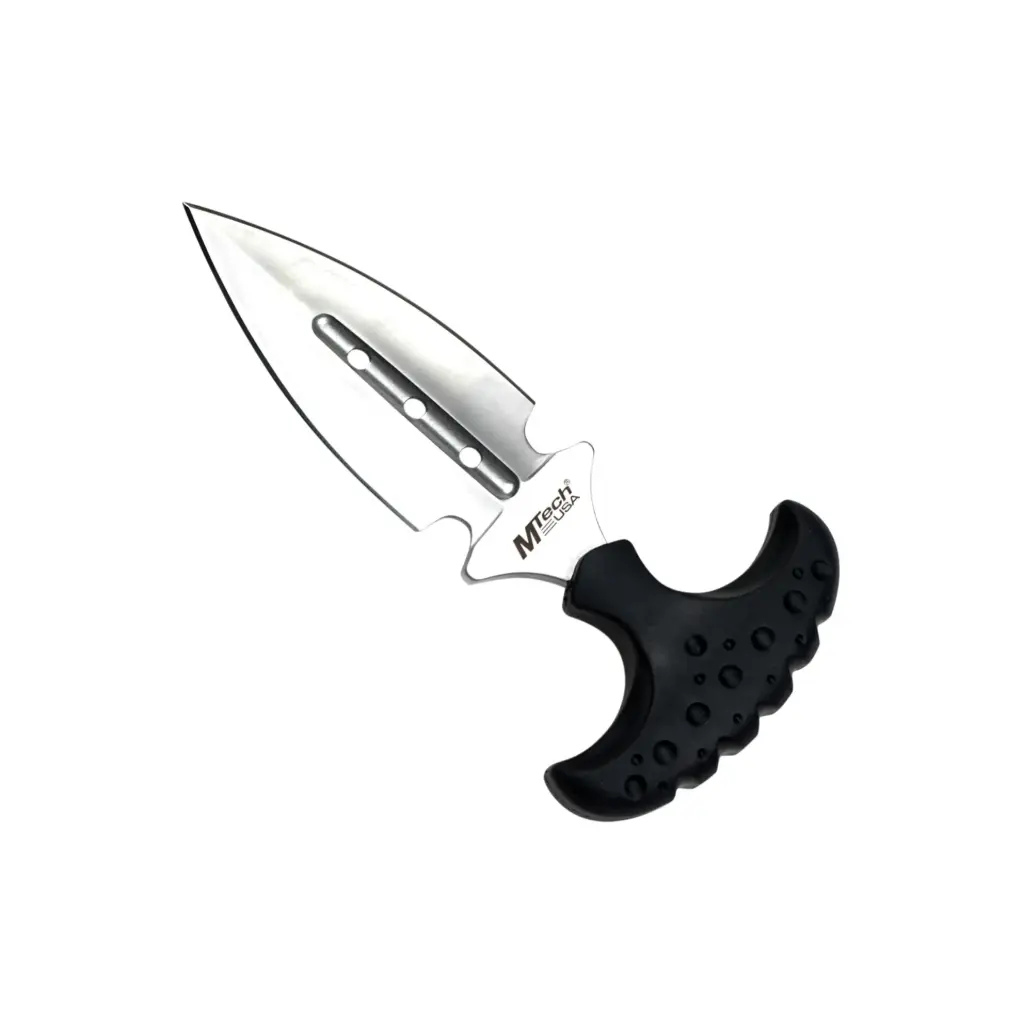
Built as a compact backup blade, the Shadow Anchor Compact Push Dagger locks into your palm with a textured black rubber T‑handle and finger grooves that don’t slip when it matters. The 5.5" spear‑point 440 stainless blade delivers controlled thrusting power in tight quarters, while the included nylon sheath rides discreetly on belt or in a bag. Simple, low‑profile, and purpose‑driven, this push dagger is made to stay out of sight until your hand closes around it.
What This Compact Push Dagger Actually Does
The Shadow Anchor Compact Push Dagger - Black Rubber is a close-range, last-ditch defensive tool designed for one thing: giving you a secure, controlled grip on a short fixed blade when space and time are limited. At 5.5" overall, it’s built to be carried quietly and deployed quickly, not waved around. The T-shaped handle seats into your palm so the blade points straight out from your fist, keeping things simple under stress.
This isn’t a fantasy knife. It’s a compact push dagger meant for practical self-defense: tight spaces, quick access, and direct, instinctive movement. If you already train or are thinking about carrying a backup defensive tool, this form factor is one of the most intuitive to use at contact distance.
How a Push Dagger Works in Personal Protection
A push dagger is different from a standard knife. Instead of holding it like a kitchen knife, you slot the T-handle into your palm, curl your fingers around it, and let the blade extend forward between your knuckles. This setup gives you:
- Natural alignment: The blade tracks straight with the bones of your forearm, which is exactly how you punch.
- Short learning curve: If you can form a fist, you can understand the basic mechanics of a push dagger.
- Better retention: The T-handle makes it harder to knock or twist out of your grip in a struggle.
Used responsibly and legally, a compact push dagger like this one is about control, not theatrics. It favors simple, direct movements over fancy technique, which matters when adrenaline ruins fine motor skills.
Build Quality: Blade, Steel, and Grip That Don’t Pretend
440 Stainless Spear-Point Blade
The Shadow Anchor uses a spear-point, double-edged style 440 stainless blade with a satin silver finish. 440 stainless is a practical choice for a self-defense push dagger: it’s corrosion-resistant, holds a serviceable edge, and is easy to maintain. You’re not batoning firewood with this—its job is to stay sharp enough, clean enough, and ready if you ever need it.
The symmetrical spear point supports straight-line thrusting and controlled piercing. The central fuller and round lightening holes keep weight down without compromising the spine. For a compact defensive knife, that balance between tip strength and nimbleness is what matters.
Rubber T-Handle with Real-World Grip
The black rubber T-handle is where this push dagger earns its keep. The raised circular texture and finger grooves give your hand multiple points of contact, so the blade feels anchored rather than perched. Under sweat, cold, or gloves, that extra traction is what keeps the knife aligned where you intend it to go.
Because the handle is rubberized, it also absorbs a bit of shock and reduces slip if your grip isn’t textbook-perfect—which is exactly what you want in a tool meant for chaotic moments.
Carry Reality: How This Compact Push Dagger Rides
A defensive knife only protects you if it’s actually on you and accessible. The Shadow Anchor Compact Push Dagger comes with a nylon sheath designed for discreet, consistent carry. It’s not about looking tactical; it’s about being where your hand expects it:
- Belt or waistband carry: The compact footprint hugs the body and disappears under a shirt or jacket.
- Bag or pack carry: The sheath keeps the blade covered so you can stage it in a dedicated pocket without snagging other gear.
- Repeatable index point: Once you choose a carry position, you can train your hand to find it by feel—critical for any self-defense tool.
Like with any personal protection setup, consistency is more important than cleverness. Pick one primary carry method for this push dagger, and practice a few smooth, safe draws so your hands know the path before your brain catches up.
Why This Specific Push Dagger Works for Self-Defense
The Shadow Anchor isn’t pretending to be a do-everything survival knife. It’s optimized for one job: close-quarters personal protection when distance is gone and options are limited. Several design choices support that mission:
- Compact 5.5" overall length: Small enough to conceal, large enough to anchor firmly in the hand.
- Fixed-blade reliability: No moving parts, no deployment mechanisms to fail under pressure.
- Instinctive grip alignment: T-handle keeps the blade in line with your strike without complex technique.
- Textured rubber control: Grip built for retention when conditions aren’t perfect.
In the spectrum of personal protection tools, a compact push dagger is a high-commitment option. It’s a lethal-force tool, like a firearm or a full-sized defensive blade, and deserves the same level of respect, training, and legal awareness. What it gives you in return is simplicity: if you can maintain a fist, you can maintain this blade.
Training, Safety, and Responsible Use
Carrying a push dagger for self-defense is a decision that should come with preparation:
- Understand your local laws: Some areas restrict blade length, double edges, or push daggers specifically.
- Train with the format: Dry practice drawing from the sheath, establishing your grip, and returning safely.
- Use a layered protection plan: Consider this one piece of your overall safety strategy—alongside awareness, avoidance, and non-lethal options where appropriate.
Safe carry starts with a good sheath and consistent habits. Always re-sheath slowly, deliberately, and with your eyes on the blade until the path feels second-nature. Tools like this reward calm, methodical practice.
What People Ask Before Buying a Stun Gun for Protection
How effective are stun guns for self defense?
Stun guns are contact tools: they must be pressed firmly against an attacker and held there for long enough to disrupt their muscle control or pain tolerance. Their effectiveness depends far more on amperage (current), contact time, and placement than on advertised "million volt" claims. In real self-defense use, they work best as part of a layered plan—paired with movement, verbal boundaries, and escape—rather than as a magic stop button.
Does voltage or amperage matter more in a stun gun?
Voltage mostly determines the arc’s ability to jump a gap or get through clothing. Amperage is what actually affects the body. Many products shout giant voltage numbers because they sound impressive, but a reasonably high voltage and properly limited, well-delivered current are what matter. A well-built stun gun with honest current output, good contact points, and a reliable power source will outperform a flashy "10 million volt" device with poor design.
Is this stun gun legal to carry in my state?
Stun gun laws vary widely. Some states treat them like standard self-defense tools with minimal restrictions; others require permits, limit where you can carry them, or ban them outright in certain jurisdictions. Before buying or carrying any stun gun for self defense, check your state and local regulations—look specifically for terms like "electronic control device" or "conducted energy weapon" in statutes. When in doubt, consult official state resources or a qualified legal professional.
Carrying with Confidence: Matching Tools to Your Plan
Whether you choose a compact push dagger like the Shadow Anchor or a stun gun for self defense, the principles are the same: understand what the tool can and cannot do, know the law where you live, and build skill through practice, not fantasy. The Shadow Anchor gives you a low-profile, secure-grip option for close-range defense; a well-chosen stun gun offers a contact-distance, pain-compliance alternative built around electrical disruption instead of a blade.
When you align your carry method, training time, and legal research with the tool you pick, you move from just "owning gear" to actually having a personal protection plan. That’s where real confidence comes from.