Shadow Lock Neck Carry Push Dagger - G10 Black
5 sold in last 24 hours
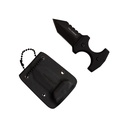
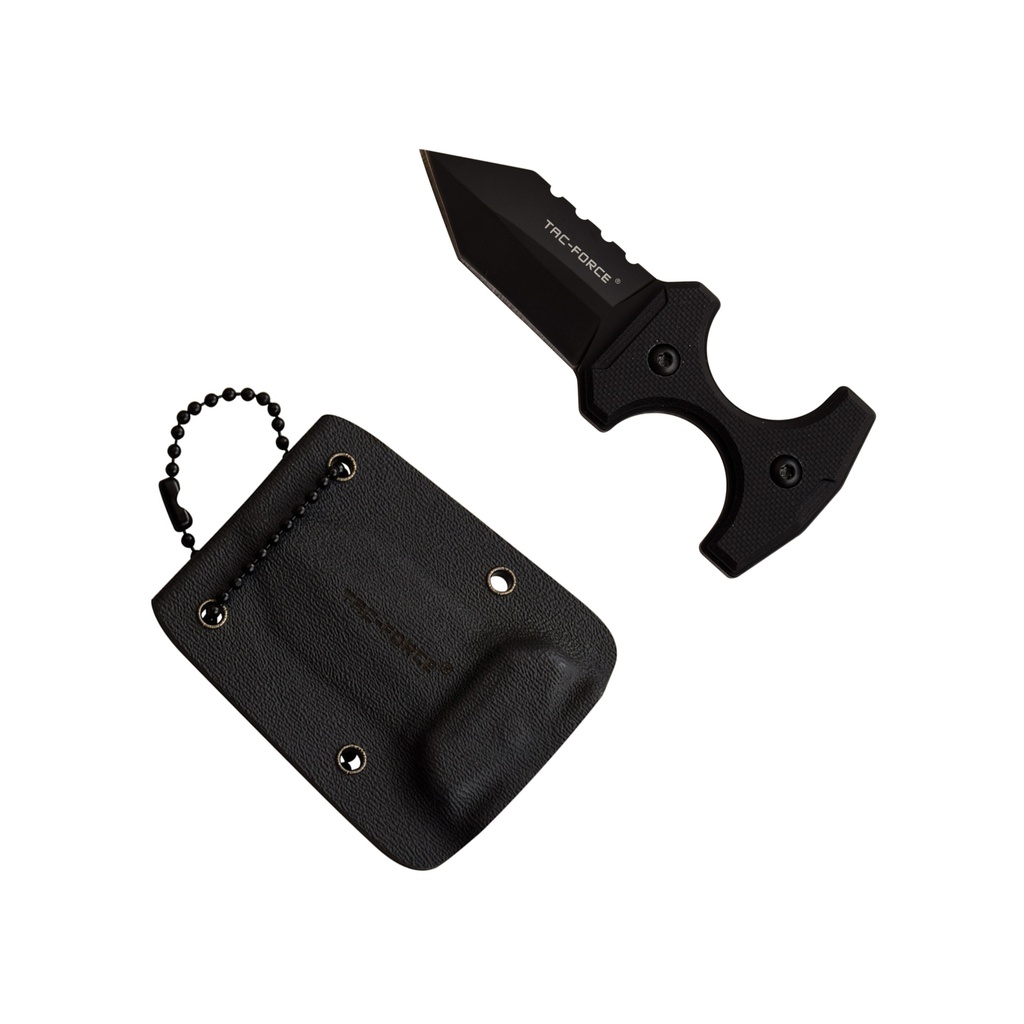
The Stealth Sentinel T-Handle Push Dagger is built for one job: controlled, close-quarters defense when space and time are limited. The textured G10 T-handle locks into your grip, the full-tang 3Cr13 blade rides secure in a molded Kydex sheath, and the included ball chain keeps it centered on your chest for consistent neck carry. It draws the same way, every time, so your hands know where it is without looking—simple, repeatable, and purpose-built for discreet personal protection.
Stealth Sentinel Push Dagger: Compact Control for Close-Quarters Defense
The Stealth Sentinel T-Handle Push Dagger - G10 Black is a compact fixed blade built for one specific role: stable, instinctive control at arm's length. Instead of chasing gimmicks, this neck-carry push dagger focuses on secure grip, predictable draw, and a low-profile footprint that disappears until you need it.
This is not a fantasy piece or wall hanger. It’s a purpose-built self-defense tool for people who care about retention, repeatable access, and close-quarters leverage more than they care about flashy styling.
How a Push Dagger Works in Real-World Self Defense
A push dagger is designed around biomechanics, not showmanship. The T-handle sits between your fingers and against your palm, so the blade lines up with the bones of your forearm. That means you can drive force forward from your shoulder and core, not just your wrist. In a struggle where grips are messy and adrenaline is high, that alignment matters more than blade length alone.
Because the Stealth Sentinel is a compact push dagger, its main strengths in self defense are:
- Retention under stress: The T-handle and finger cutouts make it much harder to knock or strip from your hand compared to a standard straight-handle knife.
- Intuitive striking motion: You use a natural punching or shoving motion instead of complex knife techniques.
- Close-quarters focus: It excels in very tight spaces where longer blades are harder to manage.
It’s a close-in personal protection tool, not a do-everything utility knife. That clarity of purpose is what makes it effective when used correctly.
Build Quality That Backs Up Its Defensive Role
For a self-defense blade, build quality isn’t about looking tactical—it’s about not failing when your grip is sweaty, your hands are shaking, and fine motor skills are gone. The Stealth Sentinel leans into that reality with a straightforward, durable construction.
Full-Tang Strength and 3Cr13 Steel
The blade and handle core are one continuous piece of steel (full tang), with the G10 handle scales bolted on. That means there’s no hidden joint or weak folding mechanism to fail if the blade is torqued or driven hard.
- Steel: 3Cr13 stainless is known for being tough enough for defensive duty and easy to maintain. It’s not a boutique steel, but it’s reliable and corrosion-resistant.
- Blade length: About 2 inches—short enough for low profile neck carry, long enough to matter in a close-quarters encounter.
- Finish: A black coated spear-point style blade that minimizes reflections and keeps the overall profile discreet.
Textured G10 T-Handle for Locked-In Grip
The handle is where push daggers succeed or fail. Here, the Stealth Sentinel uses textured black G10—lightweight, rigid, and grippy even when wet. The double-finger cutouts and palm-filling T-handle help you establish a consistent grip quickly, which is essential under stress.
- G10 handle scales: Resistant to moisture, impact, and temperature swings.
- Jimping on the spine: Three notches near the handle give your thumb an indexing point if you need extra control.
- All-black profile: Keeps attention off the blade until you deliberately draw it.
Carry Reality: Neck Carry That’s Actually Practical
A defensive tool is only useful if it’s on you when you need it. The Stealth Sentinel is built as a neck carry push dagger you can keep front and center, under a shirt or jacket, without broadcasting that you’re carrying.
Kydex Sheath and Ball Chain Setup
The included molded Kydex sheath is formed to the blade and locks it in place with friction. That means no flapping, rattling, or loose retention when you move.
- Retention: Positive click-in feel so you know it’s seated.
- Draw: Designed for a straight up-and-out pull toward your dominant hand.
- Neck chain: The ball chain keeps the push dagger centered on your chest, so the draw location is consistent.
For many people, the advantage of a neck carry push dagger over a pocket knife is that it rides in the same location regardless of clothing. Hoodie, scrubs, t-shirt, or jacket—the blade is still sitting at your sternum, not shifting between different pockets.
Deployment Under Stress
In a real self-defense situation, you won’t have time for complex manipulations. With this push dagger, deployment is deliberately simple:
- Clear your cover garment with your non-dominant hand.
- Index the handle with your dominant hand—your fingers naturally find the cutouts.
- Pull straight down and out of the sheath.
- Drive from a guarded, close position using natural forward strikes.
It’s not magic and it doesn’t replace training, but the design does favor gross motor movements over fine, fiddly motions—which is exactly what you want in a stress event.
What People Ask Before Buying a Stun Gun for Protection
How effective are stun guns for self defense?
Stun guns can be effective as part of a self-defense plan, but only when you understand their limits. They are close-contact tools—you have to physically touch the attacker with the electrodes and maintain contact for at least one to several seconds to create meaningful disruption. They don’t reliably drop people instantly like movies suggest. Factors like clothing thickness, contact area, and where you land the charge all matter.
Where stun guns shine is in creating pain, hesitation, and opportunities to break contact and escape. They’re not a guaranteed one-shot solution, and they work best when paired with awareness, movement, and a clear escape mindset.
Does voltage or amperage matter more in a stun gun?
Voltage is what gets the electricity to jump the gap between the stun gun and the target; amperage is what determines how much work that electricity can do once it gets there. Most of the huge "million volt" marketing claims are hype—once you’re past the threshold required to arc through clothing and skin, more voltage doesn’t equal dramatically more stopping power.
Amperage (current), contact time, and contact area are far more important in practical self defense. A well-built stun gun with moderate stated voltage but stable current output, solid electrodes, and a comfortable grip you can actually keep on target is much more useful than a flimsy "10 million volt" device that’s hard to control. When you evaluate a stun gun for self defense, prioritize build quality, reliability, and how securely you can hold and aim it under stress.
Is this stun gun legal to carry in my state?
Stun gun legality in the United States is very state- and city-specific, and the rules change over time. Some states allow stun guns for personal protection with minimal restrictions, while others require permits, limit where you can carry them (schools, government buildings, etc.), or ban them in certain cities and jurisdictions.
Before you buy or carry a stun gun for self defense, check three levels of law:
- State law: Look for specific terms like "electronic control device" or "stun gun" in your state statutes.
- County and city ordinances: Some major cities add extra restrictions even if the state allows them.
- Property rules: Workplaces, schools, and private businesses may have their own policies on stun guns.
When in doubt, verify current regulations through your state legislature’s website or a reputable legal resource before making this part of your everyday self-defense carry.
Choosing the Right Tool for Your Personal Protection Plan
Building a personal protection setup isn’t about finding a single perfect tool—it’s about matching specific tools to specific problems. A stun gun for self defense can give you a close-contact, non-lethal option that buys time and space. A compact push dagger like the Stealth Sentinel gives you a mechanical, low-profile blade that favors retention and control when contact is already forced on you.
If you prioritize discreet carry, consistent access, and a defensive tool that stays put in your hand, this neck carry push dagger fits that role well. Add training, legal awareness, and a clear plan for when you would and wouldn’t deploy it, and you move from just "owning a weapon" to actually having a usable personal protection strategy.
The goal isn’t to feel invincible. The goal is to be calm, informed, and prepared—with tools you understand and can realistically use under pressure.