Shadow Prowler Feline Protection Keychain - Midnight Black
13 sold in last 24 hours
Slide this cat-ear self-defense keychain onto your ring and your everyday carry quietly levels up. The two-finger grip anchors in your hand, while the pointed ears focus impact where it counts. Matte midnight black keeps it discreet on your keys, but instantly accessible when walking to your car, crossing a dark lot, or working late. Non-bladed, compact, and always with you—this is personal protection that doesn’t feel tactical, just prepared.
Discreet Everyday Protection You’ll Actually Carry
The Shadow Prowler Feline Protection Keychain - Midnight Black is a simple, non-bladed self-defense tool designed for one job: give you a stronger, more controlled strike if someone closes distance on you. It rides on your keyring, looks like a cat charm at a glance, and turns into a locked-in impact tool the moment you slip two fingers through the grip.
There’s no battery to die, no safety switch to fumble, and no legal gray area around blades. Just a compact, focused way to hit harder and hold your ground for long enough to break contact and get to safety.
How This Cat-Ear Self-Defense Keychain Actually Works
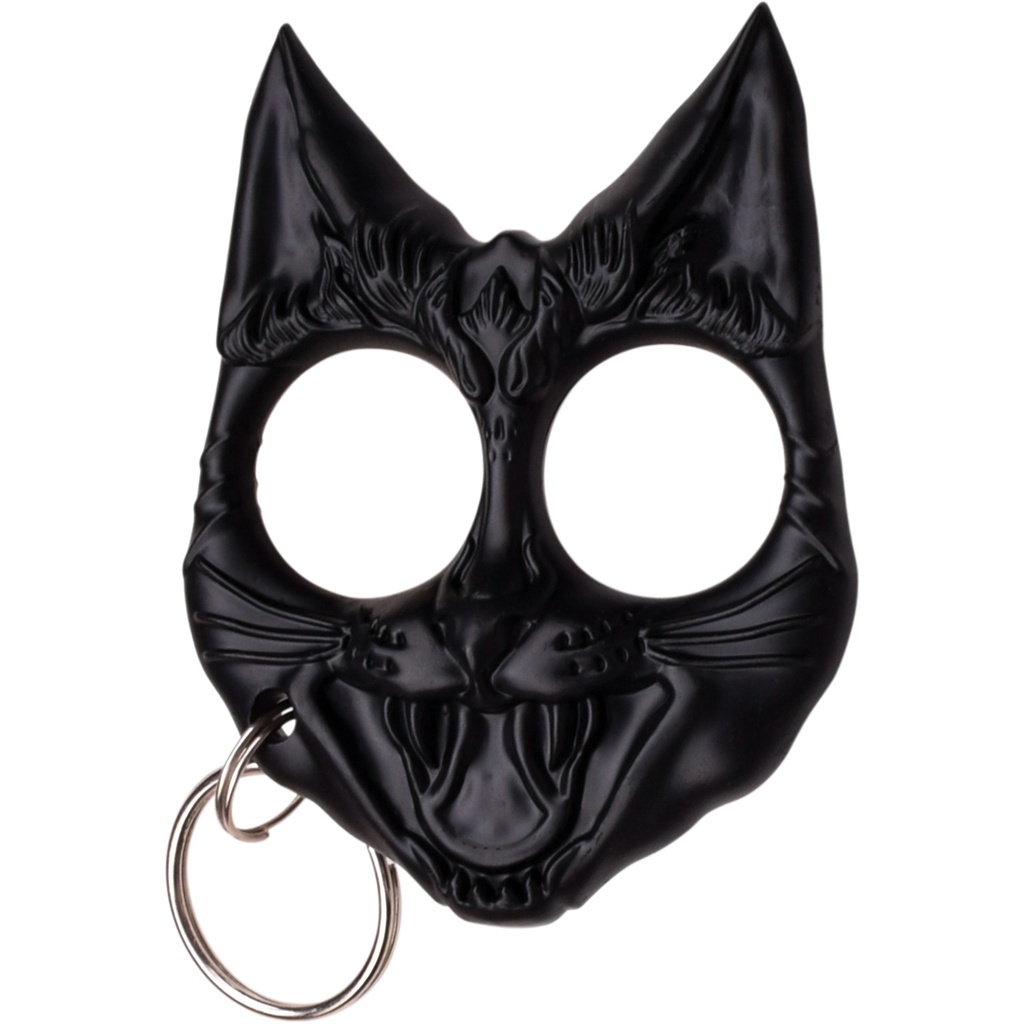
This isn’t a stun gun or a gadget. It’s a rigid impact amplifier. You slide two fingers through the circular openings so the body of the keychain rests against your palm. The pointed "ears" extend past your knuckles, turning a bare-hand strike into a concentrated point of impact.
In practical self-defense terms, that means:
- You don’t need to punch harder—force is already focused into the tips.
- Your grip is more secure under stress than loose keys or improvised objects.
- You can use natural motions (jab, hammer-fist, rake) without complex training.
Used correctly, the goal is not to "win a fight." The goal is to cause enough pain and disruption to create an opening to escape. This tool helps you do that with more control and less risk to your own hand than hitting bare-knuckled.
Why This Keychain Is a Reliable Self-Defense Companion
For personal protection gear, the real question is simple: will you actually carry it, and will it work under stress? This cat-ear self-defense keychain is built around those two realities.
First, carry: at just about 3 inches long with a flat, matte-black profile, it disappears into a key cluster. It doesn’t scream "weapon," so it’s more likely to be with you on late walks, rideshares, or night shifts. You don’t have to remember to clip it on—it lives with your keys.
Second, usability: the two-finger design is easy to index by feel. If you can grab your keys, you can find the finger holes. There’s no orientation puzzle; once your fingers are through, the striking points are automatically in the right place.
Two-Finger Grip for Instant Control
The dual finger holes are sized for most adult hands and give you a secure, anchored grip. Compared to holding a single key between your fingers—a common but risky suggestion—this design spreads impact across your palm and reduces the chance of twisting or tearing your own skin on contact.
The result is a more stable strike and better retention if someone grabs or bumps your hand.
Matte Midnight Black, Low-Profile Carry
The midnight black finish keeps reflections down and visual drama low. On a keyring, it reads as a novelty cat charm more than a dedicated self-defense tool. That subtlety matters. Tools you can carry daily without drawing attention are the ones that protect you best. The slim profile also means it rides comfortably in pockets, small purses, or clipped inside a bag.
Real-World Scenarios: When This Tool Helps Most
No self-defense keychain is a magic shield. What it can do is tilt the odds slightly in your favor in the close-range situations people actually face: a grab at your wrist, someone crowding you at a car door, an attempt to drag you or hold you in place.
With this cat-ear keychain in hand, you can:
- Drive sharp, focused strikes into bony targets (hands, collarbone, shins) to break grips.
- Rake or jab toward softer areas to create a flinch and open space.
- Maintain better control of your keys while moving, shouting, and escaping.
It works best when paired with simple habits: keeping your keys in hand while walking to your car at night, scanning your surroundings early, and trusting your instincts about distance and boundaries.
Build Details That Matter for Personal Protection
Most defense keychains look similar at first glance, but small design details determine whether they’re useful or just decorative. This one is optimized for protection-first carry:
- Defined striking points: The angular cat ears are long enough to focus impact without being so exaggerated that they snag in pockets.
- Comfortable inner edges: The finger holes are rounded for a more comfortable hold, reducing hot spots when you clench under adrenaline.
- Integrated keyring mount: A side-mounted hole connects to a silver split ring, keeping the tool oriented flat against your keys so it’s easy to grab by feel.
- Non-bladed design: No cutting edge to worry about, just impact points—making it a lower-maintenance, lower-risk option than many knives.
Carrying This Self-Defense Keychain Effectively
Protection gear only helps if you can get to it fast. A few simple habits make this cat-ear self-defense keychain far more effective:
- Keys in hand, not buried: When walking to your car, entering a parking garage, or meeting a rideshare, keep the keychain in your hand—not at the bottom of your bag.
- Finger through, before you need it: If something feels off, slide two fingers through the grip preemptively. It’s not aggressive; it’s just being ready.
- Practice the motion: At home, practice grabbing your keys, finding the finger holes by feel, and making a simple jab or hammer-fist motion. A minute of practice pays off under stress.
This is the same mindset professionals use: low drama, high preparation. The tool is there to support you, not replace awareness or common sense.
What People Ask Before Buying a Stun Gun for Protection
How effective are stun guns for self defense?
Stun guns can be effective for self defense, but not in the way marketing often suggests. The loud crackle and visible arc can be a deterrent, and a solid contact to bare skin or thin clothing for several seconds can disrupt muscle control and create a window to escape. But they are not one-touch "off switches." Clothing, movement, and contact time all matter. Many professionals treat stun guns as one option in a broader personal protection plan, not as a single guaranteed solution.
Does voltage or amperage matter more in a stun gun?
Voltage numbers in stun gun ads—especially anything claiming "millions"—are mostly marketing. Voltage is how well the current jumps the gap. Once you have enough to arc, more doesn’t automatically mean better results. Amperage (current) and contact time matter far more for real-world effect. A stun gun with modest, honest specs, solid build quality, and a reliable battery is more trustworthy than one shouting inflated voltage claims without data.
Is this stun gun legal to carry in my state?
Stun gun laws vary widely by state and sometimes by city. Some places allow them with few restrictions; others require permits, limit where they can be carried, or ban them outright. Before buying or carrying any stun gun for self defense, check both your state statutes and local ordinances, and remember that rules can change. When in doubt, consult current state code or a local attorney rather than relying on old forum posts or anecdotal advice.
Why a Simple Defense Keychain Still Belongs in Your Kit
While stun guns rely on batteries, electrical contact, and legal complexity, this cat-ear self-defense keychain is as straightforward as it gets. No power source, no switches, no maintenance beyond keeping it on your keys. It doesn’t replace awareness, boundaries, or good decisions—but it gives your hand a measurable advantage if someone ignores all of those and closes the distance.
If your goal is calm, practical personal protection, this kind of tool fits that mindset perfectly: small, discreet, always with you, and easy to use under stress. Paired with simple habits and a bit of practice, it turns your ordinary keyring into a quiet layer of defense you don’t have to think about—until you need it.