Shadowline Rapid-Access Magnetic Gun Mount - Black
9 sold in last 24 hours
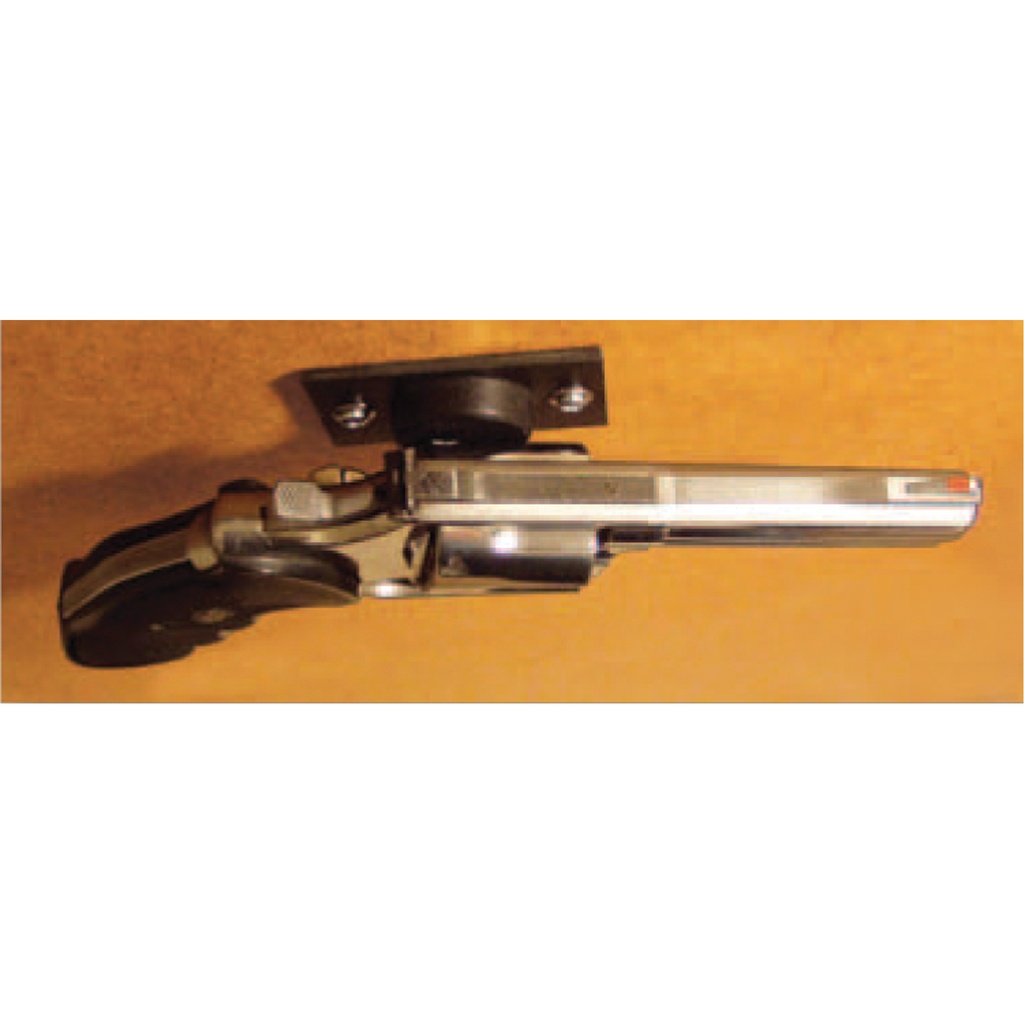
This magnetic gun mount is built for quiet, controlled access—not drama. The low-profile black body tucks under desks, in vehicles, or bedside, holding up to 10 lb of real-metal handguns with a firm, predictable grip. Two screw points keep the mount planted, while the magnet’s contact area supports a natural, straight-line draw. No hinges, no moving parts—just a simple, secure way to stage your firearm where your hand actually is when it matters.
What This Magnetic Gun Mount Actually Does
The Shadowline Rapid-Access Magnetic Gun Mount - Black is built for one job: keep your handgun exactly where you expect it to be, and let you draw it in a straight, natural motion without fumbling. No hinges, no latches, no gimmicks—just a compact, matte-black magnetic gun mount that quietly turns the space under a desk, beside a bed, or in a vehicle into a stable access point.
Instead of a visible holster telegraphing intent, this mount keeps your firearm close to the surface, low-profile, and ready. The magnet grips stainless steel, titanium, and alloy firearms up to 10 lb, which means it’s designed for the guns people actually carry—not prop-weight toys.
How Magnetic Gun Mounts Work in Real Use
A magnetic gun mount isn’t about theatrics; it’s about predictable contact and controlled movement. The core magnet creates a strong, localized field that locks onto the steel components of your slide or barrel. Because the mount presents a flat, stable face, the gun seats in a consistent position every time, so your hand learns exactly where to go.
Unlike holsters with retention buttons or straps, there’s no extra action to defeat under stress. You drive your hand forward, wrap the grip, and pull in one motion. The magnet’s holding power is tuned so it resists casual bumps and vibration, but still releases smoothly along the line of your draw. That balance—enough retention to stay put, not so much that you’re fighting it—is what makes a magnetic gun mount practical for protection and self-defense setups.
Why This Magnetic Gun Mount Is Reliable for Protection
For personal protection, hardware has to be boringly dependable. This gun mount uses a simple, two-screw plate and a central magnetic housing—no moving parts to fail, nothing to adjust, and nothing to loosen from daily draw and reholster cycles when properly installed.
The 10 lb rating is the realistic piece: it reflects the actual retention you can count on with full-size and compact defensive pistols made from stainless steel, titanium, or common alloys. In practice, that means your bedside gun, truck pistol, or office desk firearm stays in place through door slams, drawer bumps, and road vibration, as long as the mounting surface is solid and the screws are properly driven.
Low-Profile Design That Stays Out of Sight
The matte black finish and compact footprint are intentional. When you’re setting up a gun mount for self-defense or home protection, the last thing you want is a bright, reflective bracket drawing attention. This mount tucks the firearm tight against the underside of a desk, shelf, or ledge, leaving just enough clearance for a clean grip, but little enough profile that casual glances don’t pick it up.
Two-Point Mounting for Real-World Stability
Two visible screw heads give you a simple, repeatable installation: measure your draw point, mark, drill, and drive the screws. That dual-anchor design resists twisting and sagging over time. On a solid surface—wood, properly anchored drywall, or vehicle framing—you end up with a mount that feels like part of the structure, not a clip-on accessory.
Carry Reality: Where This Gun Mount Belongs
Good self-defense setups match where you actually spend your time. This magnetic gun mount is optimized for three primary locations: under desks, bedside, and in vehicles. Under a desk, you can position the firearm along the natural path of your dominant hand, shielding it from casual view while keeping it seconds away. Bedside, it mounts to a bed frame, nightstand, or wall surface, keeping the gun off the floor and out of clutter while still accessible in low light.
In a vehicle, the low-profile body mounts to solid structure, not thin trim, allowing you to orient the handgun horizontally or vertically depending on your draw preference. The goal isn’t dramatic “quick draw” theatrics—it’s safe, repeatable access without digging through a console or glove box.
Orientation and Draw Style Under Stress
This gun mount supports horizontal or vertical orientation. Horizontal mounting lets your hand slide straight in from the side, mimicking a traditional belt draw. Vertical mounting can work well for tight spaces where you’re coming from above or below. The important part is consistency: once installed, your draw stroke should be the same every time you practice it.
Build Quality Details That Matter
The mount’s body is a solid, rectangular plate with a central cylindrical magnetic housing. That geometry isn’t an accident—it concentrates the magnetic field where it can best contact the metal of your firearm, while the wider plate spreads out the mechanical load of the screws. The matte black finish helps resist glare and blends with most interiors, from dark vehicle panels to office furniture.
Because there are no hinges, springs, or release levers, long-term reliability depends mainly on two things: the strength of the magnet and the quality of your installation. In practical terms, that means if you attach it to a solid surface with proper screws, you’ve reduced your failure points to almost zero.
What People Ask Before Buying a Stun Gun for Protection
How effective are stun guns for self defense?
Effectiveness in a stun gun for self defense comes from current (amperage), contact time, and where you land the contact—not from inflated “million volt” numbers. A well-built stun gun with adequate amperage can disrupt muscle control and create a pain response if you maintain contact on large muscle groups or nerve-rich areas for several seconds. It’s a close-contact tool: you have to be within arm’s reach, and you need to drive it in with intent. Used realistically—as a way to break someone’s grip, create an opening, and get to safety—a quality stun gun can be a useful part of a protection plan, but it is not a magic “one-touch knockout” device.
Does voltage or amperage matter more in a stun gun?
For a stun gun, voltage gets your attention on the packaging; amperage does the work in the real world. High voltage helps the charge arc through clothing and across a small air gap, but once contact is made, it’s the current (amperage) and how long it flows that determine how much effect you get. That’s why serious self-defense professionals look past “10 million volt” claims and focus on build quality, battery output, contact area, and how securely they can grip and drive the device under stress. If a manufacturer won’t talk honestly about amperage and realistic effects, you’re looking at marketing, not protection.
Is this stun gun legal to carry in my state?
Stun gun legality in the U.S. is handled mostly at the state and sometimes city level. Many states allow stun guns for personal protection with few restrictions, but others may require a permit, restrict carry in certain locations (schools, government buildings, some workplaces), or limit sales based on age. A few cities and jurisdictions have additional rules layered on top of state law. Before you carry any stun gun for self defense, check both your state statutes and local ordinances, and remember that private properties—employers, campuses, venues—can set their own policies even when state law allows carry.
Putting It All Together: Prepared, Not Paranoid
Whether you’re staging a handgun on this magnetic mount or adding a stun gun for self defense to your overall protection plan, the principle is the same: simple, reliable tools in known locations you’ve actually practiced using. This gun mount gives you a fixed, predictable access point; a solid stun gun gives you a close-contact option when distance isn’t possible.
By focusing on real factors—mounting stability, contact security, amperage instead of marketing voltage, and how your hand actually moves under stress—you move from buying gear out of anxiety to setting up a calm, deliberate protection system. Quiet hardware, honest expectations, and practiced access will do more for your safety than any dramatic claim on a package.