Shadowline Rapid-Deploy OTF Knife - Black Aluminum
5 sold in last 24 hours
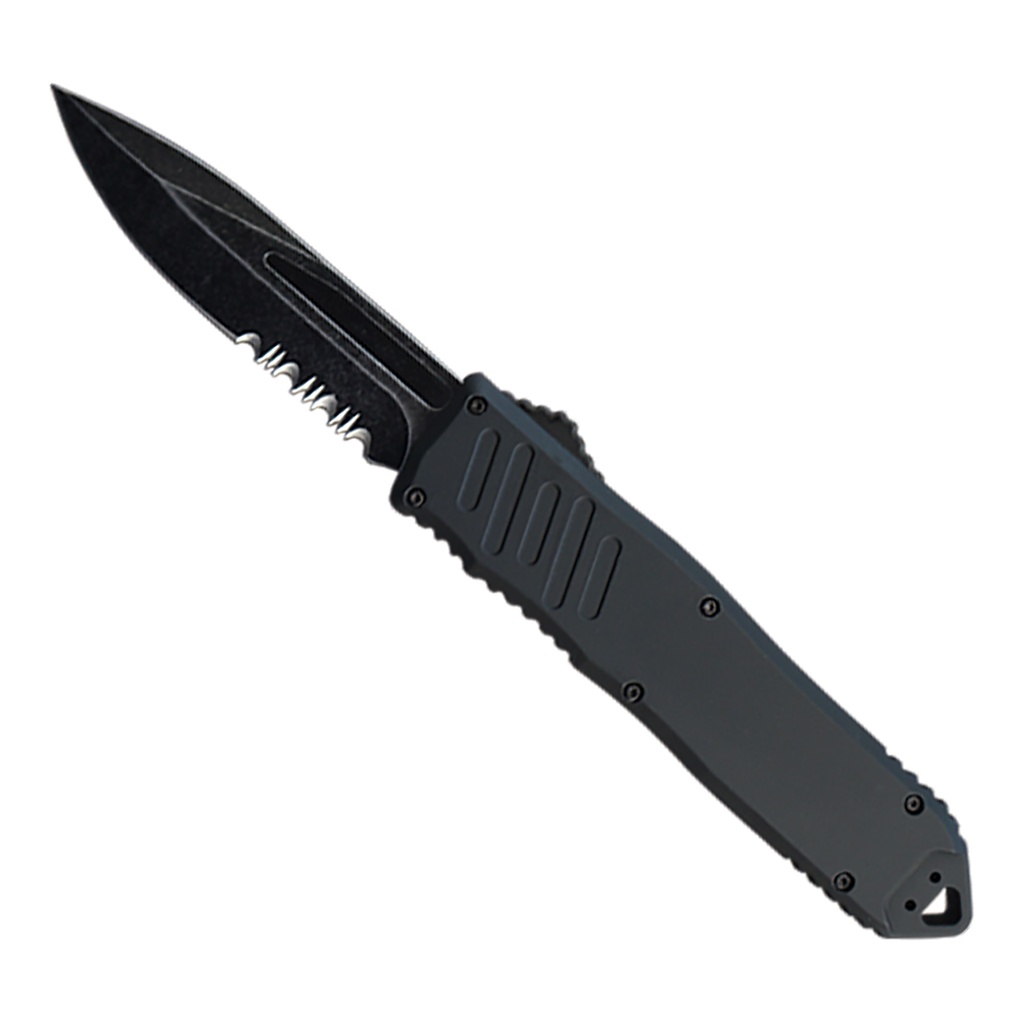
This OTF knife is built for quiet competence, not show. A black stonewash clip point with partial serrations snaps out from a matte black aluminum handle using a low-profile slide actuator. The deep-carry clip keeps it discreet; the pointed pommel and lanyard hole add emergency utility. Single-action deployment with manual reset gives you fast, confident access when you need to cut cord, webbing, or packaging without fuss. A practical, stealthy everyday carry tool that looks like it’s belonged in your pocket from day one.
Shadowline Rapid-Deploy OTF Knife – Built for Quiet, Real-World Use
The Shadowline Rapid-Deploy OTF Knife - Black Aluminum is for people who want a fast, reliable cutting tool that doesn’t shout for attention. It’s a modern out-the-front knife with a black stonewash clip point blade, partial serrations, and a matte black aluminum handle. Everything about it is tuned for discreet everyday carry, quick deployment, and practical utility.
What This OTF Knife Actually Does Well
This isn’t a display piece. It’s a work-focused OTF knife designed to:
- Deploy quickly with a low-profile slide actuator
- Cut cleanly with a clip point tip and useful belly
- Chew through cord, webbing, and tougher materials with the partial serrations
- Ride low and discreet with a deep-carry pocket clip
- Provide emergency impact utility with a pointed glass-breaker style pommel
If you’re used to folders but want true out-the-front speed in a compact package, this knife gives you that without adding bulk or drama.
How the Out-the-Front Mechanism Works in Practice
This is a single-action OTF knife. That means the blade launches forward under spring power when you push the slide actuator, and you manually reset it back into the handle after use. In daily reality, that gives you straightforward benefits:
- Fast deployment: Slide forward, blade out. No flipping, no wrist action.
- Controlled reset: You guide the blade back, reinforcing safe handling habits.
- Positive feel: You feel the snap forward and the solid stop when it locks.
For someone coming from traditional folders or assisted knives, the learning curve is minimal: thumb finds the actuator, pushes forward, blade is ready. Under stress or with gloves, that simple motion matters more than any flashy mechanism description.
Blade Design: Stonewash, Serrations, and Real Cutting Utility
The blade is a black stonewash clip point with a partial serrated section near the handle. That combination is about function, not fashion.
Clip Point Geometry for Everyday Tasks
The clip point gives you a sharp, controllable tip for opening boxes, trimming material, and doing fine cuts. The curvature of the edge provides a useful slicing belly, which helps the knife glide through cardboard, plastic, and similar tasks instead of just forcing its way.
Partial Serrations Where They Actually Help
Placing the serrations near the handle puts them where you can apply the most pressure. That’s exactly where you want them when you’re:
- Cutting rope, paracord, or zip ties
- Working through nylon straps or webbing
- Dealing with thicker, fibrous materials
The plain edge forward section handles clean, controlled cuts. The serrated section steps in for tougher, saw-like work. You get both without having to carry two separate tools.
Handle, Grip, and Carry: Why This OTF Works as an EDC Knife
The handle is matte black aluminum with chamfered edges and machined grip grooves. It’s built to disappear in the pocket and stay steady in the hand.
Aluminum Build and Texturing
The aluminum construction keeps weight reasonable while still feeling solid. The linear grip grooves on the sides and spine add traction without turning the handle into sandpaper. That balance matters if you’re carrying it every day against clothing or gear.
The matte finish reduces glare and fingerprints, keeping the knife visually low-profile. Combined with the all-black color scheme, it reads as serious tool, not toy.
Deep-Carry Clip and Discreet Profile
The deep-carry pocket clip rides the knife low in your pocket so very little shows above the edge. For many users—especially those in public-facing jobs or urban environments—that’s a real advantage. You know it’s there; most people around you don’t.
The clip is mounted on the spine side, which keeps the knife oriented consistently for a natural draw. Over time, that consistent orientation matters more than any marketing phrase: you reach, you know what you’re grabbing, and it comes out ready to deploy.
Emergency and Hard-Use Details That Actually Matter
At the base of the handle, you’ll find a pointed glass-breaker style pommel with a lanyard/cord hole. This is there for those rare but high-consequence situations:
- Breaking tempered glass in emergencies
- Striking hard surfaces where you don’t want to risk the blade tip
- Running retention cord or lanyard for work-at-height or gloved environments
In short, it’s a small, intentional piece of design that turns this from “just a knife” into a more complete tool for people who live or work around vehicles, equipment, or unpredictable environments.
Who This OTF Knife Is a Good Fit For
This knife will appeal most to:
- EDC enthusiasts who prefer rapid-deploy blades with a discreet look
- Night-shift and field workers who cut rope, straps, or packaging regularly
- People around vehicles who value quick access to a blade and a glass-breaker style pommel
- Those who dislike flashy designs and want a tool that looks professional and low-key
If you want a compact, fast-access OTF knife that blends into your daily carry but is obviously purpose-built when you put it to work, the Shadowline fits that role well.
Carry Reality: Living With a Single-Action OTF Day to Day
In daily carry, the single-action mechanism and overall profile shape your experience more than any spec line. Here’s what living with this OTF knife actually looks like:
- You clip it in your pocket and mostly forget it’s there due to the deep carry and slim rectangular profile.
- When you need it, your thumb naturally finds the top-mounted slide as you draw.
- The blade snaps out in a straight line from the handle—no arc, no flipping—useful in tight spaces or around obstacles.
- After the task, you manually reset it, which becomes a quick, familiar motion after a few uses.
The result is a knife that feels like a straightforward tool, not a gimmick. You’re not managing a complex mechanism; you’re just using a blade that happens to deploy very quickly from the front.
What People Ask Before Buying a Stun Gun for Protection
Even though this product is an OTF knife, many buyers researching personal protection gear also look at stun guns for self defense. The questions below address those stun gun concerns with the same practical, no-hype mindset.
How effective are stun guns for self defense?
Stun guns can be effective for self defense, but only within their limits. They are contact devices, which means you must be close enough to press the electrodes firmly into an attacker and maintain contact for at least 1–3 seconds to see real effect. The realistic outcomes are pain compliance, momentary muscular disruption, and creating an opportunity to escape—not a guaranteed one-touch knockout. Build quality, actual amperage, and how well you target large muscle groups matter more than big voltage numbers on the package.
Does voltage or amperage matter more in a stun gun?
Amperage matters more. Voltage is mostly about the stun gun’s ability to arc through clothing and skin resistance, and companies often inflate that number for marketing. Once you have enough voltage to arc (which almost every modern stun gun does), the key factor for self defense is current—how many milliamps the device can deliver into the target over time. Higher current (within safe non-lethal ranges), a solid contact area, and sustained contact time are what create actual neuromuscular disruption. So when you compare stun guns, treat million-volt claims as advertising theater and look for honest discussion of amperage, reliability, and contact design instead.
Is this stun gun legal to carry in my state?
Stun gun legality is state- and sometimes city-specific. Many states allow stun guns for personal protection with few restrictions, but some may require you to be over a certain age, prohibit carry in schools or government buildings, or restrict them entirely in certain jurisdictions. The safest approach is to:
- Check your state’s statutes on electronic control devices or stun guns
- Look for any local city or county ordinances
- Confirm whether there are restrictions on concealed carry or public carry
Laws change, so verify current regulations from official state or municipal sources before you buy or carry a stun gun for self defense.
Closing the Loop: Building a Practical Protection Setup
Real personal protection isn’t about one magic tool—it’s about having reliable, well-understood options you can actually carry and use. A discreet, rapid-deploy OTF knife like the Shadowline gives you everyday cutting capability and emergency utility. If you also decide to carry a stun gun for self defense, understanding how it really works—amperage over voltage, contact time, and legal context—puts you ahead of most buyers.
The goal is simple: calm, informed readiness. You know what your tools do well, where their limits are, and how to integrate them into your daily life without drama. That’s how you build a protection setup you’ll actually carry—and trust—when it counts.
| Blade Color | Black |
| Blade Finish | Stonewash |
| Blade Style | Clip Point |
| Blade Edge | Partial-Serrated |
| Blade Material | Steel |
| Handle Finish | Matte |
| Handle Material | Aluminum |
| Button Type | Slide |
| Theme | None |
| Double/Single Action | Single |
| Pocket Clip | Yes |