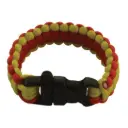
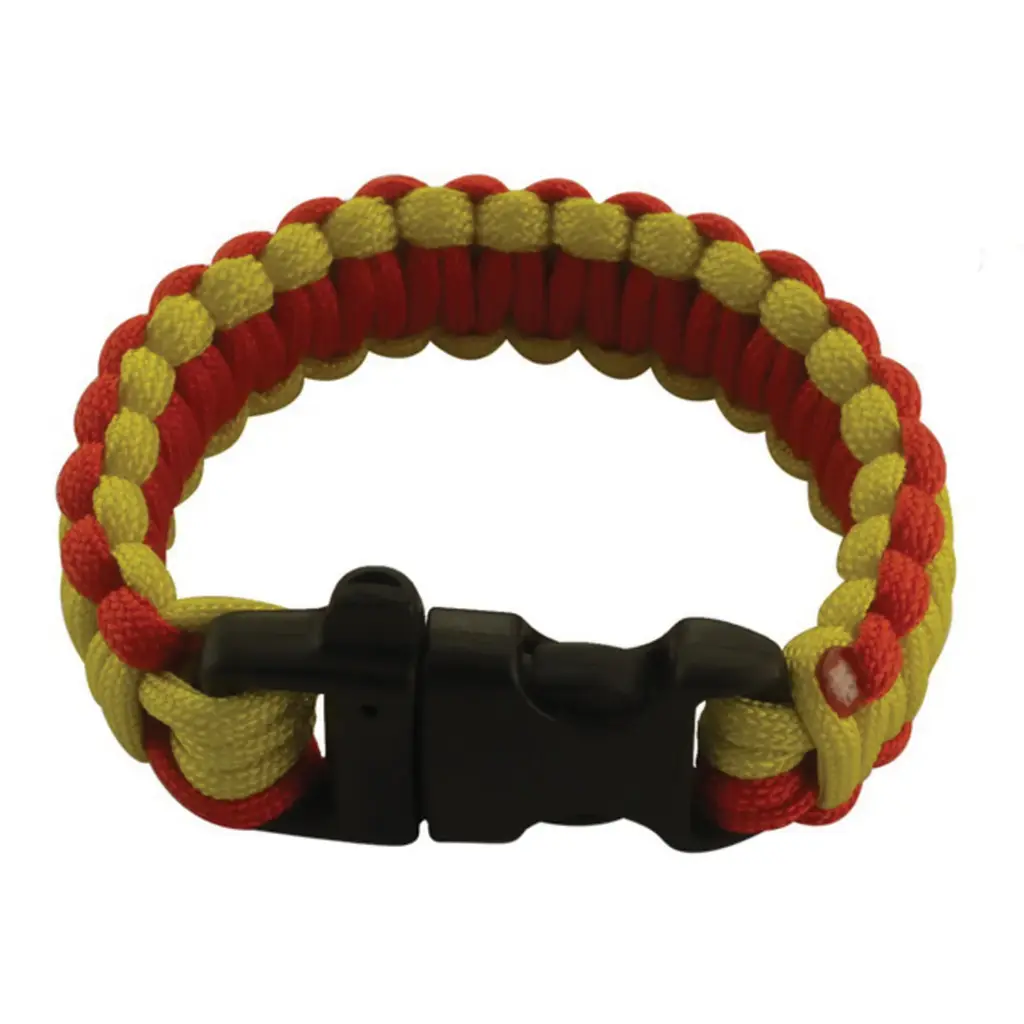
Signal Braid Emergency Paracord Bracelet - Red Yellow
7 sold in last 24 hours
This 550 lbs Type III paracord bracelet is built for real-world emergency preparedness, not just looks. The bright red-and-yellow Signal Braid design stays visible on the trail, at camp, or on the road, while the side-release buckle keeps it secure until you need cordage fast. Wear it daily as an easy backup for shelter ties, gear repairs, or improvised lanyards—compact, dependable, and always on your wrist.
What This Paracord Bracelet Actually Does in an Emergency
The Signal Braid Emergency Paracord Bracelet - Red Yellow is a compact way to carry real 550 lbs Type III paracord on your wrist. In plain terms: this isn’t a fashion bracelet that happens to look tactical—it's a small, wearable spool of reliable cordage for basic emergency preparedness. When you need it, you cut or unwind the bracelet and you’ve got strong, versatile cord ready for shelter building, gear repair, or basic field improvisation.
There’s no gimmick here. No inflated survival promises. Just proven 550 paracord in a bright, easy-to-spot package that you’re more likely to have on you when something goes wrong.
How a 550 Paracord Bracelet Works for Everyday Preparedness
A paracord bracelet is simple by design: the maker uses a flat cobra-style weave to wrap several feet of Type III 550 cord into a compact, wearable loop. This bracelet uses tightly woven synthetic cord with a smooth finish and a black side-release buckle for fast on/off wear.
In normal life, it rides quietly on your wrist. When you need it, you sacrifice the bracelet to access the cord. You cut an end or undo the fused section near the buckle, pull the weave apart, and you’re left with a usable length of 550 lbs-rated line. It won’t replace a full survival kit, but it gives you a reliable backup when you didn’t plan on needing one.
Why This High-Visibility Paracord Bracelet Is Reliable Preparedness Gear
With emergency preparedness, "most effective" usually means "most likely to be on you." This paracord bracelet is designed to be worn all day without getting in the way, so you’re more likely to have cordage when you need it.
550 lbs Type III Strength You Can Count On
Type III 550 paracord is a proven standard: roughly 550 pounds of tensile strength and a multi-strand core that can be separated for finer tasks. That means one bracelet can give you both a strong outer sheath for heavier work and inner strands for lighter jobs like stitching, fishing line improvisation, or gear lashings.
Tight Cobra Weave for Maximum Usable Cord
The flat cobra-style braid and even tension mean you get a solid amount of cordage in a compact bracelet. Instead of loose, decorative loops, the cord is packed in tight, maximizing how much usable line you can carry on your wrist without bulk.
High-Visibility Design: Easy to Spot When It Matters
The red and yellow two-tone pattern isn’t just for style. Those colors are traditionally used in safety and signal gear because they stand out against natural backgrounds. In low light, on the trail, or around camp, this paracord bracelet is easier to see and harder to misplace than muted, tactical colors.
That high-contrast weave pairs with a simple black side-release buckle, keeping the focus on function: quick on/off, secure closure, and a band that draws the eye when you’re looking for your gear fast.
Comfortable, Everyday Carry on Your Wrist
The rounded outer profile of the cobra weave and the smooth synthetic cord make it comfortable against the skin. There are no sharp edges, exposed metal, or hardware to catch on clothing. It’s the kind of emergency preparedness item you can forget you’re wearing—until you need it.
Realistic Ways to Use a Paracord Bracelet in Emergencies
This bracelet won’t magically solve every survival scenario, but having dependable cordage on you opens up a lot of practical options. Common real-world uses include:
- Shelter and tarp tie-downs: securing corners, ridgelines, or wind braces when weather changes fast.
- Gear repair and lashing: fixing broken backpack straps, tying down loose items, or bundling firewood.
- Improvised lanyards and retention: keeping tools, lights, or knives attached to your person or pack.
- Marking and signaling: using the bright cord to flag a path, mark camp, or increase visibility.
- First-aid improvisation: as a last resort, creating slings, securing splints, or tying bandages (with padding).
Preparedness doesn’t have to be dramatic. It’s usually small advantages—like always having cordage on you—that make stressful situations easier to manage.
Carry Reality: When and Where This Paracord Bracelet Shines
This emergency paracord bracelet is built for people who hike, camp, travel, commute, or just prefer to have basic tools close at hand. Because it uses a simple plastic side-release buckle, it’s quick to remove if you need the cord, and just as quick to put back on when you’re done.
It’s especially useful in settings where you don’t want to carry obvious survival gear but still want some capability: concerts, travel days, casual office environments, or quick trips where a full pack feels excessive. Quiet, low-profile preparedness.
What People Ask Before Buying a Paracord Bracelet for Preparedness
How strong is 550 paracord really?
"550" refers to its approximate tensile strength—about 550 pounds under steady pull in ideal conditions. In practical terms, that’s plenty for shelter lines, guy-outs, gear lashings, and many field-expedient uses. It’s not meant for climbing or life support, and no responsible emergency preparedness instructor would present it that way. Treat it as robust utility cord, not a substitute for certified climbing or rescue gear.
How much cord do you usually get from a paracord bracelet?
Exact length depends on wrist size and weave tightness, but a tightly woven cobra-style bracelet like this typically yields several feet of usable 550 paracord once unraveled. That’s enough for basic emergency tasks—like setting a small tarp shelter, making a ridgeline, or repairing key gear—without taking up any pocket or pack space.
Is this paracord bracelet comfortable for everyday wear?
The smooth synthetic cord and rounded braid keep contact points soft against your skin, and the side-release buckle sits flat on the wrist. Most users can wear this paracord bracelet all day without hotspots or rubbing. As with any bracelet, fit matters: snug enough not to spin constantly, loose enough not to pinch when you flex your wrist.
Will I damage the bracelet when I use the paracord?
Yes—using the paracord means sacrificing the bracelet form, but that’s by design. A paracord bracelet is meant as stored cordage first and a wearable accessory second. When you decide to deploy it, you’re choosing function over appearance in that moment. Once used, you can reweave it later if you’re comfortable with basic paracord techniques, or keep the cord loose in your kit and replace the bracelet.
Is a paracord bracelet enough for full emergency preparedness?
On its own, no. A single paracord bracelet is one tool in a broader emergency preparedness approach. It’s ideal as a backup or supplemental resource: cordage you always have on you, even when you don’t have your main kit. Paired with a basic first-aid kit, a small light, and some knowledge, it becomes part of a solid, realistic preparedness plan.
Practical Preparedness You’ll Actually Wear
The Signal Braid Emergency Paracord Bracelet - Red Yellow is intentionally simple: real Type III 550 cord, high-visibility colors, a proven cobra weave, and an easy side-release buckle. No overblown survival promises—just a practical, wearable way to carry cordage every day.
If your goal is calm, informed readiness rather than dramatic survival fantasies, this bracelet fits. Put it on, forget about it, and know that if a small problem shows up—a broken strap, a loose tarp, gear that needs securing—you’ve already got one of the most useful basic tools on your wrist.