Signal Rescue Rapid-Access EMT Knife - Orange Aluminum
4 sold in last 24 hours
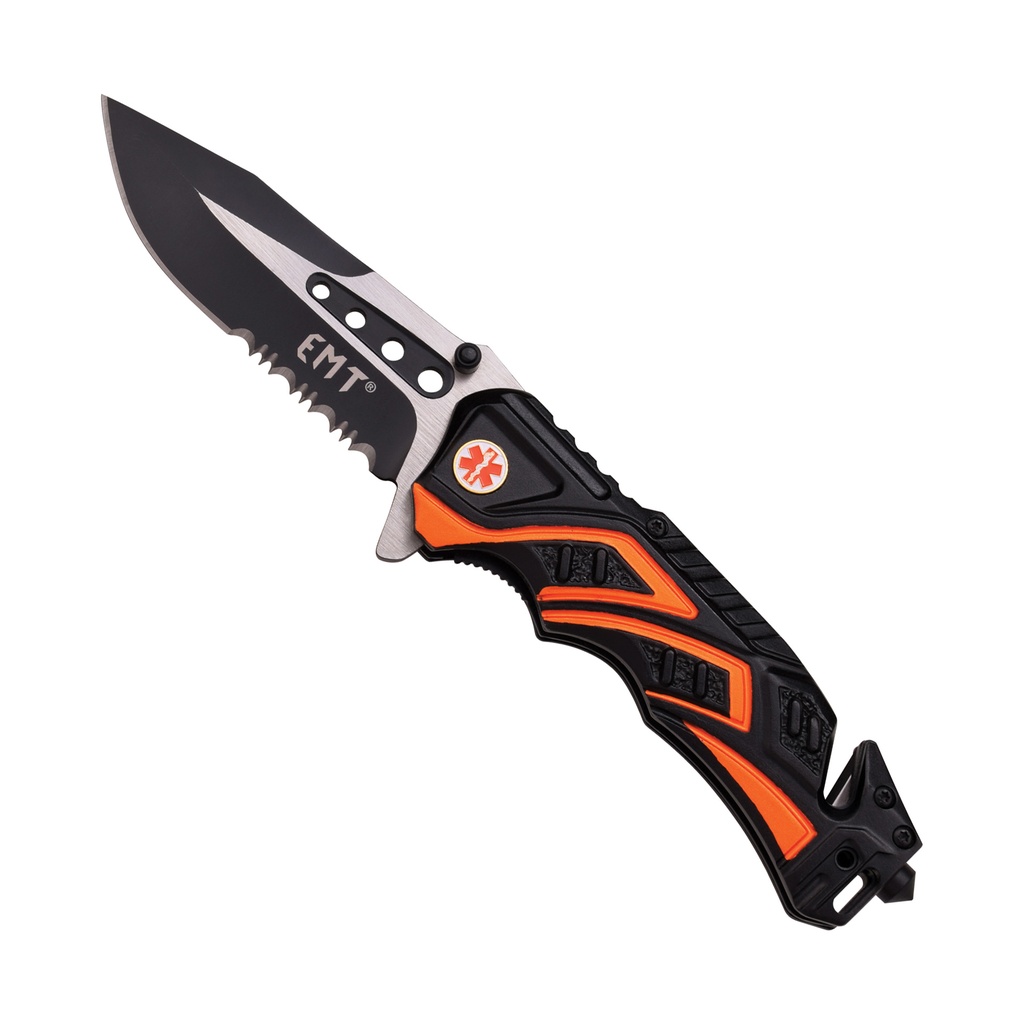
Built for EMTs and anyone who takes emergency prep seriously, the Signal Rescue Rapid-Access EMT Knife snaps open with spring-assisted speed for one-handed use. A partially serrated drop-point blade chews through seatbelts and stubborn material, while the integrated belt cutter and glass breaker handle vehicle extractions. High‑vis orange aluminum scales stay easy to spot in low light or chaos. A secure liner lock and pocket clip keep this rescue knife ready for daily carry, go-bags, or vehicle kits.
What This EMT Knife Actually Does in a Real Emergency
The Signal Rescue Rapid-Access EMT Knife - Orange Aluminum is built for people who care less about tacticool looks and more about what happens in the awkward, stressful minutes after a crash or medical emergency. This is an assisted-opening EMT knife designed to help you cut a seatbelt, break a side window, or slice through clothing and cordage quickly, with one hand, when seconds matter.
Every feature on this rescue knife serves that purpose: spring-assisted deployment, high-visibility orange scales, an integrated belt cutter, and a glass breaker. No gimmicks, no fantasy use cases—just a compact, practical emergency tool you can actually carry every day.
How an Assisted Opening EMT Knife Works in Practice
This is a spring-assisted folding knife, not an automatic. That means you start the blade with a thumb stud, and an internal spring does the rest, snapping it fully open with a positive click. In real terms, that gives you three advantages in an emergency:
- One-handed access: You can open it while bracing a patient, holding a door, or stabilizing yourself.
- Consistent deployment: The spring assist helps overcome shaky hands and adrenaline.
- Safer than fully automatic: You control the start of the motion, reducing accidental openings in a pocket or bag.
Once open, the liner lock engages behind the tang of the blade. That lock-up is what keeps the blade from folding on your fingers while you're sawing through a seatbelt or cutting clothing during patient access.
Why This EMT Knife Is Built for Real Rescue Work
A lot of “rescue” folders throw on a glass breaker nub and call it a day. This EMT knife actually layers the core rescue functions in a way that makes sense when you're under pressure: blade for general cutting, dedicated belt cutter for clean strap cuts, and glass breaker for side windows.
Blade Geometry for Controlled Cutting
The 3.5-inch partially serrated drop point blade combines straight edge control with serration aggression. The plain edge near the tip gives you predictable, careful cuts for clothing, tape, or fine work. The serrated section closer to the handle bites into webbing, rope, and seatbelts without skating off the material.
The drop point profile is deliberate: it keeps the tip in line with your grip for better control, especially when you're working in tight spaces or around a patient where avoiding accidental punctures actually matters.
Rescue-Ready Handle Design and Tools
The high-visibility orange aluminum handle scales stand out on a floorboard, in grass, or in a cluttered bag—important when you put a tool down mid-call and have to find it again instantly. Textured finger grooves help lock your grip even if your hands are wet or gloved.
- Belt / seatbelt cutter: Built into the spine of the handle, this protected cutting hook lets you slide webbing or clothing in and pull through without exposing a sharp tip near the patient.
- Glass breaker: The hardened tip at the butt of the handle is designed to target side windows. A focused impact at a corner of the glass can mean quick access to a trapped driver when doors are jammed.
- Pocket clip: The clip keeps the knife indexed in the same place every time—front pocket, duty belt, or vest—so you're not searching for it when you're already on scene.
Carrying This Knife for Everyday Preparedness
This EMT knife is sized for real-world carry: about 4.5 inches closed and 8.0 inches overall when deployed. That puts it in a comfortable pocket folder range—large enough to work confidently with gloves, compact enough to carry daily without noticing it.
For EMTs and first responders, it rides well on a uniform pocket or gear vest via the clip. For civilians, it fits naturally as an everyday carry rescue knife in a front pocket, vehicle visor, center console, or go-bag. The spring-assisted opening and liner lock make it practical as an EDC utility knife as well as an emergency tool.
Build Quality and Reliability Under Stress
The blade is stainless steel with a matte black two-tone finish, giving you corrosion resistance and reduced glare. That matters more than it sounds—flashy reflections in a night scene or inside a vehicle can be distracting when you're already managing chaos.
The liner lock is a proven, common locking system. It's easy to understand at a glance, which is what you want if multiple people may use this tool in an emergency kit. Dual thumb studs allow either hand to open the blade, an underrated advantage if your primary hand is occupied, injured, or stabilizing a patient.
The aluminum handle is lightweight yet rigid, and stands up better to ride-along abuse in vehicles or bags than many plastic-handled folders. Between the visibility, rigidity, and ergonomic shaping, it gives you a dependable base for the blade and rescue tools.
What People Ask Before Buying a Sturdy EMT Rescue Knife
How effective are EMT knives for real emergencies?
An EMT knife like this is not a magic solution; it's a purpose-built tool that solves three specific problems well: cutting restraints and clothing, accessing vehicles through glass, and giving you a compact, always-on-you utility blade. If you're trained and calm enough to use it, it can speed up extrication and patient access significantly compared to improvising with dull tools or bare hands.
Its effectiveness comes from being available and simple. A rescue knife in your pocket beats a more elaborate tool locked in a compartment you can't reach. Use the blade and belt cutter for controlled cuts, and reserve the glass breaker for situations where you’ve confirmed it's safe to break a side window.
Does this replace dedicated rescue tools?
No. This EMT knife complements, not replaces, full-size tools like halligans, seatbelt cutters with larger handles, or spring-loaded glass punches. Think of it as your first-access tool—the one you can deploy in seconds while bigger equipment is still being fetched or staged.
Is this EMT knife legal to carry?
Knife laws vary by state and even by city. Most areas treat spring-assisted knives differently than true automatics, and many allow folders with blades in this length range for everyday carry. However, some jurisdictions restrict assisted opening mechanisms, blade length, or carry locations (like schools and certain public buildings).
The practical approach: check your state and local statutes on folding knives and assisted opening knives specifically, and if you're a uniformed responder, confirm department policy about duty-carry tools. When in doubt, treat this as a utility and rescue knife, not a weapon, and carry it accordingly.
Where should I keep an EMT knife for best readiness?
For first responders, clipped consistently in the same pocket or on the same gear location is ideal—muscle memory matters when your attention is on the patient, not the tool. For civilians, consider one in the driver’s door pocket or center console, and another in a go-bag or home emergency kit. The key is predictable placement you can reach while belted in.
Carrying With Purpose: Turning a Knife Into a Rescue Plan
Owning an EMT knife is only half the equation. The useful half is knowing exactly what role it plays in your personal emergency plan. This knife gives you three reliable actions you can bank on: cut a seatbelt, break a side window, and perform controlled cuts on clothing or cordage. If you rehearse those mentally—where you carry it, how you open it, how you orient the belt cutter and glass breaker—you move from just having gear to having a plan.
The Signal Rescue Rapid-Access EMT Knife - Orange Aluminum is built for that kind of calm, prepared user. It won’t do the thinking for you, but it will do its job cleanly when you need it, which is exactly what a real rescue tool should offer.
| Blade Length (inches) | 3.5 |
| Overall Length (inches) | 8.0 |
| Closed Length (inches) | 4.5 |
| Blade Color | Black |
| Blade Finish | Matte |
| Blade Style | Drop Point |
| Blade Edge | Partial-Serrated |
| Blade Material | Stainless Steel |
| Handle Finish | Two Tone |
| Handle Material | Aluminum |
| Theme | EMT |
| Pocket Clip | Yes |
| Deployment Method | Spring-assisted |
| Lock Type | Liner lock |