Signal Rescue Duty OTF Knife - Rubberized Orange
11 sold in last 24 hours
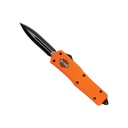
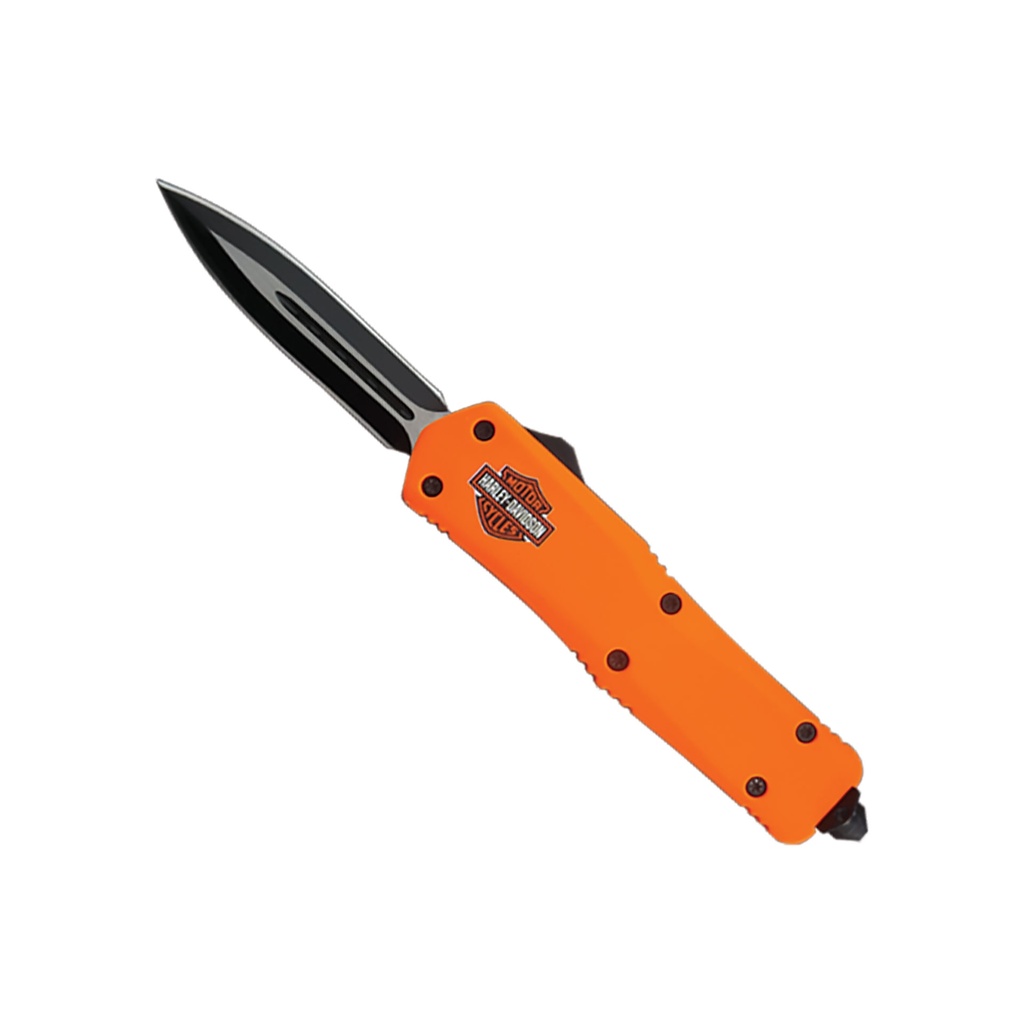
The Signal Rescue Duty OTF Knife - Rubberized Orange is a high-visibility out-the-front workhorse built for shift workers, first responders, and serious EDC. A matte black spear point blade snaps in and out with reliable double-action, while the rubberized orange handle locks into your hand even when wet or gloved. The pocket clip, glass breaker, and included nylon holster keep it accessible in vehicles, on the job, or in daily carry. Compact at 7" overall, it rides light but stands ready for real use.
What the Signal Rescue Duty OTF Knife Actually Does for You
The Signal Rescue Duty OTF Knife - Rubberized Orange is built as a practical everyday carry tool, not a novelty. It’s a compact, double-action out-the-front knife designed for people who work in real environments—shift workers, first responders, industrial crews, and EDC users who want something they can find fast, grip securely, and deploy with one hand.
At 7 inches overall with a 2.75-inch matte black spear point blade, this OTF knife gives you a controlled cutting tool that’s easy to carry and even easier to locate thanks to its high-visibility rubberized orange handle. It’s about access, control, and reliability under stress.
Why This OTF Knife Works as a Practical Duty and EDC Tool
When you choose an out-the-front knife for daily carry, you’re really choosing three things: how reliably it deploys, how secure it is in the hand, and how easy it is to get to when you actually need it. The Signal Rescue Duty OTF Knife is built around those priorities.
- Reliable double-action mechanism: A side-mounted slider drives the blade out and back along internal tracks, giving you repeatable, one-handed deployment.
- Rubberized orange handle: The high-visibility color and textured rubber surface make this knife easy to spot and hard to drop.
- Glass breaker and pocket clip: Practical additions that align with duty, vehicle, and work carry rather than display or collection.
This isn’t a showpiece. It’s a straightforward OTF knife built to ride in a pocket, on a belt, or in a vehicle and be usable with cold, wet, or gloved hands.
How the Double-Action OTF Mechanism Works in Real Use
Out-the-front knives operate differently from folders and fixed blades, and understanding that helps you use one more confidently.
On this model, the black side slider is your control point. Pushing it forward drives a spring-loaded internal carriage that extends the spear point blade out through the front of the handle. Pulling the slider back retracts the blade fully inside the handle.
Because it’s double-action, you don’t have to manually reset anything—the same slider both fires and retracts the blade. That means:
- One-handed open and close without changing your grip
- No flipper tab or thumb stud to hunt for under stress
- No exposed blade when it’s retracted—safer in pockets and bags
Like most modern OTF knives, the mechanism is built with an internal safety bias: if the blade meets significant resistance during deployment, it will typically stall or disconnect rather than drive through. That’s by design, and it’s part of what makes an OTF knife safer to carry and use around clothing and gear.
Build Quality Details That Matter on an OTF Knife
Secure, High-Visibility Rubberized Grip
The rubberized orange handle is more than a styling choice. The bright color makes this knife easy to locate in a cluttered vehicle, on dark job sites, or in the bottom of a bag. The rubberized surface improves friction in the hand, especially in conditions where a smooth metal handle would get slick—sweat, rain, or gloves.
Four visible body screws tie the handle scales together, signaling a serviceable construction rather than a sealed disposable design. The shield-style badge inset into the handle reinforces the duty and protection aesthetic.
Blade Geometry and Everyday Performance
The 2.75-inch matte black spear point blade is optimized for controlled, general-purpose cutting. The symmetrical spear profile gives a strong tip while the plain edge keeps sharpening simple and predictable.
At 7 inches overall and 4.25 inches closed, this knife sits in the sweet spot for out-the-front EDC: long enough to be useful for cutting tasks, compact enough to carry without printing heavily or digging into your leg when seated.
Carry Reality: How This OTF Knife Rides and Deploys
For any knife you intend to carry daily, the draw and deployment matter as much as the blade itself. The Signal Rescue Duty OTF Knife is set up for realistic, repeatable carry.
- Pocket clip: The spine-mounted clip lets the knife ride along the seam of your pocket or on a vest or bag strap for quick retrieval.
- Nylon holster: The included holster adds options—belt carry, MOLLE mounting, or glovebox organization.
- Glass breaker: The pointed butt-end tip gives you a dedicated impact point for window break or striking in emergencies.
Because it’s a double-action OTF, you don’t need to swing the blade open or clear side space like you do with many folders. In tight spaces—inside vehicles, between seats, or in cramped work areas—being able to drive the blade straight out from the handle is a genuine advantage.
What People Ask Before Buying a Stun Gun for Protection
Many people researching personal protection gear look at both knives and stun guns for self defense. While this product is an OTF knife, the same practical, no-hype approach applies when you’re assessing an actual stun gun for personal protection.
How effective are stun guns for self defense?
A stun gun for self defense can be effective as a close-contact tool when used correctly, but it isn’t magic and it isn’t a distance weapon. A typical civilian stun gun relies on delivering enough current (amperage) over a focused contact area for several seconds to disrupt muscle control and create pain compliance.
In practice, that means you must get solid contact on the attacker—ideally on larger muscle groups or areas with lots of nerve endings—and maintain that contact under stress. It’s a tool that works best as part of an overall protection plan that includes awareness, movement, and a clear idea of when and how you’re willing to use force.
Does voltage or amperage matter more in a stun gun?
Voltage numbers in stun gun marketing are mostly theater. Once you’re past the point where the electricity will arc through clothing and skin—a relatively modest voltage level—increasing that number doesn’t make the stun gun dramatically more effective for self defense.
What matters more is amperage (the actual current delivered), contact time, and contact area. A well-built stun gun with realistic current output, a solid power source, and electrodes that stay planted on target will outperform a flimsy unit that screams about “millions of volts” but can’t maintain reliable contact or consistent output. When evaluating the best stun gun for personal protection, look for build quality, battery performance, and ergonomics before chasing voltage claims.
Is this stun gun legal to carry in my state?
Stun gun and TASER-style device laws vary by state and, in some cases, by city. Some states treat a stun gun for self defense much like other personal protection tools with relatively light restrictions. Others require permits, restrict carry in certain locations, or prohibit them outright.
The right approach is to check your current state and local laws just before buying or carrying—statutes can change. Look specifically for terms like “stun gun,” “electronic control device,” or “conducted energy weapon” in your state code. If you already carry an OTF knife like the Signal Rescue Duty, you’re familiar with how weapon classifications can vary; treat stun gun legality with the same attention to detail.
Building a Practical, Layered Personal Protection Setup
Whether you’re choosing an OTF knife, a stun gun for self defense, or both, the goal is the same: practical personal protection that fits your real life. Tools like the Signal Rescue Duty OTF Knife give you reliable cutting capability, emergency glass-breaking, and controlled deployment in a compact package you’ll actually carry.
For many people, the best stun gun for personal protection is one that complements that kit: honest amperage claims, solid construction, intuitive safety, and a carry format that lets you access it under stress. No hype, no fear language—just gear that works the way you expect.
When you understand how your tools function—how an out-the-front knife deploys, how stun guns work, and what their limits are—you’re already ahead of most buyers. You’re not just collecting gear; you’re building a coherent, tested self-defense and personal protection setup you can rely on when it matters.
| Blade Length (inches) | 2.75 |
| Overall Length (inches) | 7 |
| Closed Length (inches) | 4.25 |
| Weight (oz.) | 4.73 |
| Blade Color | Black |
| Blade Finish | Matte |
| Blade Style | Spear Point |
| Blade Edge | Plain |
| Blade Material | Steel |
| Handle Finish | Rubberized |
| Handle Material | Rubber |
| Theme | None |
| Double/Single Action | Double |
| Pocket Clip | Yes |
| Sheath/Holster | Nylon |