Signal Sentinel High-Vis Training Handcuffs - Pink Chrome
7 sold in last 24 hours
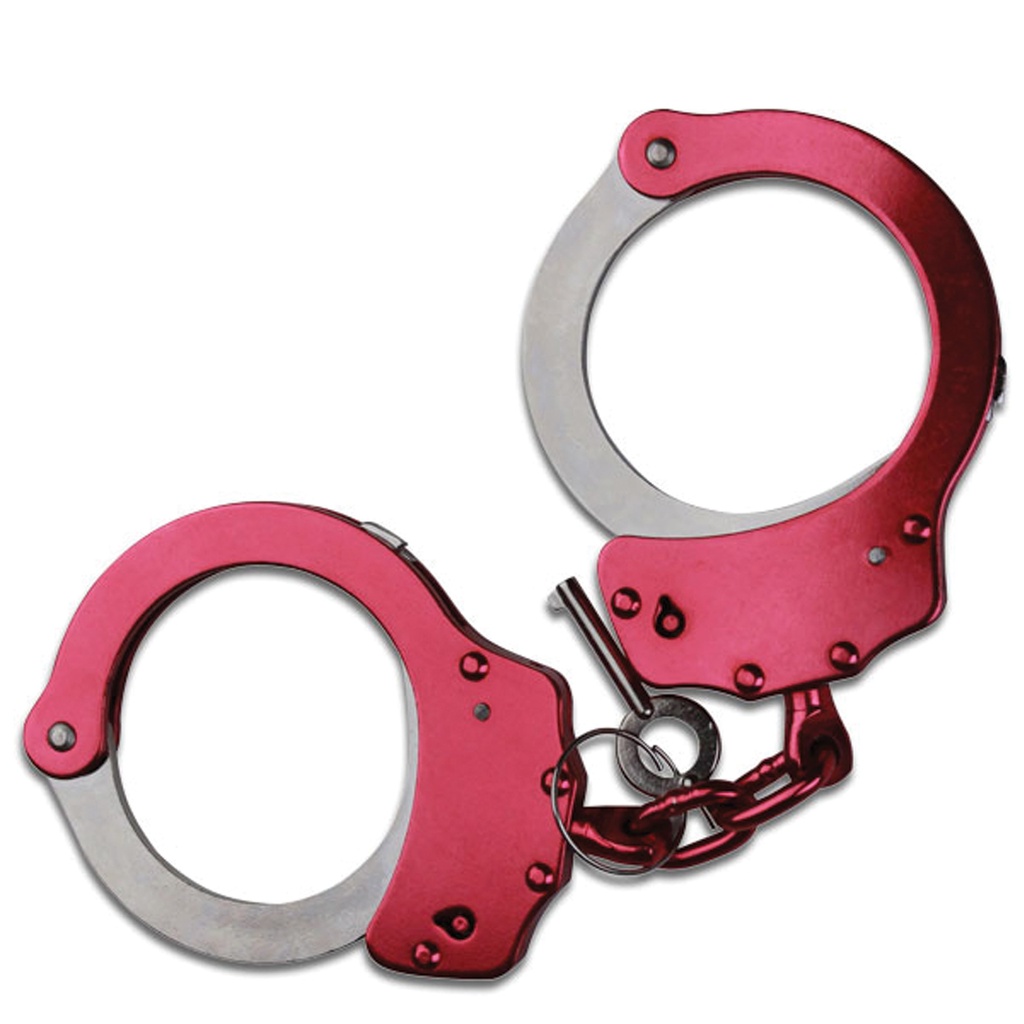
These Signal Sentinel handcuffs use a high-visibility pink chrome finish to make training and transport restraint clear, controlled, and easy to monitor. A disc-style double lock helps prevent over-tightening once applied, while smooth ratchet action and a universal keyway keep operation familiar for security and law enforcement users. Chrome-plated steel construction delivers dependable strength, and the short link chain maintains practical control without looking needlessly aggressive. Ideal for agencies, trainers, and retailers who want professional restraint with instant visual clarity.
What These Handcuffs Actually Do in Real-World Control
Signal Sentinel High-Vis Training Handcuffs - Pink Chrome are built for one job: secure, predictable restraint that looks like deliberate control, not chaos. In training rooms, medical transports, and lower-threat security environments, the goal is clear compliance with minimal drama. These handcuffs give you that—professional-grade mechanics and a high-visibility finish that tells everyone exactly what’s happening without escalating tension.
Instead of disappearing like standard steel cuffs, the pink chrome stands out. That visibility makes it easier to confirm placement, monitor fit, and maintain clear accountability in photos, video, or documentation. You’re not trying to look tough; you’re trying to stay in control. These cuffs are designed around that mindset.
Handcuff Design for Practical Restraint, Not Intimidation
The core of these handcuffs is a familiar, chain-style law-enforcement silhouette in chrome-plated steel. If you’ve used standard duty cuffs, the feel and function will make sense immediately: swing-through ratcheting arms, a short center chain, and a key-operated double lock. The difference here is in visibility and presentation—same mechanics, less confrontational appearance.
That makes them especially well-suited for training environments, hospital or clinic security, campus security, and any setting where you want professional restraint tools that don’t visually scream “high-threat arrest,” but still work like real hardware.
Disc-Style Double Lock for Safer, Predictable Fit
Each cuff features a disc-style double-lock mechanism. Once the cuff is applied to a safe, functional tightness, you engage the double lock to prevent further tightening. This reduces the risk of pressure injuries from movement, especially during longer transports or when a subject is being repositioned frequently.
The disc design offers tactile feedback—trained users can feel when it’s set—and keeps the lock protected in a compact housing. It’s a small detail, but in real restraint work, those details are what keep tools predictable and documentation clean.
Smooth Ratchet Action and Universal Keyway
The ratcheting arms swing smoothly through the cheek, so you can apply the handcuffs quickly without fighting gritty or inconsistent movement. That matters under stress: less fumbling, more controlled application.
A universal-style keyway means they work with standard handcuff keys, including the included metal key on a small split ring. For agencies, trainers, or range programs, that compatibility reduces headaches—no hunting for a proprietary release tool.
Why High-Visibility Pink Chrome Matters in Training and Transport
The pink chrome finish isn’t just an aesthetic choice; it’s a functional one. High-visibility restraint tools help everyone involved understand what’s going on, from bystanders to supervisors reviewing footage.
- Fast visual confirmation: In dynamic scenarios, you can immediately see whether someone is cuffed and how the cuffs are oriented.
- Reduced perceived aggression: The bright color softens the visual impact of otherwise serious hardware—useful in training with new recruits, role-players, or vulnerable populations.
- Clear separation from duty gear: Agencies can easily distinguish training or transport cuffs from standard field restraints at a glance.
In short, the finish supports a calmer, more deliberate approach to control, especially where optics and professionalism matter as much as mechanical function.
Build Quality You Can Feel in Everyday Use
These aren’t toy cuffs. Under the pink chrome is steel chosen for predictable strength and durability. The chrome plating adds corrosion resistance and a smooth surface, which helps both in cleaning and in avoiding unnecessary abrasion against skin during movement.
Multiple visible rivets secure the body shells, and the smooth, rounded edges help reduce hot spots and sharp contact points. The short double-link chain strikes a balance between control and mobility—enough movement to position a subject for seating, walking, or transport, but limited enough to maintain effective restraint without wrestling.
Comfort and Control in Practical Scenarios
“Comfort” in restraint is relative—you’re still limiting someone’s movement. But well-designed cuffs can reduce avoidable harm. The rounded profiles and consistent ratchet spacing give more predictable pressure distribution on the wrist compared to cheaper, rough-finished imports.
For trainers and supervisors, that consistency matters. It makes it easier to teach appropriate application, document technique, and maintain a standard of care that aligns with your organization’s policies.
Carrying and Deploying These Handcuffs Under Real Conditions
From a carry standpoint, these handcuffs ride just like standard chain cuffs, fitting most open-top and covered handcuff pouches designed for traditional law-enforcement restraints. The pink chrome will be visible on open carriers; that may be a feature or a drawback, depending on whether you want your restraint tools to stand out or stay discreet.
Deployment technique is the same as with conventional cuffs: establish control, position the wrists, and apply one cuff at a time using the swing-through ratchet. The smooth ratchet action makes it easier to get a clean click without over-driving the arm. Once applied, you engage the disc-style double lock to fix the size.
What People Ask Before Buying a Stun Gun for Protection
Most people looking at gear for personal protection start with stun guns and similar tools. Even if you’re here for handcuffs, the same mindset applies: you want equipment that actually works, not just big marketing numbers. So it’s worth addressing the most common stun gun questions clearly.
How effective are stun guns for self defense?
A stun gun for self defense can be effective in very specific conditions: close range, solid contact on bare skin or thin clothing, and a long enough contact time to disrupt muscle control or create strong pain compliance. They are not magic “drop someone instantly” devices.
If you choose a stun gun for personal protection, treat it like a contact tool in a close-range fight, not a distance solution. That means you still need basic movement, awareness, and an exit plan. The best stun gun for personal protection is the one you can reliably access, control, and use under pressure—not just the one with the biggest voltage printed on the package.
Does voltage or amperage matter more in a stun gun?
Voltage is mostly about the spark being able to arc through clothing and across small air gaps. It looks impressive, but after a certain point, more advertised “millions of volts” doesn’t mean more real stopping power.
The current—amperage—and contact time are what matter most for effect. A well-built stun gun with controlled amperage, a good contact area, and a stable power source will outperform a flimsy, high-voltage-branded device in real self-defense use. When evaluating a stun gun, look at build quality, battery design, and ergonomics before getting caught up in voltage hype.
Is this stun gun legal to carry in my state?
Stun gun legality in the United States is handled at the state and sometimes city level. Many states allow stun guns for personal protection with few restrictions; others require permits, and a few impose bans or tight conditions in certain jurisdictions.
Before you buy or carry any stun gun for self defense, check:
- Your state statutes on electronic control devices or stun guns
- Local city or county ordinances, especially in major metro areas
- Any additional rules for schools, government buildings, or workplaces
If you’re a security professional, also confirm your agency’s policies—what’s allowed, how it must be carried, and any training requirements.
Putting It All Together: Calm, Controlled Restraint as Part of a Protection Plan
Whether you’re issuing these Signal Sentinel High-Vis Training Handcuffs for instruction, using them in medical or campus security, or stocking them for customers who want professional-grade gear, the goal is the same: visible, accountable control with tools that behave predictably.
The high-visibility pink chrome makes restraint obvious without turning the scene into a spectacle. The disc-style double lock, smooth ratchet action, and universal keyway keep operation simple and familiar. And the steel construction under the finish provides the reliability professionals expect from everyday restraint tools.
Paired with realistic training—whether that’s defensive tactics, transport procedures, or scenario-based drills—these handcuffs help reinforce a protection mindset built on calm, methodical action instead of intimidation. That’s the same mindset that should guide stun gun selection, carry, and use: understand what the tool can actually do, set clear expectations, and build your skills around that reality.
If your role involves managing people under stress, these handcuffs offer a straightforward advantage: restraint that’s easy to see, easy to supervise, and designed to keep your control techniques as clean and professional as they look.