Silent Rhythm Dojo Nunchucks - Natural Wood
12 sold in last 24 hours
Silent Rhythm Dojo Nunchucks – Natural Wood give you that classic, no-drama training feel: hardwood handles, quiet rope connection, and smooth balance that rewards clean technique. The natural wood warms to your grip and stays predictable through basics, kata, and flow drills. Built for serious dojo practice and demonstrations, these traditional nunchucks focus on control, timing, and repetition—not flash—so students and instructors can train fundamentals with confidence.
Silent Rhythm Dojo Nunchucks Built for Real Training
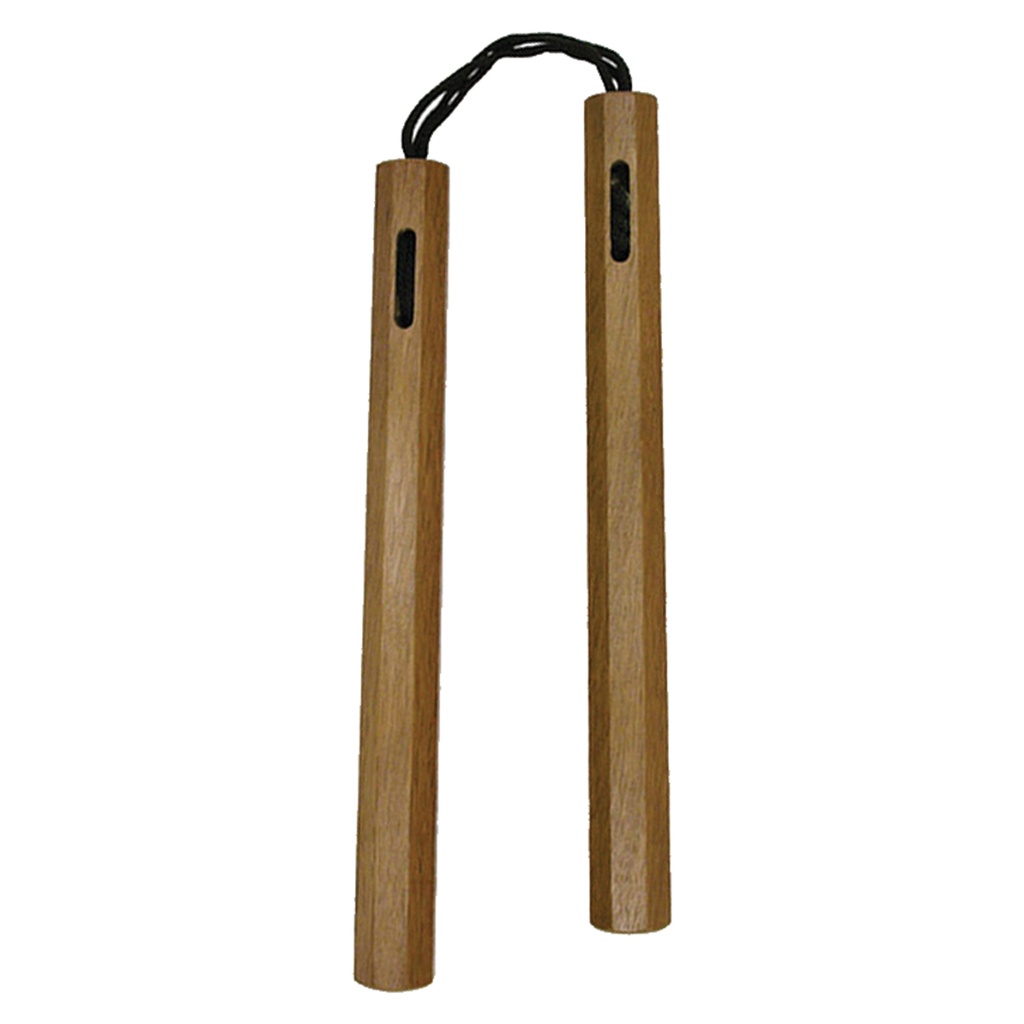
These Silent Rhythm Dojo Nunchucks - Natural Wood are exactly what most martial artists actually need for practice: traditional hardwood nunchucks with a quiet rope connection, predictable balance, and a clean, natural finish. No gimmicks, no decoration that gets in the way—just a classic dojo training weapon that lets you focus on control, timing, and technique.
Why Traditional Rope Nunchucks Still Matter in the Dojo
In many dojos, the best training gear is the simple gear that disappears in your hands. These rope nunchucks do that. The hardwood handles sit comfortably in your grip, the rope runs quietly, and you can move from basics to combinations without fighting the weapon. For instructors, that means a reliable tool for students. For students, it means a consistent feel you can trust from rep to rep.
Balanced Hardwood Handles for Consistent Control
The natural hardwood handles offer a solid, dependable weight—light enough for extended practice, substantial enough to give clear feedback when you make contact or miss your line. The smooth, matte finish helps prevent hot spots during long sessions and lets your grip adjust freely without sticking. Subtle facets along the round profile improve rotational control while keeping the traditional cylindrical look.
Quiet Rope Connection for Focused Practice
The rope connector is one of the most underrated parts of nunchucks. A well-set rope runs quietly, tracks consistently, and doesn’t distract you or your training partners. These dojo nunchucks use a black braided rope that moves smoothly through the vertical slots in each handle, keeping the connection quiet and predictable—ideal for kata, partner work, and demonstration where control matters more than flash.
How These Nunchucks Work in Real Dojo Training
Nunchucks are primarily a coordination, timing, and body-mechanics tool in modern training. You learn to manage angular momentum, transitions between grips, and the relationship between your hands and your centerline. These natural-wood nunchucks support that role by giving you a consistent swing arc and reliable feedback.
The rope connection offers a slightly softer, more forgiving feel than a chain, which many instructors prefer for foundational training. It reduces harsh impact on mis-catches and helps students build confidence while they work up to faster speeds and more complex patterns.
Built for Fundamentals, Not Flash
With no logos, no paint, and no gloss, these nunchucks are clearly designed for work, not display. That matters in a dojo setting: students aren’t comparing finishes, they’re learning patterns. Instructors aren’t worried about chips in paint, they’re watching stances and guard position. The plain natural wood keeps attention where it belongs—on clean execution and safe control.
Reliable Construction for Repeated Reps
The vertical rope slots and flat-cut ends are simple, proven design choices. They keep the connection centered and help the handles track evenly through spins and passes. Paired handles of matching length and diameter support muscle memory; when both sides feel the same, you burn in patterns faster and correct mistakes more easily. For schools buying multiple sets, that kind of consistency across training weapons matters.
Carry, Storage, and Everyday Practicalities
While these are primarily dojo training nunchucks, the same practical mindset applies to storage and transport. The rope connection allows them to fold compactly into a bag or gear locker without sharp edges or protruding hardware. The smooth natural wood won’t catch easily on fabric and is less likely to damage other items in your gear bag.
For instructors who travel between schools or events, the minimalist design means they pack easily, stack cleanly, and present well for demonstrations without needing special care. A simple wipe-down and periodic inspection of the rope is generally all that’s required to keep them training-ready.
What People Ask Before Buying a Stun Gun for Protection
Many people researching personal protection gear start with stun gun questions—even when they’re also looking at traditional martial arts weapons like nunchucks. Below are practical, hype-free answers that cut through common misunderstandings about stun guns for self defense.
How effective are stun guns for self defense?
A stun gun for self defense can be effective in close-range encounters when three things line up: enough current (amperage) to disrupt muscle control, solid contact on the body, and a contact time of at least a second or two. They are not magic “drop someone instantly” devices. In real use, a stun gun works best as a pain-compliance and distraction tool, creating an opening to break contact, escape, or transition to a safer position. Quality stun guns with a focused contact area and reliable power source generally perform better than cheap, high-"voltage" models that look impressive but don’t deliver consistent current.
Does voltage or amperage matter more in a stun gun?
Voltage gets used in marketing because big numbers sound powerful, but amperage is what actually does the work. Once you have enough voltage to arc across clothing and skin—usually far less than the “million volt” claims—what matters most is how much current (amperage) the stun gun can reliably deliver into the target over time. A well-built stun gun for self defense focuses on manageable, effective current, contact design, and battery performance instead of chasing inflated voltage claims. When comparing models, look for honest discussion of amperage, contact time, and build quality rather than just a voltage headline.
Is this stun gun legal to carry in my state?
Stun gun laws vary by state and sometimes by city. Some areas treat a stun gun for self defense similarly to other defensive tools and allow adult carry with few restrictions; others require permits, restrict carry in certain locations (schools, government buildings, public events), or ban them outright. Before you buy or carry any stun gun, check your state and local regulations from an official source—often the state statutes or the attorney general’s website. If you travel, remember that what’s legal in your home state might not be legal across state lines, so plan accordingly.
Choosing and Using Protection Tools with a Clear Head
Whether you’re investing in traditional dojo weapons like these natural-wood nunchucks or evaluating a stun gun for personal protection, the same principles apply: understand what the tool can and cannot do, prioritize build quality over marketing claims, and train realistically for how you’ll actually use it.
These Silent Rhythm Dojo Nunchucks - Natural Wood give martial artists a straightforward, dependable training partner for fundamentals, kata, and demonstrations. In the same way, an honest approach to selecting a stun gun—focusing on amperage, contact time, and reliability instead of hype—puts you in a better position to protect yourself responsibly. Calm, informed preparation always beats dramatic promises, whether you’re in the dojo or planning your everyday self-defense strategy.