Skull-Guard Heritage Combat Trench Knife - Brass
9 sold in last 24 hours
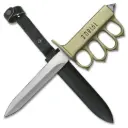
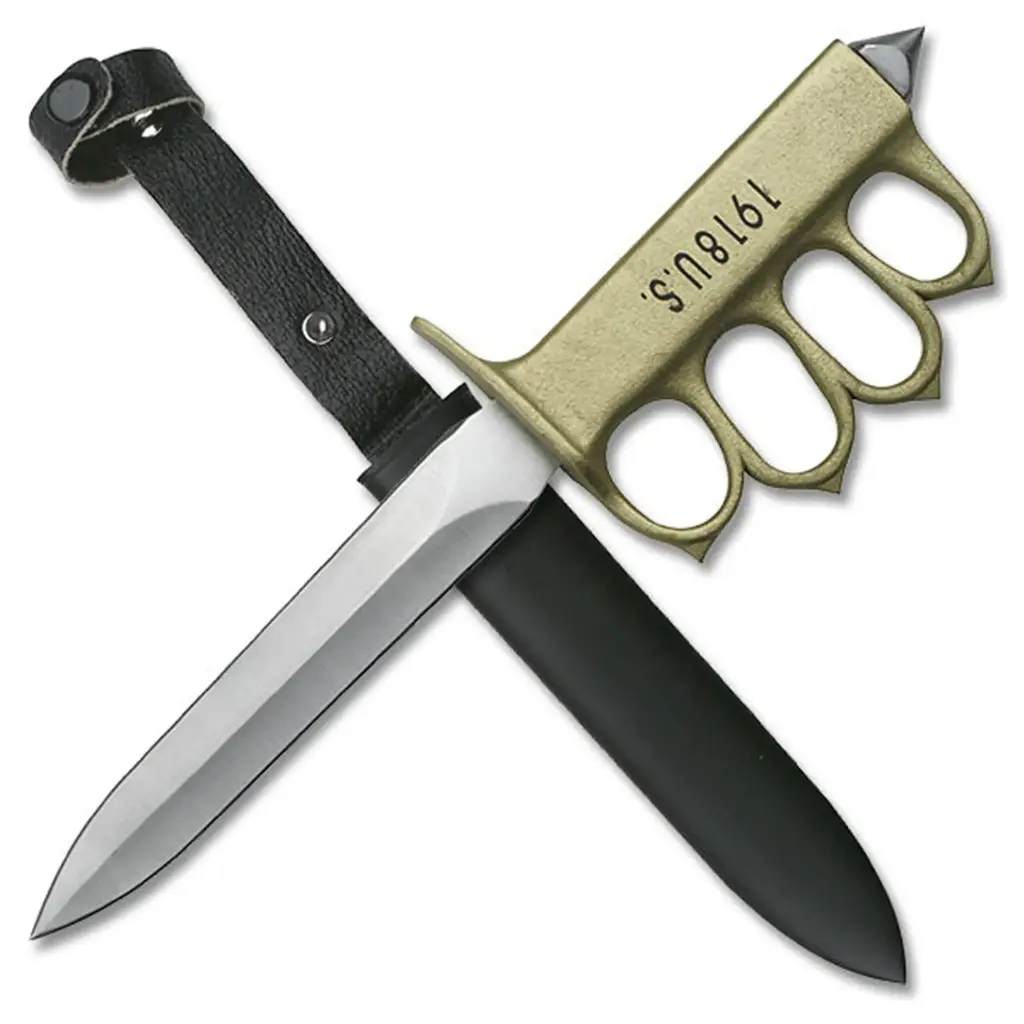
The Skull-Guard Heritage Combat Trench Knife - Brass brings the iconic 1918 trench knife out of the history books and into your hand. A 6.75" double-edged dagger blade, full-tang construction, brass knuckle-guard stamped “1918 U.S.”, and skull-crusher pommel create a brutally authentic combat-style profile. The belt-ready leather sheath makes it easy to display, carry, or stage as part of a collection. It’s a heritage trench knife for buyers who appreciate classic military design and solid steel and brass, not gimmicks.
What the Skull-Guard Heritage Combat Trench Knife - Brass Actually Is
This is a full-size fixed blade trench knife modeled on the classic 1918 pattern: a 6.75" double-edged dagger mated to a solid brass knuckle-guard handle stamped “1918 U.S.” and finished with a skull-crusher pommel. At 11.4" overall with full-tang construction and a belt-ready leather sheath, it’s built as a combat-style fighting knife and display piece for people who favor real steel and brass over fantasy designs.
In plain terms: this is not a delicate everyday carry. It’s a heritage combat trench knife for collectors, military history buffs, and anyone who wants a brutally honest fighting-knife profile in their lineup.
Fixed Blade Trench Knife Design, Not a Folding EDC
The Skull-Guard Heritage Combat Trench Knife - Brass is a fixed blade, which means there’s no hinge, lock, or opening mechanism to worry about. The steel runs as a full tang through the handle, and the brass knuckle-guard is built around it. For a combat-style knife in this format, that’s exactly what you want: maximum rigidity, no moving parts, and a handle that protects your fingers and anchors your grip.
The double-edged dagger profile, combined with the trench-style brass knuckle handle, is purpose-built for close-quarters fighting — the same environment the original 1918 trench knives were designed for. If you’re buying this for its historic combat roots, the design language is spot on.
How a 1918-Style Trench Knife Like This Actually Works in the Hand
The function of this trench knife is simple: it gives you a full-fist grip with integrated brass knuckles and a double-edged stabbing blade in line with your forearm. The guard forms four finger holes to lock your hand in place and protect your knuckles, while the skull-crusher pommel lets the knife deliver impact strikes even without the blade.
Double-Edged Dagger Blade for Straight-Line Penetration
The 6.75" satin-finished dagger blade is ground with two plain edges and a central spine. This shape prioritizes straight-line penetration and controlled thrusting over slicing. For users, that means:
- It feels intuitive in a forward or reverse grip.
- The point tracks directly where your fist is aimed.
- Both edges can cut on entry or withdrawal when used aggressively.
As a collector’s or display piece, this is the profile people expect when they think “1918 trench knife” — long, narrow, and unapologetically purpose-built.
Brass Knuckle-Guard and Skull-Crusher Pommel
The matte brass handle forms a full knuckle-duster guard, stamped “1918 U.S.” for historical authenticity. This guard serves two roles:
- Protects your fingers from impact and glancing blows.
- Turns every punch into a brass-enhanced strike.
The pointed skull-crusher pommel extends past the fist. In use, it functions as a concentrated impact point for hammer-fist style strikes. In display, it completes the unmistakable trench-knife silhouette that sets this knife apart from standard fixed blades.
Build Quality: Steel, Brass, and Leather You Can Actually Feel
What makes this trench knife satisfying isn’t a spec sheet full of buzzwords; it’s the physical reality: the weight of brass in your hand, the stiffness of a full-tang steel blade, and a leather sheath that carries like real gear, not packaging.
Full-Tang Fixed Blade Construction
The blade and tang are one continuous piece of steel running through the handle. For a trench knife, full tang is non-negotiable — it’s what keeps the blade from loosening or shifting under hard use. Paired with the brass handle, this creates a rigid, confidence-inspiring structure that feels more like a tool than a toy.
Belt-Ready Leather Sheath for Practical Carry and Display
The included black leather sheath is set up for vertical belt carry. A retention strap with snap closure secures the knife, covering most of the blade while leaving enough handle exposed for a positive draw. This matters for three groups:
- Collectors who want a historically appropriate sheath look.
- Display-focused buyers who stage knives on gear walls or mannequins.
- Role-players / reenactors who need a believable trench-era silhouette on the belt.
It’s a simple, functional sheath that suits the knife’s heritage style and size.
Where This Trench Knife Fits in a Realistic Self-Defense Context
Honest assessment: while this is a combat-style trench knife, it is not a subtle everyday self-defense tool. The overall length, brass knuckle handle, and skull-crusher pommel make it visually aggressive and hard to explain as a general-purpose utility knife. That’s by design — it’s meant to look and feel like a 1918 fighting knife.
If your goal is low-profile daily personal protection, a more compact fixed blade or folding knife will usually be more practical and legally defensible. Where this knife shines is:
- As a statement piece in a collection of combat and trench knives.
- For historical or military-themed displays.
- As a training or reference example when teaching about WWI gear and close-quarters combat history.
In other words, this is the knife you pick for heritage and presence, not discretion.
What People Ask Before Buying a Trench Knife for Protection
How effective is a trench knife for self defense?
In close quarters, a full-size trench knife is absolutely capable as a defensive weapon — but effectiveness isn’t just about the blade. It depends on your training, your ability to deploy it under stress, and whether you can legally and ethically justify carrying and using something this overtly combat-focused. For most everyday self-defense situations, a more neutral-looking knife or a non-lethal option (like a stun gun or pepper spray) is easier to carry, explain, and live with afterward. The Skull-Guard Heritage Combat Trench Knife - Brass is best seen as a combat-style collector’s piece that can function defensively, rather than a primary self-defense solution for daily civilian carry.
Does the knuckle-guard actually make a difference?
Yes, the brass knuckle-guard changes how the knife behaves in the hand. It locks your fingers in place, protects your knuckles, and lets you drive the blade behind a solid fist structure. It also allows the knife to double as an impact tool when the blade is sheathed. The tradeoff is bulk and visibility — the same guard that improves grip and striking also makes the knife harder to conceal and more obviously “combat” in appearance.
Is a trench knife like this legal to own and carry?
Knife laws are highly state- and city-specific, and trench knives often trigger multiple categories at once: double-edged blade, knuckle-duster handle, and overall length. In some jurisdictions, it may be legal to own at home but not legal to carry, or legal as a display piece but restricted as a weapon. Before you treat this as a carry knife, you should:
- Check state statutes on double-edged or dagger-style blades.
- Confirm whether brass-knuckle-style handles are restricted.
- Review local city or county ordinances, which can be stricter than state law.
Many buyers choose to keep the Skull-Guard Heritage Combat Trench Knife - Brass as a home display or collection piece specifically to avoid those carry complications.
Carrying and Owning This Knife with Realistic Expectations
Owning the Skull-Guard Heritage Combat Trench Knife - Brass is partly about function and partly about story. Functionally, you’re getting a full-tang steel dagger blade, a solid brass knuckle handle, and a leather belt sheath — enough to satisfy someone who values tangible build quality. Historically, you’re holding a modern homage to one of the most recognizable fighting knives of the 20th century.
If you treat it as a primary daily self-defense tool, you’ll run into practical and legal tradeoffs. If you treat it as a serious, combat-style heritage knife that earns its space on your wall, belt during events, or in a collection, it delivers exactly what its design promises: cold brass and steel with unmistakable trench-knife character.
Understand what it is, be honest about how and where you’ll actually use it, and you’ll get the most value from this knife — not as a gimmick, but as a substantial piece of combat-inspired gear with roots in real history.
| Blade Length (inches) | 6.75 |
| Overall Length (inches) | 11.4 |
| Blade Color | Silver |
| Blade Finish | Satin |
| Blade Style | Dagger |
| Blade Edge | Plain |
| Blade Material | Steel |
| Handle Finish | Matte |
| Handle Material | Brass |
| Theme | Trench Knife |
| Handle Length (inches) | 4.65 |
| Tang Type | Full Tang |
| Pommel/Butt Cap | Skull-crusher |
| Carry Method | Belt Carry |
| Sheath/Holster | Leather Sheath |