Skull Sentinel Quick-Deploy EDC Knife - Black Nylon Fiber
13 sold in last 24 hours
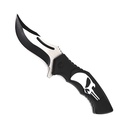
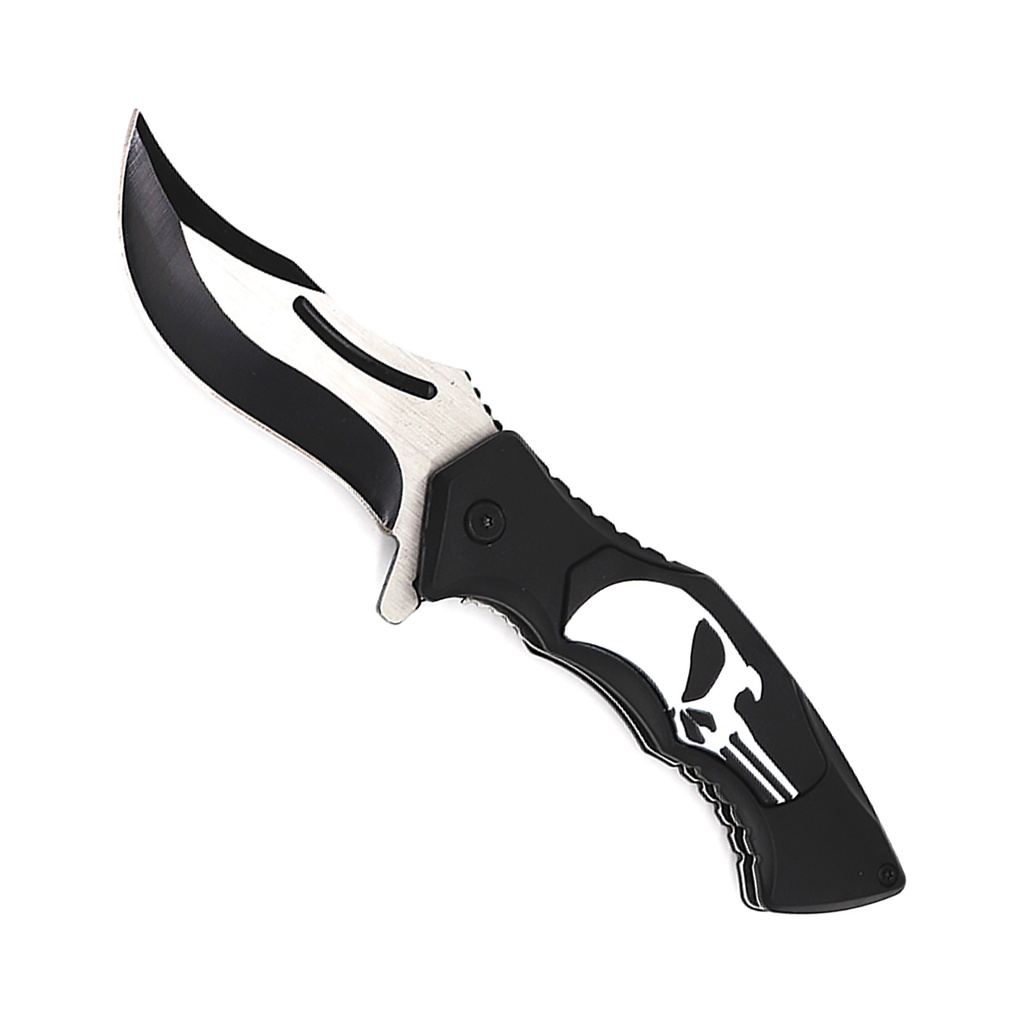
The Skull Sentinel Quick-Deploy EDC Knife is built for people who want a dependable assisted opening knife without the drama. A spring-assisted, two-tone clip point blade snaps out with a thumb stud or flipper, locking solidly with a liner lock. The black nylon fiber handle, contoured with finger grooves and a bold skull graphic, sits secure in the hand while the pocket clip keeps it low-profile until needed. It’s a practical, fast-opening everyday carry knife with a tactical edge—not a toy and not a gimmick.
What the Skull Sentinel Quick-Deploy EDC Knife Actually Does for You
The Skull Sentinel Quick-Deploy EDC Knife is a spring-assisted folding knife built for people who want a fast, reliable everyday carry blade without pretending it’s something it’s not. It opens quickly, locks solidly, rides discreetly in the pocket, and gives you a dependable cutting tool when you need it—box, strap, or emergency cutting task. The skull graphic leans tactical and aggressive, but the true value here is a practical EDC knife with quick deployment and a secure grip.
Assisted Opening EDC Knife Built for Real-World Use
This assisted opening knife uses a spring-assisted mechanism that takes over once you nudge the thumb stud or flipper. That means you don’t have to fight the blade open under stress or with cold, wet, or gloved hands. At 8 inches overall with a 3.25-inch clip point blade, it’s large enough for meaningful work yet compact enough to disappear into a pocket.
The Skull Sentinel is a practical EDC knife first and a skull-themed showpiece second. The pocket clip keeps it anchored in one consistent carry position so you can reach for it by feel. The liner lock gives you a clear tactile and visual confirmation that the blade is locked before you start cutting.
How an Assisted Opening Knife Like This Actually Works
An assisted opening knife is mechanically simple once you understand the basics. The Skull Sentinel’s blade is partially tensioned by an internal spring. When the knife is closed, that spring is held back. As you push on the thumb stud or press the flipper, you move the blade past a small resistance point. Once the blade crosses that point, the spring takes over and snaps it open the rest of the way.
This is not an automatic switchblade; you must start the opening manually. That design keeps it fast to deploy while staying within many everyday carry policies and some local regulations where full automatics are restricted. The liner lock then swings under the blade tang and holds it securely until you intentionally push the lock bar aside to close the knife.
Clip Point Blade with Practical Edge Geometry
The two-tone clip point blade on this assisted opening knife is designed to balance piercing control with everyday slicing. The narrow tip lets you start cuts precisely—opening packages, trimming cord, or making controlled punctures—while the main edge handles straight and slightly curved cuts efficiently. A matte black finish helps reduce glare and keeps the overall look subdued despite the bold skull handle.
Handle Shape That Stays Put When You’re Working
The nylon fiber handle is more than a canvas for the skull graphic. Its finger grooves and spine jimping give you real purchase when you bear down on a cut. The material is lightweight, impact-resistant, and doesn’t feel icy in cold weather or overly slick when wet. In short, it’s a practical choice for a knife that may ride in your pocket every day.
What Makes This Assisted Opening Knife Reliable in Daily Carry
Reliability in an EDC knife isn’t about exotic metals or flashy marketing. It’s about whether the blade opens when you tell it to, locks firmly, and stays where you clipped it. The Skull Sentinel Quick-Deploy EDC Knife checks those boxes in a few specific ways:
- Consistent deployment: Thumb stud and flipper give you two ways to activate the assisted opening, so you can choose what feels more natural.
- Positive lockup: The liner lock engages the base of the blade with a clear click, giving you feedback that the knife is ready to work.
- Durable handle: Nylon fiber resists dings and cracks from casual drops or pocket abuse.
- Secure clip carry: The pocket clip holds the knife in a predictable orientation so your draw becomes automatic over time.
None of that is glamorous, but it’s exactly what you want from a working assisted opening knife.
Carry Reality: How This Knife Rides and Deploys
EDC knives that actually get carried share a few traits: manageable size, reasonable weight, and predictable deployment. At 4.75 inches closed and about 4.23 ounces, the Skull Sentinel is noticeable but not cumbersome in a front pocket, waistband, or on a belt.
The skull-themed handle clearly leans tactical, but the black clip and slim profile let it ride in most casual or work environments without drawing unnecessary attention. When you do need it, you can choose to open it via the thumb stud for a more subtle deployment or use the flipper for a faster, more assertive opening. Either way, the assisted action takes over and brings the blade to full lock quickly.
Using an Assisted Opening Knife Under Stress
Under stress, fine motor skills degrade. That’s why having two opening options matters. You can index the flipper with your index finger or the thumb stud with your thumb—whichever your body finds easier in the moment. Training a consistent draw and open from your usual carry position is more important than any advertised speed claim. The dependable spring assist simply reduces the effort required once you start the motion.
Safety, Responsibility, and Legal Context
Even though this is a knife, not a stun gun or firearm, it still exists in the broader world of self-defense and personal protection tools. It is primarily an everyday cutting tool, with potential emergency use if you ever need to cut seat belts, clothing, or obstacles in a hurry.
Legal treatment of assisted opening knives can vary by state and municipality. In many places they are treated as standard folding knives because they require manual initiation to open; in others, certain features may bring them closer to restricted categories. The responsible approach is straightforward: check your state and local knife laws, pay attention to blade length limits and assisted-opening regulations, and carry accordingly.
What People Ask Before Buying a Stun Gun for Protection
Even though the Skull Sentinel is an assisted opening knife, many buyers researching personal protection gear are also comparing it with tools like a stun gun for self defense. The questions below address those stun gun topics directly so you can make informed choices about your overall protection setup.
How effective are stun guns for self defense?
A stun gun can be effective for self defense, but only if you understand its limits. A contact stun gun must be pressed firmly against an attacker’s body—ideally on large muscle groups or nerve-rich areas—for several seconds to have meaningful effect. You’re not “shooting lightning” from across the room; you’re creating pain and muscle disruption at close range. Build quality, amperage (current), and contact time matter far more than any “million volt” marketing claim.
Does voltage or amperage matter more in a stun gun?
Amperage matters more than voltage in a stun gun. Voltage mainly helps the electrical current jump across clothing and skin—it’s the pressure. Amperage is the actual flow of electricity that does the work. Stun gun for self defense marketing often shouts about sky-high voltage numbers because they sound impressive, but the real effectiveness comes from controlled current output, solid contact points, and a power system that can sustain that current for more than a brief spark. A well-built stun gun with realistic amperage and good contact design will outperform a flashy “million volt” device every time.
Is this stun gun legal to carry in my state?
Stun gun legality in the United States is highly state- and city-specific. Some states allow a stun gun for personal protection with few restrictions; others require permits, limit carry locations, or ban them outright in certain jurisdictions. Before buying a stun gun for self defense, check your state statutes and, if you live in a major city, local ordinances as well. Look for rules around age, where you can carry (schools, government buildings, public transit), and whether concealed or open carry is addressed. When in doubt, consult current local law or a qualified legal source—regulations change more often than marketing pages do.
Putting It All Together: A Practical Protection Approach
Building a realistic personal protection plan means understanding what each tool actually does. A stun gun for self defense gives you a close-contact, pain-based deterrent that depends on amperage, contact time, and your ability to access it under pressure. An assisted opening EDC knife like the Skull Sentinel gives you a fast, reliable cutting tool you can legally carry in many everyday contexts.
The key is clarity, not fantasy. No stun gun, knife, or gadget is a magic force field. The real value comes from choosing credible tools, knowing how they work, and practicing how you’ll access and use them. If you want a bold but practical everyday knife that opens quickly and carries consistently, the Skull Sentinel Quick-Deploy EDC Knife gives you that functionality with a tactical skull aesthetic. Pair it with honest research on stun guns and other defensive options, and you move from gadget-shopping to an informed, prepared protection mindset.
| Blade Length (inches) | 3.25 |
| Overall Length (inches) | 8 |
| Closed Length (inches) | 4.75 |
| Weight (oz.) | 4.23 |
| Blade Color | Black |
| Blade Finish | Matte |
| Blade Style | Clip Point |
| Blade Edge | Plain |
| Blade Material | Steel |
| Handle Finish | Matte |
| Handle Material | Nylon Fiber |
| Theme | Punisher Skull |
| Pocket Clip | Yes |
| Deployment Method | Spring-assisted |
| Lock Type | Liner lock |