
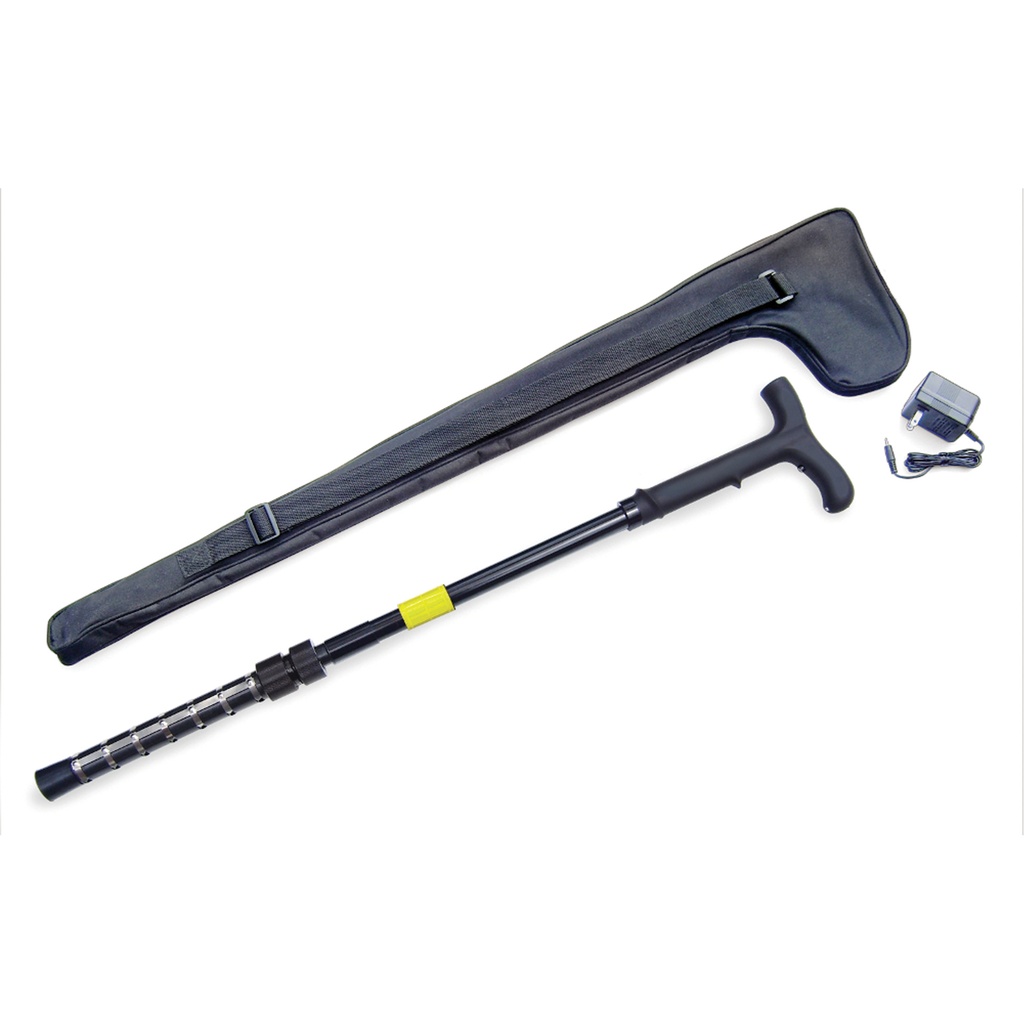


SteadyGuard Discreet Defense Cane Stun Gun - Matte Black
7 sold in last 24 hours
This stun gun for self defense is built into a fully functional walking cane, giving you support and discreet protection in one tool. The SteadyGuard Discreet Defense Cane Stun Gun focuses on real effectiveness: solid build quality, good contact area at the tip, and a reliable built-in rechargeable battery. An ultra-bright LED flashlight, safety switch, and included carry case make it practical for daily use and travel. For anyone who needs a cane and wants quiet, real-world personal protection, this is a smart, prepared choice.
Steady, Discreet Protection: What This Stun Gun Cane Actually Does
The SteadyGuard Discreet Defense Cane Stun Gun - Matte Black is a functional walking cane and a stun gun for self defense in one low-profile tool. It’s designed for people who genuinely need a cane for mobility and also want practical personal protection without carrying something that looks overtly “tactical.” It won’t turn you into a superhero, but it does give you a solid support cane plus an electric deterrent at contact distance.
Instead of chasing “million volt” headlines, this stun gun focuses on what actually matters for personal protection: a sturdy cane body you can trust your weight to, a contact area at the tip that can deliver an electrical shock when needed, a safety switch to prevent accidental discharge, and a rechargeable power system you can keep topped off at home.
How This Walking Cane Stun Gun for Self Defense Works
Most people looking up how stun guns work are really asking one thing: will this actually help me protect myself? The core of a stun gun is simple: it delivers a high-voltage, low-amperage electrical discharge across two or more contact points. The voltage is what allows the current to arc; the amperage (current) and contact time are what influence how disruptive the shock feels.
On this walking cane stun gun, the contact area is built into the lower end of the cane. When activated and pressed into an attacker, the device delivers an electrical shock through those contacts. The sound and visible arc (when tested in the air) often have a deterrent effect by themselves—many people do not want to move closer to that crackling tip. If someone keeps coming, your job is to maintain your balance, use the cane as a barrier, and, if necessary, drive the charged tip into large muscle groups for at least a second or two.
Why Amperage, Contact Time, and Target Area Matter
Real-world effectiveness for any stun gun for self defense comes from three factors working together:
- Current (amperage): This is the actual flow of electricity. Marketing often shouts about volts, but it’s the current and how it’s delivered that matters.
- Contact time: A quick tap is mainly a pain and surprise stimulus. One to three seconds of solid contact on a large muscle group increases the chance of disorientation or loss of balance.
- Targeting: Hips, thighs, buttocks, and upper arm muscles are more impactful than bony areas or thick clothing folds.
This stun gun cane is designed to help you manage distance and stability so you can actually keep contact long enough to matter, instead of just waving a device in the air.
Stun Gun for Self Defense and Mobility: Why a Cane Format Works
For many buyers, the best stun gun for personal protection is the one they can actually carry all the time. A walking cane stun gun is specifically for people who already use a cane or are comfortable carrying one without feeling self-conscious. It looks like a normal black cane, supports up to 250 lb, and adjusts from 32 to 36 inches so you can set a length that fits your gait.
Because it’s a real mobility aid, you’re not adding extra gear to your pockets or belt. The cane is already in your hand, so in a confrontation you don’t have to dig for a device—you simply decide whether to use the cane as a barrier, a striking tool, a stun gun, or a combination of all three.
Build Quality You Can Lean On
This isn’t a toy cane with electronics stuffed inside. The adjustable shaft is built to handle daily walking support up to 250 lb, which is crucial if you’re relying on it to move safely. The T-shaped handle provides a stable, ergonomic grip both for walking and for bracing during a defensive encounter. The matte black finish keeps it discreet and non-reflective, while the metallic lower section houses the stun contacts.
Carry and Daily Use Reality
The stun gun cane includes a dedicated carry case, which is useful for travel, storage, or when you’re transporting it in a vehicle. Around the house or out in public, it simply rides in your hand like any other cane. The built-in rechargeable battery charges via an included wall adapter, so keeping it ready is as simple as plugging it in overnight every few weeks, depending on use. No scrambling for disposable batteries when you already have enough to manage.
Voltage vs. Amperage: Cutting Through the Stun Gun Marketing Hype
You’ll see “1 million volts” mentioned for this product and many others. Here’s the blunt truth: voltage numbers in stun gun marketing are mostly theater. Device design, current output, and contact time matter far more for personal protection than chasing higher and higher advertised voltage.
Think of voltage as the pressure that lets electricity arc at the contacts; it needs to be high, but once you’re in that range, more is not necessarily better in any practical sense. Amperage and how the circuit delivers that current into the target, along with your ability to maintain firm contact, is what makes a stun gun for self defense useful in real life.
This cane’s advantage is not the number in the voltage line—it’s the fact that it puts a defensive tool into something you already hold, with a solid contact area at the tip and a body you can actually use to control distance and position. You’re not relying on magic electricity; you’re stacking a mobility aid, impact tool, and stun gun into one item you know how to handle.
Practical Effectiveness: How to Use This Specific Stun Gun Cane
Effectiveness comes from pairing the tool with realistic tactics. A stun gun for self defense should be one part of an overall protection plan: awareness, boundary setting, safe routes, and backup options. Here’s how this cane fits in.
- Deterrence: If you feel threatened, creating space with the cane as a physical barrier is your first step. If appropriate and safe, arcing the stun gun in the air can send a clear message you’re not an easy target.
- Contact application: If someone closes the distance and you cannot escape, drive the electrified tip into a large muscle area—hip, thigh, buttock, upper arm—and maintain contact for at least a second or two while keeping your balance.
- Follow-through: Your goal is not to stand there and “zap” someone indefinitely; it’s to create an opening to move away to safety, call for help, or get to a more secure location.
The built-in ultra-bright LED flashlight is also a practical self-defense tool in its own right. Good lighting helps you avoid bad spots, identify people sooner, and navigate safely after dark—all of which can prevent confrontations before a stun gun is ever needed.
Safety Switch and Stress Use
A stun gun for self defense has to balance safety with speed. This cane includes a safety switch to prevent accidental discharge, which matters if you’re leaning on it or storing it around family. Get in the habit of one specific sequence: safety off, thumb on activation, tip toward the threat. Practice this motion a few times (with the cane unloaded or away from your body) so it’s familiar before you actually need it.
What People Ask Before Buying a Stun Gun for Protection
How effective are stun guns for self defense?
Stun guns can be effective as part of a broader self-defense strategy, but they’re not magic. They work best at very close range, with solid contact on large muscle groups and at least a second or more of contact time. They can cause pain, surprise, and sometimes significant muscle disruption, but effects vary by person, clothing, and circumstances. The real benefit is often the combination of deterrence (sound and visible arc), pain compliance, and the chance to break away and escape. A stun gun for self defense is most useful when you’ve also thought about awareness, escape routes, and what you’ll do immediately after you create that opening.
Does voltage or amperage matter more in a stun gun?
Amperage matters more for effectiveness. Voltage needs to be high enough to arc, but once you’re in that zone, ramping it up for marketing claims doesn’t translate into proportional real-world stopping power. Amperage is the flow of current that actually affects the body, and how that current is delivered—through contact area, circuit design, and contact time—matters more than chasing bigger voltage numbers. When you’re evaluating the best stun gun for personal protection, prioritize build quality, ergonomics, and credible engineering over flashy voltage claims.
Is this stun gun legal to carry in my state?
Stun gun laws vary by state and sometimes by city or county. Many places allow civilian ownership of a stun gun for self defense, but some require permits, limit carry in certain locations (schools, government buildings, airports), or restrict sales entirely. A walking cane stun gun may also be viewed as a concealed or disguised device in some jurisdictions. Before you carry, check your state and local laws by looking at your state statutes on electronic control devices or contacting local law enforcement or an attorney. Laws change, so do not rely on outdated forum posts—verify with current, official sources.
Carrying This Stun Gun Cane with Confidence
When you’re choosing the best stun gun for personal protection, the right answer is the one that fits your life and that you can actually use competently. If you already use a cane—or are willing to carry one—this stun gun cane offers three layers in a single object: mobility support, a sturdy impact and barrier tool, and an integrated stun gun for close-range encounters, plus a useful LED flashlight for everyday navigation.
Take a few minutes to adjust the length to your stride, learn the location of the safety switch and activation button by touch, and practice moving with it in a hallway or open space. That small investment of time turns it from "a gadget" into your tool—one more reason you can move through your day a little more calmly, a little more prepared, and a lot less dependent on hype.