
Shadow Column Full-Tang Tactical Knife - Matte Black
9 sold in last 24 hours
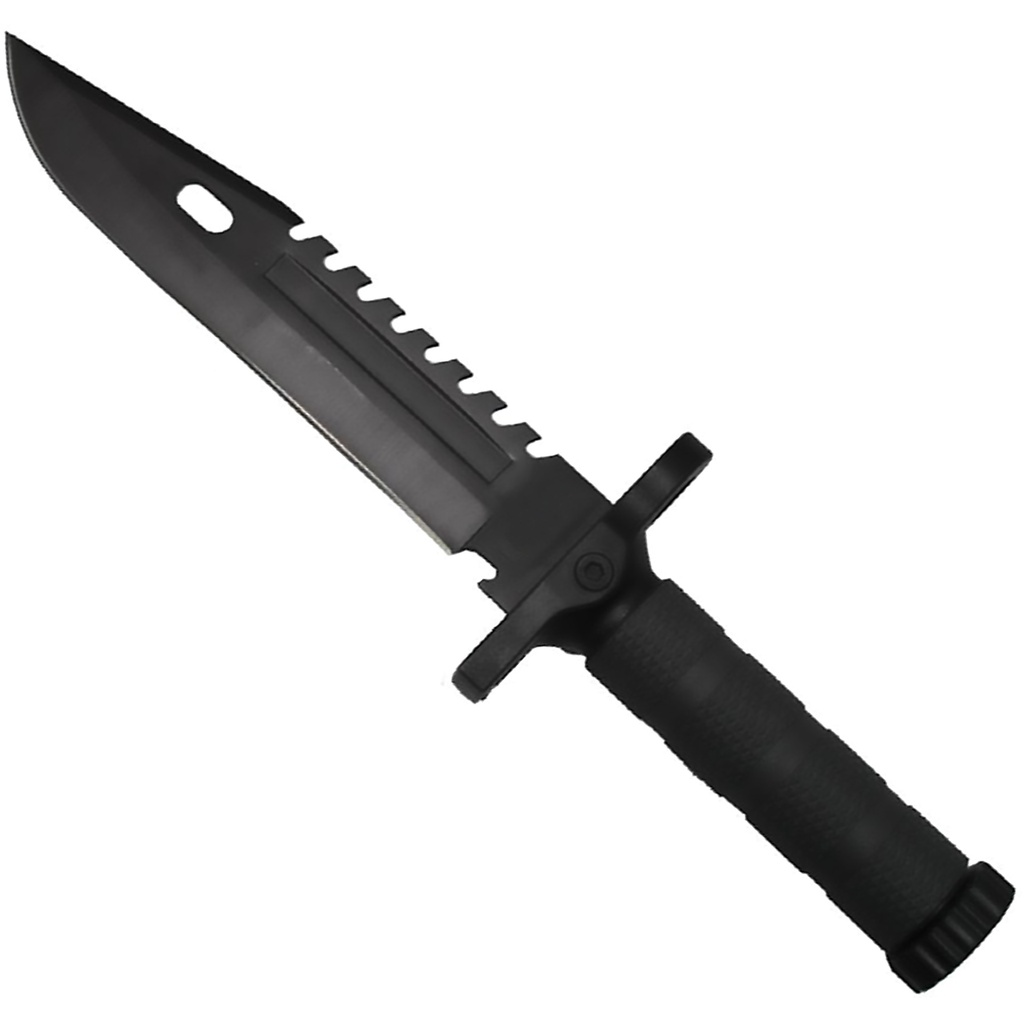
A tactical fixed blade built for real work, not wall space. The matte black full-tang design gives you solid steel from tip to pommel, with a clip-point blade, partial edge serrations, and a serrated spine for fast notching and rough cuts. The straight guard protects your fingers while the solid pommel adds striking and prying confidence. It’s a quiet, all-business knife for cutting cordage, breaking down boxes, or riding backup in a kit where reliability matters more than flash.
What This Tactical Fixed Blade Actually Does Well
The Stealth Ridge Full-Tang Tactical Fixed Blade Knife - Matte Black is built as a quiet, hard-use tool: full-tang steel from tip to pommel, a matte black finish that doesn’t flash, and a clip-point profile that handles both detail cuts and rough utility. It’s not a fantasy piece. It’s the type of fixed blade you keep where you work, train, or camp because it simply gets cutting tasks done.
The design leans tactical, but the day-to-day reality is simple: cut cordage, open and break down boxes, notch and shape material in the field, and have a solid steel handle and pommel when you need leverage or controlled impact.
Fixed Blade Build: Full-Tang Strength You Can Trust
When you look at this knife in profile, you see one continuous bar of steel running from the tip of the clip point all the way through the handle to the pommel. That’s full-tang construction, and it’s the core reason this knife feels more trustworthy than lighter, folding options when you start to twist, pry, or bear down.
Full-Tang Backbone for Hard Use
Because the tang and the blade are one piece, you don’t have to worry about pivot screws loosening, lock bars failing, or flimsy partial tangs snapping under torque. For field tasks like carving tent stakes, cutting saplings, or levering apart tight packaging and light crates, that uninterrupted steel spine matters more than any marketing term.
Matte Black Steel That Stays Quiet
The entire knife is finished in matte black—blade, guard, handle, and pommel. That’s not just about looking tactical. A non-reflective finish cuts shine under vehicle lights, warehouse LEDs, or sunlight at camp. It’s a practical detail if you prefer tools that don’t attract attention but still work hard.
Blade Geometry That Balances Control and Aggression
This clip-point blade is designed to be versatile. The fine tip gives you control for more precise cuts, while the combination of plain edge and serrations expands what you can do without switching tools.
Clip Point with Partial Serration
The main cutting edge starts as a plain edge near the tip for cleaner slices and controlled shaving cuts. Closer to the handle, a partial serration section bites into tougher material—think nylon webbing, light rope, and stubborn plastic. You get the everyday control of a straight edge with the backup aggression of serrations when you hit something fibrous or resistant.
Serrated Spine for Fast Notching
The aggressively toothed spine is there for more than looks. It gives you a fast, repeatable way to notch and rough-shape material—branches, dowels, or simple camp fixtures—without chewing up your primary cutting edge. It also adds an extra area for grip leverage when you need to pinch the blade or brace it with a gloved hand.
Handle, Guard, and Pommel: Control Under Pressure
A tactical fixed blade isn’t just about the blade; it’s about how confidently you can hold and direct it when your hands are sweaty, gloved, or tired.
Textured Cylindrical Handle
The handle is a straight, cylindrical steel grip with texturing for traction. The shape makes it easy to index in different grips—standard, reverse, or choked up closer to the blade. Because it mirrors the full-tang profile, there are no fragile joints between handle and blade to worry about.
Protective Guard and Solid Pommel
The straight crossguard acts as a barrier between your fingers and the edge, especially when you’re driving the blade forward into stubborn material. At the other end, the round, flat pommel gives you a solid striking surface for light impact tasks—tapping pins, breaking light material, or using controlled pressure to start a hole or seat gear without risking the blade.
Carry and Use in Real Environments
While this is a tactical-style fixed blade, its actual strengths show up in ordinary and field use. In a vehicle kit, workshop, range bag, or camping loadout, the knife gives you predictable performance without requiring careful babying.
Because it’s full-tang steel with a matte finish, it tolerates rougher storage better than a more delicate folder. Knock it around in a tool roll, keep it in a gear bin, or mount it where you need fast access; you’re not worrying about a fragile mechanism or polished finish.
What Makes This Fixed Blade Reliable for Hard Work
Reliability here comes down to three simple factors: one-piece steel strength, a blade that can handle both slicing and tearing cuts, and ergonomics that keep the knife in your hand when you apply serious pressure.
- One-piece steel construction: No hinge, no lock, no multi-part handle core to fail under torque.
- Dual-serration concept: Partial edge serration for cutting, spine serration for notching and rough shaping.
- Guard and pommel integration: Designed so you can push, pull, and strike without fighting the handle.
You’re not buying this as a showcase piece. You’re buying it to live in the environments where you actually work and train—garages, warehouses, campgrounds, and range days—where a dependable fixed blade earns its keep quickly.
What People Ask Before Buying a Stun Gun for Protection
How effective are stun guns for self defense?
Stun guns for self defense are contact tools, not magic wands. They work by sending electric current through a small area of the attacker’s body, causing pain, muscle disruption, and hesitation. Their effectiveness depends on three real factors: amperage (current), contact time, and where you hit. Higher advertised voltage sounds impressive, but once you’re past the minimum needed to arc through clothing, it’s largely marketing. A well-built stun gun with decent amperage, solid contact points, and a form factor you can actually deploy under stress is far more important than a “million volt” claim on packaging.
Does voltage or amperage matter more in a stun gun?
Amperage matters more. Voltage is the pressure that helps the stun gun arc across a gap or through thin clothing. Once that’s achieved, it’s the current (amperage) moving through the body that creates pain and muscular disruption. That’s why serious self-defense instructors will tell you to ignore wild voltage numbers. Look instead for: a reputable manufacturer that states realistic output, good contact area on the electrodes, a strong battery or power system, and a grip and switch layout you can hold onto and fire under stress. Those details predict real-world effectiveness better than any “10 million volt” label.
Is this stun gun legal to carry in my state?
Stun gun laws vary by state and sometimes by city. Many states allow stun guns for personal protection, but some require you to be over a certain age, restrict carry in specific locations (schools, government buildings, airports), or ban them outright. Before you buy or carry a stun gun for self defense, check three layers: state law, local city/municipal codes, and any rules for workplaces or campuses you frequent. When in doubt, look up your state statutes directly or consult a local attorney; staying inside the law is part of responsible self-defense planning.
Carrying With Confidence: Knife in the Kit, Stun Gun as a Contact Tool
Used together in a broader personal safety plan, a solid fixed blade like the Stealth Ridge and a carefully chosen stun gun for self defense fill different roles. The knife is your utility workhorse—cutting, prying, shaping, and solving physical problems all day. The stun gun, if you choose to carry one, is a close-range contact tool designed to interrupt an assault long enough for you to escape.
The common thread is realism: understand what each tool actually does, carry them in a way you can access under stress, and train enough that operating them is simple and repeatable. That’s how you move from just owning gear to having a practical protection setup you can trust when it matters.
| Blade Color | Black |
| Blade Finish | Matte |
| Blade Style | Clip Point |
| Blade Edge | Partial-Serrated |
| Blade Material | Steel |
| Handle Finish | Matte |
| Theme | Tactical |
| Tang Type | Full Tang |
| Pommel/Butt Cap | Solid pommel |