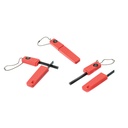
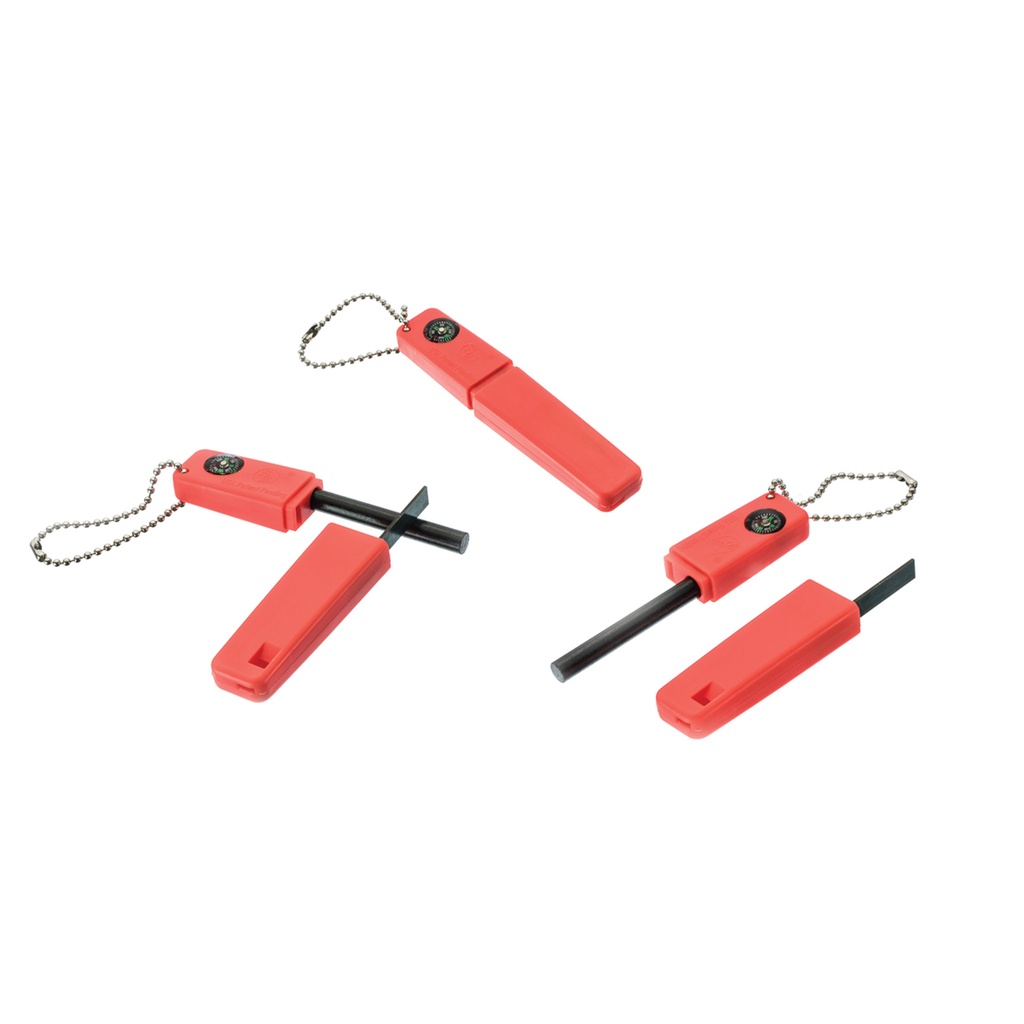
Trail Guardian 3-in-1 Firestarter Keychain - Red
8 sold in last 24 hours
The Trail Guardian 3-in-1 Firestarter Keychain keeps core survival tools where you actually carry them: on your keys or pack. A reliable flint and striker give you sparks on demand, while the built-in whistle lets you signal for help without shouting yourself hoarse. The inset compass offers quick directional checks when trails get confusing. High-visibility red housing and a simple ball chain make it easy to spot and clip anywhere, so fire, signal, and basic navigation are always within reach.
Trail Guardian 3-in-1 Firestarter Keychain - Red
Most outdoor emergencies are solved by simple tools you have on you, not gear you left in a bin at home. The Trail Guardian 3-in-1 Firestarter Keychain is built around that reality: fire, signal, and basic navigation in a compact keychain body that rides with you every day, on the trail or in town.
Instead of a bulky survival kit that only comes out for big trips, this firestarter keychain lives on your zipper, pack strap, or keys. When you need sparks, a loud whistle, or a quick compass check, it’s already there—no digging, no drama.
How This Compact Firestarter Keychain Actually Helps in Real Emergencies
The Trail Guardian isn’t a gimmick; it’s three proven survival functions in one small, bright housing:
- Fire starting: A dependable flint rod and dedicated striker for hot sparks on demand.
- Emergency signaling: An integrated whistle that carries farther and clearer than your voice.
- Basic navigation: A glance-ready compass for quick direction checks when trails, roads, or landmarks get confusing.
None of these tools try to replace full-size gear. Instead, they cover the most likely problems: lighting a stove or campfire when your lighter fails, signaling for help when you’re separated or injured, and preventing small navigational errors from turning into real problems.
Firestarter Design: Built to Spark When Lighters Fail
Disposable lighters are convenient until they’re wet, empty, or frozen. A good firestarter gives you a spark source that doesn’t care about fuel level or a bit of moisture. This 3-in-1 firestarter keychain uses a traditional flint and striker setup:
Reliable Flint Rod and Dedicated Striker
- Flint rod: The black rod slides neatly into the housing for storage, protecting it from unnecessary wear.
- Metal striker: A flat, purpose-cut striker nests into a matching red cover so it’s easy to grip and orient when your hands are cold or wet.
- Controlled strike: The rectangular handle and subtle texturing give you leverage for consistent strikes, not clumsy scraping.
With dry tinder, a prepared fire lay, and a bit of practice, this keychain firestarter can reliably give you the sparks you need for campfires, stoves, or emergency warmth. It’s designed as a backup fire source that still works when your primary plan doesn’t.
Keychain Carry That Actually Gets Used
- Ball chain attachment: The included metal ball chain clips easily to zipper pulls, pack loops, and keyrings.
- Compact footprint: Slim, stick-style body rides flat and doesn’t bulk up pockets or snag on gear.
- High-visibility red: The bright red housing stands out in grass, leaves, or the bottom of a dark pack.
The result is simple: you carry it more, so you have it when you need it.
Emergency Whistle and Compass: Small Details, Big Margin of Safety
Two features turn this from a single-purpose firestarter into a rounded trail survival keychain: the emergency whistle and the embedded compass.
Loud Emergency Whistle Built In
- No batteries, no moving lids: The whistle is integrated directly into the body—put it to your lips and blow.
- Voice-saver: Sound carries better than shouting, and you won’t burn your energy yelling for help.
- Attract attention: Useful for signaling hiking partners, alerting rescuers, or warning off wildlife at a distance.
Because it’s part of your firestarter keychain, the whistle is rarely forgotten, even on short walks or everyday commutes.
Inset Compass for Quick Direction Checks
- Top-mounted compass: The dial is set into the housing near the chain end, always visible at a glance.
- Orientation aid: Perfect for confirming basic north–south alignment and keeping a general bearing.
- Backup, not a full nav system: It won’t replace a map and compass or GPS, but it can prevent easy mistakes from escalating.
On trail, a small direction check can help you avoid following the wrong drainage or path. In town, it’s a quick way to reorient when you emerge from transit or a large building.
Real-World Use: Where This 3-in-1 Firestarter Keychain Fits in Your Kit
Think of the Trail Guardian as your always-there backup. It’s not trying to be a full survival belt; it’s the layer that stays with you when you’ve put everything else down.
- Everyday carry: Clip it to keys so fire and a signal are with you at work, on commutes, or during power outages.
- Trail and camp: Attach it to your pack or jacket zipper for hikes, camping trips, and fishing days.
- Vehicle backup: Use it as a glovebox or mirror-hanging extra, in addition to your primary emergency kit.
Because it’s light, compact, and inexpensive, it’s easy to stage more than one—one on your keys, one in your pack, one in your car. Redundancy is what turns minor problems into non-events.
Build Quality Details That Matter Outdoors
With compact tools, small design decisions matter more than big marketing claims. This firestarter keychain focuses on the basics:
- Durable plastic housing: The rectangular body with softened edges balances strength and comfort in the hand.
- Protected components: The flint and striker store inside matching covers so they’re not grinding on other gear.
- Simple, proven mechanisms: No hinges, latches, or electronics to fail—just a rod, striker, whistle, and compass.
Everything is oriented toward one principle: when you need it, it should simply work.
What People Ask Before Buying a Stun Gun for Protection
How effective are stun guns for self defense?
A stun gun for self defense works by delivering an electrical shock through direct contact, causing intense pain and momentary muscular disruption. Its real-world effectiveness depends on amperage (current), how long you maintain contact, and where you hit—large muscle groups are better targets. They are not magic off-switches; they’re tools that can create a window to break contact and escape. Just like any protection tool, a stun gun works best when it’s carried consistently, practiced with, and paired with basic awareness and escape planning.
Does voltage or amperage matter more in a stun gun?
Voltage mostly helps the stun gun arc through clothing and skin oil; amperage is what actually does the work on the body. Many "million volt" claims are marketing theater—the human body doesn’t need that kind of voltage to feel a powerful shock. What matters more is a safe but effective current level, the size and placement of the contact probes, and how reliably the device fires every time you press the trigger. When you evaluate a stun gun for self defense, look for honest specs, solid construction, and a design you can actually deploy under stress, instead of chasing the biggest voltage number.
Is this stun gun legal to carry in my state?
Stun gun laws vary widely by state and sometimes by city. Some areas treat a stun gun for self defense like any other personal protection tool, while others require permits, restrict carry in certain locations, or ban them outright. Before buying, check your state statutes and any local ordinances—search terms like "[your state] stun gun laws" or consult your local police department’s non-emergency line. Remember that even where stun guns are legal, there may be separate rules for schools, government buildings, airports, and public transportation.
Bottom line: whether you’re looking at a stun gun for personal protection or a compact firestarter keychain like the Trail Guardian, the same principle applies—carry tools you understand, practice with them before you need them, and build simple habits around everyday readiness. Calm, informed preparation beats hype every time.