
Trail Legacy Full-Tang Hunting Knife - Bone & Rosewood
5 sold in last 24 hours
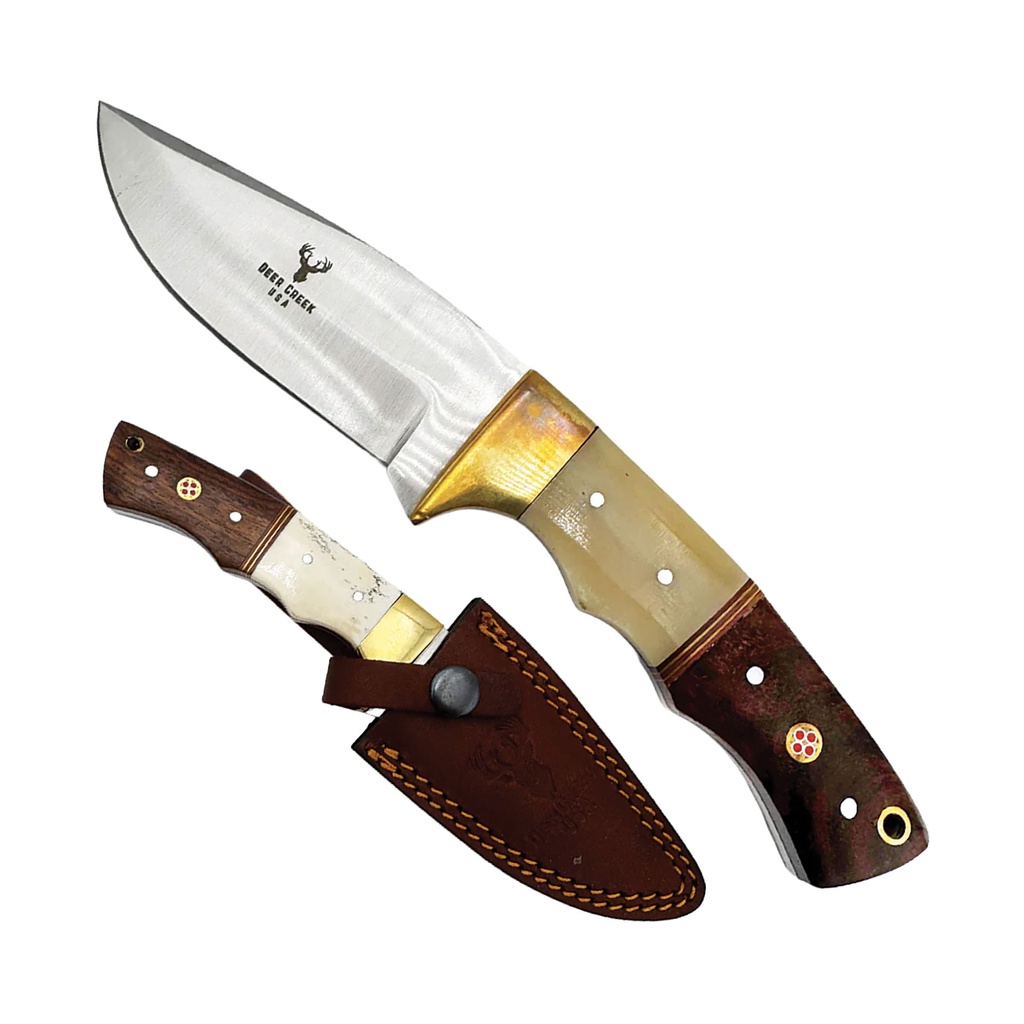
There’s a reason seasoned hunters still trust a full-tang fixed blade like this Trail Legacy. A 3.75-inch satin clip point in stainless steel handles clean field dressing without fuss, while the brass guard and mosaic-pinned bone-and-rosewood scales lock into your grip. At 8 inches overall with a solid 9-ounce feel, it rides securely on your belt in the leather sheath, ready for camp chores, game processing, and the kind of work only a real hunting knife can do—quietly and reliably.
What This Hunting Knife Actually Does in the Field
The Trail Legacy Full-Tang Hunting Knife - Bone & Rosewood is built for the unglamorous, necessary work that real hunters and outdoorsmen do: opening up game cleanly, breaking down camp tasks, and riding on your belt without complaint. At 8 inches overall with a 3.75-inch clip point blade, it’s compact enough for all-day carry, but substantial enough to feel like a true field knife—not a showpiece.
This isn’t about survival TV theatrics. It’s about a fixed blade that goes from first cut through hide to final wipe-down at the end of the trip, without drama. Full-tang construction, a brass guard, and a leather belt sheath give you old-school reliability backed by materials that have earned their place on hunting knives over decades of use.
How This Fixed Blade Knife Is Built to Work
Start with the core: a full-tang stainless steel blade. Full tang means the steel runs as one continuous piece from tip to butt, sandwiched by the bone and rosewood scales. In practical terms, that’s strength. There’s no hidden joint or narrow internal tang to fail when you put real pressure into a cut, twist, or pry.
The 3.75-inch clip point in a satin finish is purpose-built for hunting. The clip profile gives you a controllable tip for starting precise cuts—think opening the abdominal cavity without nicking organs—while the plain edge handles long, sweeping slices through hide, meat, and connective tissue. Satin finish reduces glare and wipes clean easily, which matters more on a cold morning than any marketing term.
Balanced Size for Real-World Hunting Tasks
At 8 inches overall and around 9 ounces, this hunting knife lands in the sweet spot between nimble and sturdy. It’s long enough to span across joints and make efficient cuts when dressing game, but short enough that you can choke up on the handle and work delicately around bone and tendon.
Weight-wise, 9 ounces gives you reassuring heft without turning it into a brick on your belt. That mass helps the blade track straight through tougher cuts—splitting a brisket or working through cartilage—while still being comfortable for fine control.
Handle Design That Locks Into Your Grip
The handle pairs bovine bone and rosewood, pinned with mosaic hardware. That’s not just for looks. The contouring and material contrast give you subtle indexing points your hand can feel, so you can orient the blade even with cold or gloved fingers. The brass guard is your insurance policy against a wet or greasy grip—your hand meets metal before it can slide onto the edge.
A lanyard hole at the butt lets you add a wrist thong if you like extra security when working around water or up in a blind. It’s a small detail, but one that experienced users quietly appreciate.
Why This Knife Is a Reliable Belt Companion
Reliability in a hunting knife isn’t about exotic steels or flashy coatings. It’s about predictable behavior and simple, solid construction that doesn’t get in its own way. Stainless steel keeps corrosion manageable in wet, bloody, or humid conditions. You still need to wipe and dry it, but you’re not fighting rust the moment you get home.
The leather sheath is another reliability choice. It protects the edge, rides comfortably against your side, and doesn’t rattle or flash like synthetic options. Belt carry keeps the knife where your hand naturally falls, making it easy to draw when you’re kneeling over an animal or working around camp.
Secure Leather Sheath for Belt Carry
The included leather sheath is stitched for durability and formed to retain the knife without a struggle. Slide it onto your belt and it hangs ready, not buried in a pack when you actually need it. Leather also molds subtly to your carry over time, turning this into a more personal, predictable draw.
For hunters and outdoors workers, that consistency matters. When your hands are cold or slick, you don’t want to fight a snap strap or dig through gear. You want to reach down, draw, and get to work.
Practical Effectiveness: What This Hunting Knife Can and Cannot Do
This Trail Legacy hunting knife is optimized for field dressing, light processing, and general camp use. It will handle skinning deer, breaking down small to medium game, cutting rope, notching branches, and preparing food. It is not a chopper, pry bar, or axe replacement. Staying within its intended use keeps the edge performing and the tip intact.
The clip point makes it excellent for detail work, but that also means it’s not the knife you baton through thick knots or abuse against rock. Use it as a precise cutting tool and you’ll get a long service life. Abuse it as a lever and you’re asking any fine-tipped blade to fail.
How to Carry and Use This Fixed Blade Safely
Safe carry starts with consistent habits. Belt carry on your dominant side, in the leather sheath, is the most straightforward option. Practice a smooth draw and re-sheathing motion at home with a dry, clean knife so it’s second nature in the field.
When dressing game, keep the brass guard between your hand and the edge at all times, and avoid overreaching into cavities where you can’t see the tip. Let the sharp edge do the work—don’t muscle it. Periodically wipe the blade clean as you go; a clean edge is easier to control.
After use, wash the blade with mild soap and water, dry thoroughly, and apply a light coat of oil to the blade and guard. Bone and rosewood benefit from occasional conditioning with a suitable wood or handle oil, keeping the scales stable and crack-resistant.
What People Ask Before Buying a Hunting Knife Like This
How effective is this knife for field dressing game?
For typical North American game—deer, hogs, and smaller animals—the 3.75-inch clip point is an effective, proven size and shape. It’s long enough to open cavities and follow bone lines, but short enough for controlled, careful cuts. The full-tang construction and brass guard help when you’re applying pressure in awkward angles, giving you both strength and safety. For larger animals or heavy processing work, you might pair it with a dedicated boning or butcher knife, but as a primary field-dressing tool, it’s well suited.
What’s the advantage of full-tang over other constructions?
Full-tang means the blade steel runs in one solid piece through the entire handle. In hard use, that matters more than most marketing features. Hidden or partial tangs can be plenty strong if well made, but full-tang is the simplest, most transparent way to ensure strength: there’s more steel, more contact area with the handle scales, and fewer weak points. For a hunting knife that may see twisting, torquing, and uneven pressure, full-tang gives you a margin of safety you can feel in the hand.
Is stainless steel a good choice for a hunting knife?
Stainless steel is a practical choice for hunting because it reduces the maintenance burden in real conditions—blood, moisture, and dirt. While high-carbon steels can take and hold excellent edges, they demand more vigilance against rust. A well-chosen stainless blade, sharpened correctly, gives you more than adequate edge performance for field dressing while being more forgiving if you can’t clean it immediately after use. For most hunters, that tradeoff is worth it.
Will the bone and rosewood handle hold up to real use?
Bone and hardwood handles have been used on working knives for generations. They’re stable, comfortable, and offer good grip, especially when contoured properly as they are here. The key is reasonable care: don’t leave the knife soaking in water, avoid extreme heat, and occasionally condition the handle. Treated that way, bone and rosewood handles can last for many seasons of field use while developing the kind of patina that synthetic handles never will.
Is this a good knife for general outdoor and camp tasks?
Yes, within its design lane. It’s well suited for cutting line, trimming small branches, preparing food, sharpening stakes, and similar camp chores. It can handle light batoning through small diameter wood if you’re careful, but that’s not its primary role. Think of it as your main cutting tool around camp and in the field, not your dedicated wood-processing or prying tool. Paired with a saw or hatchet, it becomes part of a very capable outdoor kit.
By choosing a knife built on straightforward, proven principles—full tang, manageable blade length, secure handle, and a real leather sheath—you’re aligning with what experienced hunters actually carry. The Trail Legacy Full-Tang Hunting Knife - Bone & Rosewood isn’t trying to be everything. It’s trying to be the trusted fixed blade you reach for when the work is real and the margin for error is small. Use it that way, care for it simply, and it will quietly earn its place on your belt season after season.
| Blade Length (inches) | 3.75 |
| Overall Length (inches) | 8 |
| Weight (oz.) | 9 |
| Blade Color | Silver |
| Blade Finish | Satin |
| Blade Style | Clip Point |
| Blade Edge | Plain |
| Blade Material | Stainless Steel |
| Handle Finish | Polished |
| Handle Material | Bovine Bone & Rosewood |
| Theme | None |
| Handle Length (inches) | 4.25 |
| Tang Type | Full |
| Pommel/Butt Cap | Lanyard hole |
| Sheath/Holster | Leather |