Trailline Quick-Deploy EDC Knife - Light Brown Wood
15 sold in last 24 hours
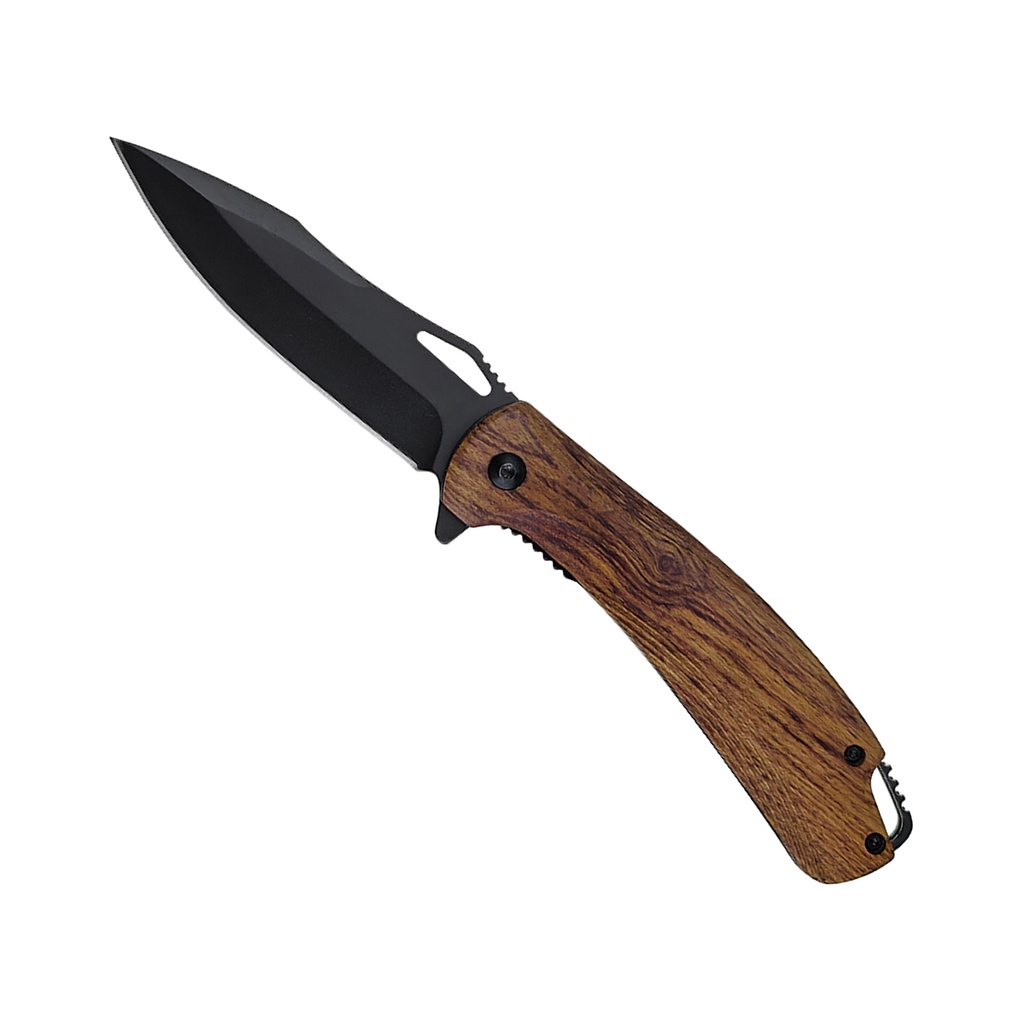
The Desertwood Quick-Deploy Spring Assisted Knife - Light Brown Wood is built as a calm, capable everyday carry. A 3.37" black-oxidized drop-point blade snaps open with a flipper or thumb hole, then locks solidly on a liner lock. The contoured light brown wood handle fills your grip with a warm, natural feel, while the pocket clip and lanyard hole keep it ready on your terms. From box duty to trail tasks, this assisted opening knife delivers practical cutting performance in a compact, easy-carry package.
What This Assisted Opening Knife Actually Does Well
The Desertwood Quick-Deploy Spring Assisted Knife - Light Brown Wood is a straightforward everyday carry knife built for people who want a reliable cutting tool in their pocket, not a wall-hanger or a gimmick. It’s a spring assisted folding knife with a black-oxidized drop-point blade and a contoured light brown wood handle. The assisted mechanism gets the blade into play quickly; the liner lock keeps it there until you’re finished. It’s sized for daily carry, tuned for real-world utility, and shaped to stay comfortable through repeated use.
How This Spring Assisted Knife Works in Daily Use
This is an assisted opening knife, not an automatic. That difference matters. You start the opening motion with either the flipper tab or the elongated thumb hole; once you’ve moved the blade a short distance, the spring takes over and snaps it into the locked position. That means:
- You stay in control of deployment—no accidental "pocket rocket" openings.
- It opens fast enough for practical use, but still feels deliberate and predictable.
- It remains legal in many places where fully automatic knives are restricted (always check local laws).
The liner lock engages on the tang of the blade as it opens. To close, you simply push the liner aside with your thumb and fold the blade back into the handle. The motion is simple to learn and repeatable under stress or with gloves once you’ve practiced it a few times.
Blade Design: Practical Geometry, Everyday Cuts
The 3.37-inch drop point blade is a sensible choice for an EDC folding knife. Drop points are generalists: you get a strong tip, enough belly for slicing, and a spine that stays stout enough for controlled pressure cuts. The plain edge makes sharpening straightforward and keeps your tasks predictable.
Made from 3Cr13 stainless steel, the blade favors ease of maintenance and corrosion resistance over exotic edge retention. That means:
- It resists rust well with basic care, even if you sweat on it or carry it on hikes.
- It sharpens quickly on common stones or pocket sharpeners.
- It’s ideal for buyers who value low-fuss upkeep over premium steel bragging rights.
The black-oxidized finish adds a layer of visual restraint—less shine, less reflection—while providing a bit of extra corrosion resistance and a tactical aesthetic that pairs well with the natural wood handle.
Handle and Ergonomics: Why the Wood Matters
The light brown wood handle isn’t just about looks. The scales are shaped with a pronounced curve that settles into the palm, giving you a natural reference point for grip. The warm, organic feel of the wood contrasts with metal or synthetic handles in a few useful ways:
- More comfortable in colder environments—wood doesn’t feel as harsh as bare metal.
- Visual character that ages uniquely as it picks up minor marks and wear.
- A more outdoors-ready vibe, pairing well with hiking, camping, or work gear.
Jimping along the spine and backspacer gives your thumb and fingers subtle traction during detailed cuts. The handle scales are fixed to a metal frame, adding strength and ensuring the spring assisted mechanism and liner lock are anchored securely.
Pocket Clip and Lanyard: Real Carry Options
This assisted opening knife includes a pocket clip mounted on the handle’s reverse side, letting you carry it clipped to a pocket, pack strap, or organizer. For those who prefer alternative carry, a lanyard hole integrated into the handle end provides another option—add cord for easier retrieval from bags or for glove-friendly access.
Deployment Under Real Conditions
The combination of a flipper tab and elongated thumb hole gives you redundancy. If your fingers are wet, cold, or gloved, you can default to the flipper. When you want a quieter, more controlled opening, the thumb hole gives you that option. Both feed into the same assisted mechanism, so once you break the initial detent, the spring finishes the work quickly and consistently.
Build Quality and Reliability Where It Counts
For a practical buyer, reliability isn’t about buzzwords; it’s about whether the knife locks up solidly and opens consistently. On this model:
- The liner lock engages with a clear, tactile click.
- The blade sits centered in the handle when closed on correctly tuned examples.
- The assisted mechanism brings the blade fully into lock without hesitation once you’ve cleared the detent.
The 7.87-inch overall length opened and 4.50-inch closed length put this squarely in the "full-size EDC" category: large enough for most day-to-day tasks without feeling oversized in a pocket. It’s the sort of folding knife you can use for opening boxes, prepping camp meals, cutting cordage, or light trail tasks without feeling under-equipped.
Everyday Carry Reality: Where This Knife Fits
This is not a specialized combat knife or a massive survival blade. It’s an assisted opening EDC knife aimed at people who need a sharp, reliable tool close at hand in normal life:
- Office and warehouse workers cutting boxes, straps, tape, and packaging.
- Outdoor enthusiasts who want a compact pocket knife for camp chores.
- EDC-focused buyers who value a mix of natural materials and modern mechanism.
The configuration—spring assisted opening, liner lock, pocket clip, and practical blade length—makes it easy to carry daily without drawing attention, while the light brown wood handle lets it blend in more naturally than an overtly tactical all-black design.
What People Ask Before Buying an Assisted Opening Knife
How does a spring assisted knife differ from an automatic knife?
A spring assisted knife like this one requires you to start the opening manually—using the flipper tab or thumb hole—before the spring takes over and completes the opening. An automatic knife, by contrast, usually opens fully at the push of a button or release without that initial manual movement. Many buyers choose assisted opening because it offers fast deployment while remaining more widely accepted under local knife laws; however, you should always verify how your jurisdiction classifies assisted opening knives.
Is a liner lock safe for everyday use?
Used properly, a liner lock is a proven, common locking mechanism for EDC folders. Before using the knife, you should always confirm the lock has engaged by feeling or lightly tapping the spine to ensure it won’t close unexpectedly. When you’re done, you deliberately push the liner aside to close the blade. As with any folding knife, respect the lock, keep your fingers clear of the blade’s path, and avoid using the knife as a pry bar or screwdriver.
Is this assisted opening knife legal to carry where I live?
Knife laws vary widely by state, city, and sometimes even by local ordinances. Many places treat spring assisted knives differently from automatic knives, but some do not. Common factors include blade length limits, opening mechanism, and where you’re carrying (schools, government buildings, etc.). The practical approach is:
- Check your state and local laws for "assisted opening" or "spring assisted" language.
- Verify any posted rules for workplaces, campuses, and public venues.
- When in doubt, consult reputable local legal summaries or an attorney.
The design of this knife—moderate blade length, folding format, and assisted rather than fully automatic action—aims to keep it within the acceptable everyday carry range in many regions, but only your local law actually decides that.
How should I maintain a 3Cr13 stainless blade?
3Cr13 is forgiving. Wipe the blade down after use, especially after food prep or contact with moisture. A light coat of oil at the pivot and a thin layer on the blade if it’s stored for a while will keep corrosion at bay. Sharpen with a basic stone or guided system when you notice performance dropping; this steel will come back to a working edge quickly without specialized tools.
Carrying This Knife With Confidence
Confidence with any folding knife comes from familiarity, not marketing. If you choose the Desertwood Quick-Deploy Spring Assisted Knife - Light Brown Wood as your EDC, spend a few minutes practicing the basics:
- Open and close it with the flipper and thumb hole until both feel natural.
- Confirm lockup every time you use it, so that check becomes automatic.
- Decide where and how you’ll carry it—clipped in pocket, on a pack, or with a lanyard—and keep it consistent.
The goal isn’t flash; it’s predictability. This spring assisted knife is built to give you a simple, repeatable opening, a secure grip, and a sensible blade shape in a compact format. Learn its feel, keep it sharp, and it becomes another quiet, capable tool you can rely on day to day.
| Blade Length (inches) | 3.37 |
| Overall Length (inches) | 7.87 |
| Closed Length (inches) | 4.50 |
| Blade Color | Black |
| Blade Finish | Black oxidized |
| Blade Style | Drop Point |
| Blade Edge | Plain |
| Blade Material | 3CR13 Stainless Steel |
| Handle Material | Light brown wood |
| Theme | None |
| Pocket Clip | Yes |
| Deployment Method | Spring-assisted |
| Lock Type | Liner lock |