Trench-Guard Blackout Knuckle Fixed Blade Knife - Matte Black
6 sold in last 24 hours
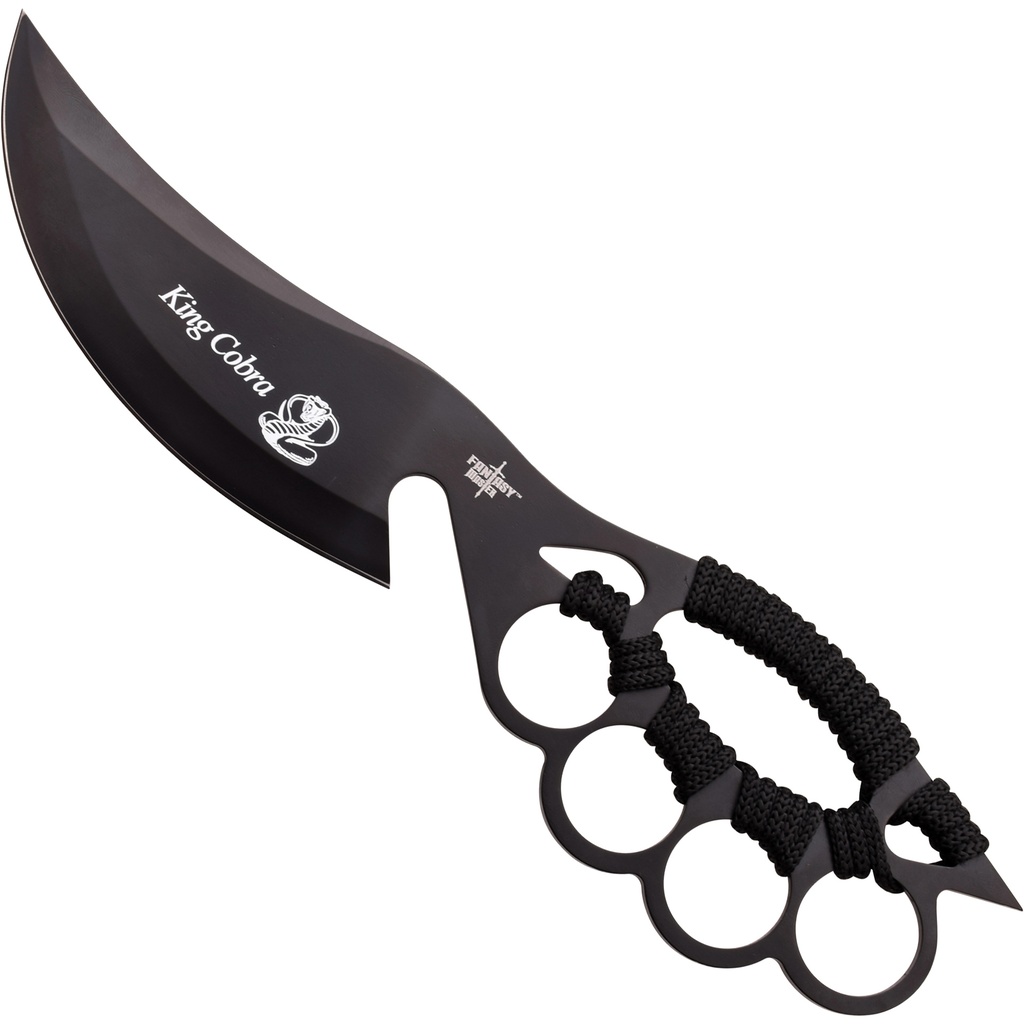
The Trench-Guard Blackout Knuckle Fixed Blade Knife - Matte Black takes the classic trench-knife profile and strips it down to a full-tang, modern tactical form. An 11-inch overall length with a 5.5-inch trailing-point blade delivers reach and cutting power, while the integrated knuckle guard locks your hand in behind the edge. The matte black finish and cord-wrapped handle add low-profile control, and the pointed pommel gives you an impact option when you don’t want to cut. A bold, combat-style centerpiece that still feels purposeful in hand.
What the Trench-Guard Blackout Knuckle Fixed Blade Actually Is
The Trench-Guard Blackout Knuckle Fixed Blade Knife - Matte Black is a modern take on the old trench knife idea: a full-tang fixed blade with a built-in knuckle guard that locks your hand in behind the edge. At 11 inches overall with a 5.5-inch trailing-point blade, it is first and foremost a close-quarters defensive knife and intimidating tactical display piece, not a general-purpose utility cutter.
Instead of hidden mechanisms or flash, this knife leans on simple physics and solid construction: one continuous piece of steel, a secure four-finger guard, and a curved cutting edge that favors slashing, hooking, and controlled thrusts. It’s designed for people who want a serious, combat-style fixed blade for personal protection scenarios, training environments, or defensive collection — not for opening Amazon boxes.
How This Tactical Fixed Blade Works in a Self-Defense Role
Unlike a stun gun for self defense, which depends on amperage, contact time, and battery charge to disrupt muscle control, a knife is a purely mechanical tool. The Trench-Guard Blackout relies on edge geometry, reach, and grip security to create a defensive advantage.
- Trailing-point blade: The pronounced belly and upward sweep are optimized for deep, efficient cutting on curved, moving targets — like arms reaching toward you.
- Full-hand knuckle guard: Your fingers pass through the steel guard, giving you a locked-in grip that’s harder to strip or knock free under impact.
- Full-tang construction: Blade and handle are one continuous piece of steel, so there’s no pivot, liner, or joint to fail under stress.
- Pointed pommel: The skull-crusher style butt gives you a blunt, focused impact option when you need to strike without cutting.
In real protection scenarios, blade length plus grip security matter more than looks. This design gives you both: 5.5 inches of usable edge with a guard that acts like a built-in retention system, so your hand stays behind the blade even if things get chaotic.
Build Quality Details That Matter More Than Looks
Full-Tang Steel and Knuckle Guard Integration
The core of the Trench-Guard Blackout is its one-piece steel construction. Blade, guard, handle frame, and pommel are all the same continuous tang. That matters for personal protection because there’s no weak link where a separate guard or handle might loosen or break if the knife is torqued, dropped, or used for hard strikes.
The knuckle duster section isn’t an add-on — it’s cut from the same steel as the blade. That means the force of a strike transfers straight through the frame instead of asking a riveted or bolted-on guard to hold together.
Matte Black Finish and Cord-Wrapped Grip
The matte black blade and handle finish are more than just style. A low-glare surface is less reflective under streetlights or indoor lighting, which is useful if you train for controlled, discreet deployment rather than theatrical intimidation.
The cord wrap adds friction and slight cushioning over the bare steel. In defensive use, that matters in three ways:
- Grip under sweat: Cord texture maintains traction when your hands are wet or adrenaline is high.
- Indexing: The transition from smooth steel to wrapped section helps you feel, not guess, where your hand should sit.
- Shock absorption: A bit of give reduces the sting when using the pommel or guard for impact strikes.
Carrying and Deploying a Knuckle Knife for Personal Protection
Where a stun gun for self defense is often clipped or holstered for quick thumb activation, a knuckle knife demands a different kind of carry discipline. The Trench-Guard Blackout is a full-size fixed blade; that means:
- It needs a proper sheath: For safe carry on a belt, vest, or inside a bag, pair it with a fitted sheath that covers the full edge and point.
- Access beats concealment: If you are carrying this as a personal protection tool, you want a draw path you can reach under stress — strong-side hip, cross-draw, or inside a dedicated bag compartment.
- Training is non-negotiable: The knuckle guard changes your draw angle compared to a simple straight-handle fixed blade. Practice the draw stroke until your fingers index through the guard without you needing to look.
For many practical protection buyers, this knife fills a specific role: vehicle kit, home defensive tool, training blade for combatives classes, or a clear visual deterrent in a collection focused on combat-style knives. It is large, committed carry — not something you forget is on you.
Effectiveness of the Trench-Guard Blackout as a Defensive Knife
Measured honestly, the effectiveness of this knife as a self-defense tool comes down to three things: retention, reach, and control.
- Retention: The full-hand knuckle guard makes it much harder for an attacker to strip the knife from your grip. Your fingers are caged in steel, which helps keep the blade oriented correctly even if your hand is struck or grabbed.
- Reach: With 11 inches overall and a 5.5-inch edge, you can intercept incoming limbs and maintain a bit more space than with a compact EDC folder.
- Control: The trailing-point belly, matte finish, and cord wrap all contribute to predictable tracking through a cut, rather than sliding or twisting as easily.
It’s important to be blunt: a knife is a lethal-force tool. Unlike a stun gun for self defense, which is often marketed as a less-lethal pain and disruption option, a blade like this should only be carried where you are legally allowed and mentally prepared for that level of force. If your goal is to have something you can use to break contact and run, this design gives you strong grip security and intimidating presence — but the responsibility is significant.
What People Ask Before Buying a Stun Gun for Protection
How effective are stun guns for self defense?
Stun guns can be effective for self defense in very specific conditions: close range, solid contact on bare skin or light clothing, and enough contact time (usually 2–5 seconds) to let the current do its work. They’re best at creating a pain and distraction window so you can break contact and escape, not at instantly dropping someone on the spot.
Compared to a fixed blade like the Trench-Guard Blackout, a stun gun is a contact tool that usually aims for less-lethal outcomes. The trade-off is that you must get very close, maintain contact, and carry a charged, reliable device with adequate amperage and a decent contact area.
Does voltage or amperage matter more in a stun gun?
Amperage matters far more than voltage in a stun gun for self defense. The high "million volt" numbers in ads are basically marketing theater. Voltage is just the pressure that helps current jump a gap; the tiny amount of current (amperage) that actually flows is what affects the body.
When evaluating a stun gun, look for honest specs around current, how large and well-built the contact probes are, and how consistent the device is when the battery starts to drop. Just like this knife’s full-tang steel and knuckle guard tell you it won’t fold or slip under stress, a stun gun’s build quality and amperage tell you whether it’s more than just a noisy flashlight.
Is this stun gun legal to carry in my state?
Stun gun and knife laws vary widely by state and sometimes by city. Some states treat stun guns like standard defensive tools with minimal restrictions; others require permits, limit where you can carry them (schools, government buildings), or ban certain designs outright.
Before you carry either a stun gun for self defense or a knuckle knife like the Trench-Guard Blackout, check three levels of law:
- State statutes: Look under weapons, electronic control devices, and knives.
- Local ordinances: Some cities are stricter than the state baseline.
- Use-of-force rules: Understand when you’re legally allowed to present or use a defensive tool in your jurisdiction.
If you’re unsure, consult a local attorney or reputable self-defense instructor who stays current on your area’s laws. The right tool for personal protection is one you can carry legally and confidently.
Carrying with Competence: Choosing the Right Tool for You
Whether you end up carrying a stun gun for self defense, a fixed blade like the Trench-Guard Blackout Knuckle Fixed Blade Knife - Matte Black, or both, the decision should be deliberate, not emotional. This knife gives you a robust, full-tang combat-style option with excellent grip retention and presence, but it also comes with the responsibilities of carrying a lethal tool.
The practical path is simple and honest: know your local laws, choose a sheath and carry position you can access under stress, and train with an inert trainer or safe replica to build draw stroke and control. When you approach personal protection this way — calm, informed, and realistic about what your tools can and cannot do — you move from just owning gear to actually being prepared.
| Blade Length (inches) | 5.5 |
| Overall Length (inches) | 11 |
| Blade Color | Black |
| Blade Finish | Matte |
| Blade Style | Trailing Point |
| Blade Edge | Plain |
| Handle Finish | Matte |
| Handle Material | Steel |
| Theme | Knuckle Duster |
| Handle Length (inches) | 5.5 |
| Tang Type | Full Tang |
| Pommel/Butt Cap | Pointed |