Blackout Beacon Crank Power Radio Flashlight - Black/Silver
3 sold in last 24 hours
When the power cuts out, this 4-in-1 hand crank emergency radio keeps you in control. A few turns give you AM/FM weather updates, a bright LED flashlight, an emergency siren, and a USB phone boost from its 400 mAh internal battery. Recharge by cranking or micro-USB, then clip the 5.5-inch body to your wrist lanyard and forget about it until you need it. Compact, simple, and self-powered—exactly what you want when the lights go down.
What This Emergency Radio Actually Does When the Lights Go Out
This Blackout Beacon crank power radio flashlight is a compact, 4-in-1 emergency tool designed for power outages, storms, and roadside surprises. Instead of depending on wall outlets or fresh batteries, it gives you three essentials from a single handheld unit: light, information, and a way to boost your phone. The integrated hand crank and 400 mAh rechargeable battery mean you can generate power on demand, even when the grid is down for hours or days.
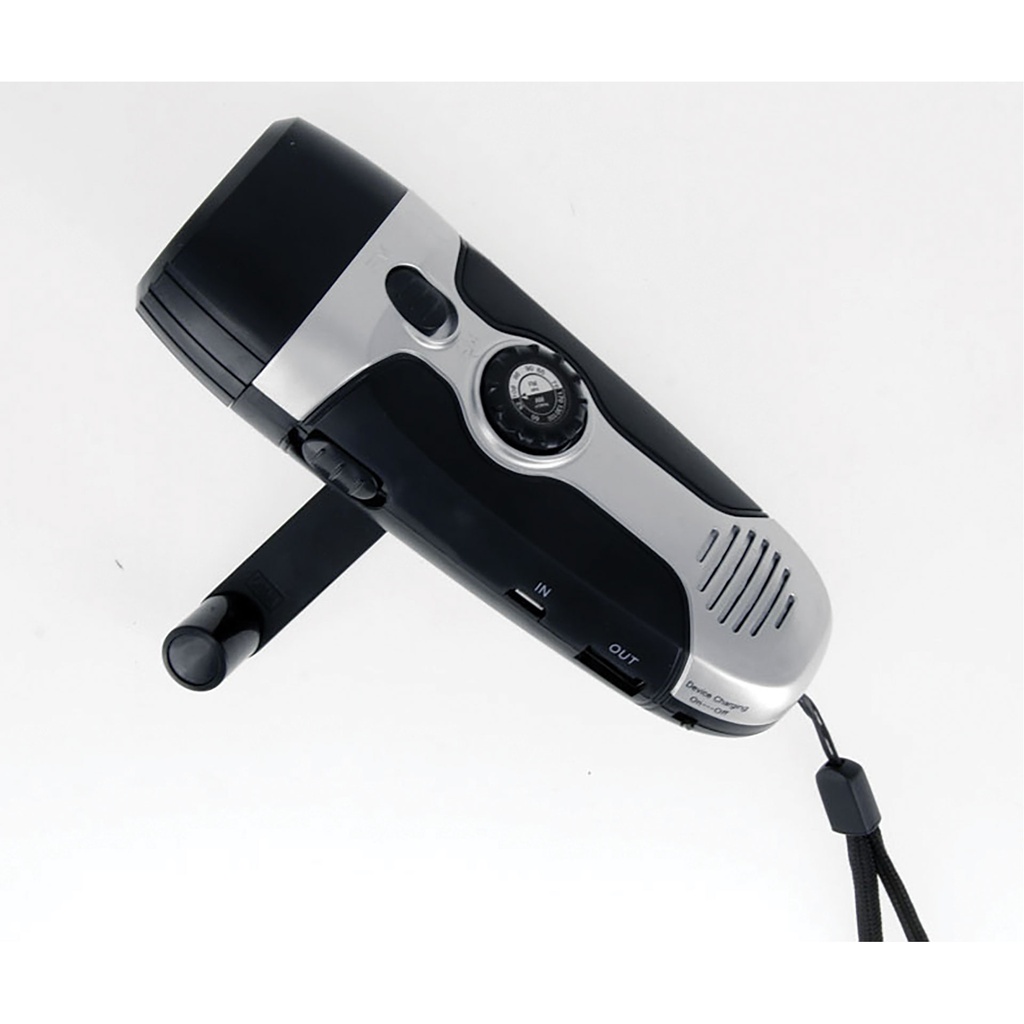
In practical terms, it’s a small, 5.5-inch radio flashlight with AM/FM tuning, a front-facing LED light, an emergency siren, and USB output for short, critical phone charges. It’s not a whole-house solution or a full power bank, and it doesn’t pretend to be. It’s the tool that lives in your drawer, glovebox, or go-bag so you’re not scrambling in the dark when the power dies.
How a Hand Crank Emergency Radio Actually Works
Hand crank emergency radios are simple: you turn mechanical effort into stored electrical energy. Inside this radio flashlight is a small dynamo that converts your cranking into charge for the internal 400 mAh battery. That battery then feeds four systems: the AM/FM radio, the LED flashlight, the emergency siren, and the USB output port for phone boosting.
Micro-USB input lets you top off the battery before a storm or trip. When the power’s on, you charge it from a wall adapter or computer. When the power’s off, you use the crank. That combination is what makes it reliable—no single point of failure. You’re not stuck if you forgot to charge it, and you’re not stuck if the hand crank is your only option.
Radio Performance You Can Use Under Stress
The AM/FM tuner is analog and straightforward. You dial in local news, weather, or emergency broadcasts the way people have done for decades. In a blackout, the most valuable feature isn’t a fancy screen—it’s being able to quickly find a station that’s still transmitting and hear clear enough audio through the built-in speaker to make decisions: stay put, move, seek shelter, or call for help.
LED Light That Turns Cranking into Visibility
The front-facing LED flashlight is designed for close to mid-range use—finding circuit breakers, navigating hallways, checking the car, or making yourself visible on a roadside. Because it runs off the same internal battery, every crank session buys you a bit more runtime. It’s not about blinding brightness; it’s about reliable, repeatable light when your phone’s battery is better saved for actual communication.
Why This 4-in-1 Radio Flashlight Is Reliable Emergency Gear
Preparedness gear fails in two main ways: it’s dead when you reach for it, or it’s too bulky and annoying to keep nearby. This hand crank emergency radio dodges both issues. At roughly 5.5 inches long with a wrist lanyard, it’s compact enough for a backpack, glovebox, bedside drawer, or kitchen counter. That size and simplicity mean you’re far more likely to actually keep it where you can grab it.
The plastic housing is utilitarian rather than delicate. This isn’t a display piece—it’s meant to be tossed in a bag, handled with cold or tired hands, and still function. Controls are obvious: tuning dial, simple switch, clearly labeled IN and OUT ports, and a fold-out crank that’s easy to grab and turn. In an emergency, ease of use beats sophistication every time.
Power Management: What 400 mAh Really Means
The 400 mAh battery is intentionally modest. It’s sized for short bursts of function rather than long-haul continuous runtime. Practically, that means:
- Enough flashlight time to navigate in the dark, not to camp all weekend without re-cranking.
- Enough phone boost to make essential calls or send texts, not to stream video.
- Enough radio time to scan for and monitor broadcasts, not to run as background music for hours.
Understanding that tradeoff is key: this is a survival and information tool, not an entertainment device. Used that way, the battery and crank give you more than enough runway to get through most power interruptions.
Carry and Placement: Where This Works Best
The included wrist lanyard and compact body shape make this radio flashlight easy to place and forget—until you need it. Ideal spots include:
- Home: In a common drawer, on a key hook, or near your breaker panel.
- Vehicle: Glovebox or center console for breakdowns or roadside emergencies.
- Go-Bag: Emergency kit, bug-out bag, or camping pack as your light-and-signal hub.
The goal is simple: when the power fails or your car won’t start, you don’t want to be hunting for scattered tools. This 4-in-1 device gives you light, information, and a phone lifeline in one grab.
Practical Use Scenarios: How It Helps in Real Emergencies
Think through actual situations, not ideal conditions:
- Overnight blackout: Use micro-USB pre-charge as your first line, then crank to top off. Run the flashlight intermittently to move around safely. Use the radio occasionally for updates instead of leaving it on constantly.
- Storm shelter or basement: Keep the radio running at low volume for weather alerts. Alternate between radio and light, cranking whenever the battery dips.
- Roadside breakdown at night: Use the flashlight to inspect your vehicle, switch on the emergency siren to draw attention if needed, and give your phone a short boost to call for assistance.
In each case, the principle is the same: short, purposeful use with periodic cranking stretches your available power and keeps critical functions online.
What People Ask Before Buying a Stun Gun for Protection
How effective are stun guns for self defense?
Stun guns for self defense work by delivering an electrical shock through contact points on the device. Their effectiveness depends less on advertised voltage and more on current (amperage), contact time, and where they’re applied. A stun gun can disrupt voluntary muscle control or cause significant pain, creating an opportunity to break contact and escape. They are close-contact tools—you have to be within arm’s reach and committed to driving the device into an attacker and keeping it there briefly. They are not magic wands; they’re one option in a broader personal protection plan that should also include awareness, avoidance, and escape strategies.
Does voltage or amperage matter more in a stun gun?
Amperage matters far more than headline voltage in a stun gun for self defense. High voltage primarily helps the current arc across clothing or small gaps, but it’s the current that actually affects the body. Many “millions of volts” claims are marketing more than engineering. A well-designed stun gun focuses on safe but effective current output, solid contact points, and a reliable power system rather than chasing extreme voltage numbers. When you’re choosing the best stun gun for personal protection, look for brands that talk honestly about build quality, battery performance, safety switches, and carry format—not just inflated voltage.
Is this stun gun legal to carry in my state?
Stun gun legality varies by state and, in some cases, by city or county. Many areas allow a stun gun for self defense in your home and for personal protection carry, but there can be restrictions on age, locations (like schools or government buildings), or concealed carry. A few jurisdictions still impose bans or permit requirements. Before choosing the best stun gun to carry, check your state and local laws—start with your state’s statutes on electronic control devices, then confirm any local ordinances. Laws change, so rely on current official sources rather than assumptions or old forum posts.
Carrying Emergency Gear with the Same Mindset as Self Defense Tools
Whether you’re looking at a stun gun for self defense or a hand crank emergency radio flashlight for blackouts, the principle is the same: the best tool is the one that works reliably and that you actually keep with you. This Blackout Beacon doesn’t rely on hype or fragile complexity. It gives you light, information, and a phone boost in a compact, self-powered package you can stage at home, in your car, or in your go-bag.
Once you understand what it can and cannot do—short, functional lighting; essential news and weather; emergency signaling; limited phone boosting—you can plan around it intelligently. Charge it occasionally via micro-USB, practice using the crank and controls once in a while, and decide now where you’ll store it so everyone in your household knows where to reach for it when the power fails. That quiet preparation is the same mindset that makes any self-defense or protection tool genuinely effective.