Blackout Sentinel Rigid Control Handcuffs - Black Steel
13 sold in last 24 hours
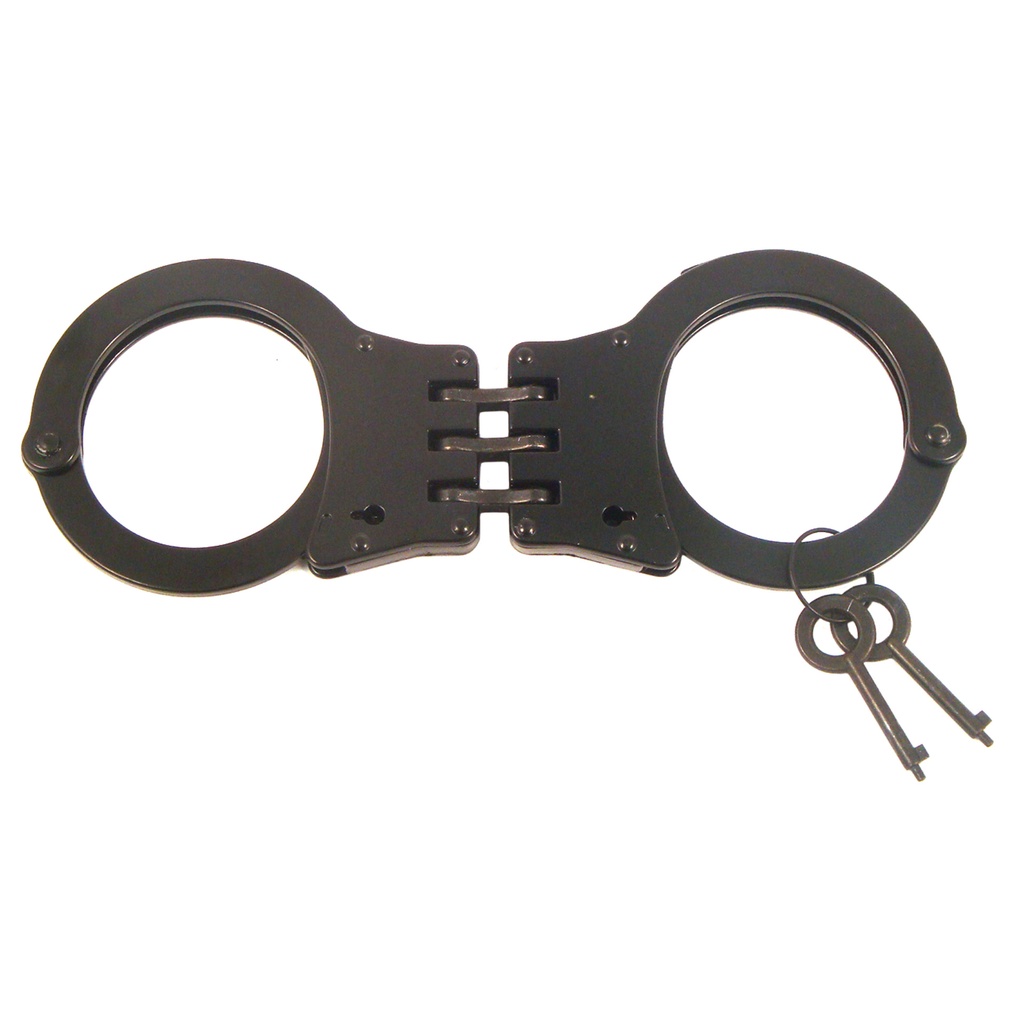
These Blackout Sentinel hinged handcuffs are built for real-world control, not theatrics. The rigid three-link hinge sharply limits wrist rotation, making it harder for subjects to twist, run, or fight the restraint. NIJ-approved stainless steel with a blackout finish keeps the profile low and professional, while the double-lock mechanism reduces the risk of over-tightening in the field. Two standard keys are included, so patrol, security, and transport teams stay ready to cuff, secure, and move on.
Serious Control in a Compact Package
The Blackout Sentinel Rigid Control Handcuffs - Black Steel are built for real-world restraint, not for show. These are professional hinged handcuffs designed for patrol, security, and transport work where control, reliability, and repeatable performance matter more than flashy finishes or gimmicks. The blackout steel construction, rigid hinge, and double-lock mechanism all serve one purpose: safe, effective control of a subject once the cuffs close.
Why Hinged Handcuffs Matter for Personal Protection and Security Work
Most people first picture standard chain-linked cuffs, but hinged handcuffs like these change the control equation. The rigid three-link hinge sharply reduces how far a subject can rotate their wrists or twist out of position. That tighter control is especially valuable for:
- Security professionals escorting disruptive or intoxicated individuals
- Transport teams moving detainees between locations
- Loss-prevention or protective services who need secure, short-term restraint
With chain handcuffs, a subject can often rotate their wrists, get partial leverage, or use the slack to resist. With a rigid hinge, you decide where their hands sit, and the cuffs help keep them there.
How These Hinged Handcuffs Actually Work
The mechanism here is straightforward and proven. Each cuff has a swing arm that ratchets through a toothed channel when you apply it to the wrist. Once it clicks down to a snug—but not crushing—position, internal pawls prevent it from backing out on its own. You can then engage the double-lock, which blocks further tightening and helps prevent accidental over-compression during movement or struggle.
That double-lock is more than a spec line—used properly, it protects the subject from unnecessary injury and protects you from allegations of careless application. Once the cuffs are on and checked for fit, set the double-lock before transport or prolonged contact. When it's time to remove them, the included key disengages the double-lock first, then reverses the ratchet to open the cuffs.
NIJ-Approved Black Steel Build for Duty Use
These hinged handcuffs are made from stainless steel with a blackout finish and are NIJ-approved. That approval means they've been tested against recognized performance standards for strength, durability, and function—not just built to look tough. The blackout finish offers three practical benefits:
- Low-profile appearance in low light, avoiding unnecessary visual escalation
- Reduced glare compared to bright stainless finishes
- A professional, uniform-ready look for law enforcement and security teams
At roughly 10 ounces, they have enough mass to feel solid in the hand without being burdensome on a duty belt.
Rigid Hinge: Control, Not Comfort
The standout feature here is the rigid three-link hinge. From a control perspective, this configuration:
- Limits wrist rotation, reducing a subject's leverage
- Makes it harder to swing cuffed hands as a weapon
- Improves positional control during escort and transport
The trade-off is that hinged cuffs are less forgiving of poor placement. Training and consistent application matter. When used correctly—wrists aligned, hands behind the back, checked for circulation—these provide excellent control with minimal added risk.
Carry and Deployment: How These Handcuffs Fit Into Real-World Use
These hinged handcuffs are designed to live on a duty belt, in a security kit, or in a dedicated case. Their compact form factor makes them easy to carry in a standard handcuff pouch, and the blackout profile keeps them visually subdued until needed.
Under stress, what matters is repeatable access. Set up your gear so that:
- Your dominant hand can reach the cuff case without visual confirmation
- The cuffs are oriented consistently every time you draw them
- The keys are stored where you can access them even if your non-dominant hand is occupied
Two standard keys are included and fit common handcuff key ports, which is important for interoperability with other professional restraints. That means if a partner or responding officer needs to remove your cuffs, they don't need a proprietary tool.
Double-Lock for Safety and Professionalism
The double-lock feature is a core part of responsible handcuff use. Once the cuffs are applied and checked for a safe level of tightness (enough that they can't slip out, but not cutting into the skin), activating the double-lock stops the swing arm from tightening further. This matters when a subject is moving, struggling, or pressed against a surface—situations where standard, single-lock cuffs might ratchet tighter unintentionally.
Using the double-lock consistently signals professional restraint: you're not just securing someone, you're managing their safety as well as your own.
Who These Handcuffs Are For—and Who They're Not For
The Blackout Sentinel Rigid Control Handcuffs are best suited for:
- Law enforcement officers who prefer hinged over chain designs for escort control
- Security personnel in venues, hospitals, campuses, or corporate environments
- Transport teams handling detainee or prisoner movement
They are not toys, costume pieces, or casual accessories. If you carry handcuffs, you take on both legal and ethical responsibilities: understanding when you're allowed to restrain someone, how to do it safely, and what your obligations are once someone is in your custody.
What People Ask Before Buying Professional Handcuffs for Protection
How effective are hinged handcuffs for control?
Hinged handcuffs are highly effective for control when used by trained personnel. The rigid hinge makes it harder for subjects to twist, turn, or use their arms to resist, compared to standard chain cuffs. That said, their effectiveness depends on your training: proper positioning, safe application, and clear post-restraint procedures matter as much as the hardware. If you're in security or law enforcement and prefer stronger escort control and reduced movement, hinged cuffs like these are a strong choice.
Are hinged handcuffs better than chain handcuffs?
"Better" depends on your role and priorities. Hinged handcuffs offer superior control and reduced subject movement, which is ideal for transport, high-risk escorts, or environments where resistance is likely. Chain handcuffs allow a bit more flexibility and are sometimes more forgiving during application, especially in awkward positions. Many agencies issue chain cuffs by default, but individual officers and security professionals often add hinged cuffs like these Blackout Sentinel restraints for situations where control is the top priority.
Are these handcuffs legal for civilians to own?
In many areas, it is legal for civilians to purchase and own handcuffs, including professional hinged models like these. However, laws about using handcuffs vary widely. Improper restraint can expose you to serious legal risk, including false imprisonment or assault charges. If you're not in law enforcement or licensed security, you should:
- Check your state and local laws on restraint devices
- Understand when, if ever, you're allowed to restrain someone
- Consider whether handcuffs are truly appropriate for your role
When in doubt, consult local statutes or an attorney who understands use-of-force and detention law in your jurisdiction.
Will these work with standard handcuff keys?
Yes. These Blackout Sentinel hinged handcuffs are designed with standard-style keyways and include two standard handcuff keys on a ring. That means they are compatible with common duty keys used by law enforcement and security professionals, which is important if multiple people may need to remove the cuffs during a shift or incident.
Carrying With Confidence
Effective restraint isn't about looking tactical; it's about having the right tool, knowing exactly what it does, and understanding the limits of when and how to use it. The Blackout Sentinel Rigid Control Handcuffs - Black Steel offer:
- NIJ-approved blackout stainless steel for real-duty durability
- A rigid hinged design for enhanced escort and transport control
- Double-lock security for safer, more professional application
- Standard key compatibility for seamless integration into your existing gear
If handcuffs are part of your protection and control toolkit, these give you a reliable, professional-grade option. Paired with solid training, policy awareness, and a clear understanding of your legal authority, they become more than metal—they become a predictable, dependable part of keeping everyone as safe as the situation allows.