Chevron Shield Triple-Defense Stun Gun - Black/White
14 sold in last 24 hours
This stun gun for self defense is built for people who want real protection without drama. The Chevron Shield Triple-Defense Stun Gun combines a loud 120 dB siren, bright flashlight, and high-contact stun tip in a slim, chevron-pattern grip that’s easy to hold and control. Squeeze-to-stun activation, a disable pin, and a built-in charger focus on what actually matters: contact, current delivery, and reliability under stress. It looks like a modern accessory, but in your hand, it’s calm, practical personal protection.
Chevron Shield Triple-Defense Stun Gun for Self Defense, Without the Hype
The Chevron Shield Triple-Defense Stun Gun is designed for real personal protection, not marketing theatrics. It gives you three layers of defense in one compact tool: a 120 dB alarm to warn and attract attention, a bright flashlight to see and be seen, and a close-contact stun gun for self defense when distance and options run out. Instead of chasing “million volt” claims, this design focuses on what actually matters—reliable current delivery, solid contact, and a grip you can control under stress.
How Stun Guns Work for Practical Personal Protection
If you’re researching the best stun gun for personal protection, it helps to understand how stun guns really work. A stun gun is a close-contact self defense tool: you have to press it firmly against an attacker’s body and maintain contact for it to do its job. The device sends high-voltage, low-amperage electrical pulses across the contact points into the target’s muscles and nervous system.
Voltage sounds impressive in ads, but it mainly determines how easily current can arc across clothing or skin. The real work is done by amperage—the actual current that passes through the body during contact. When enough current is delivered for long enough, it causes intense pain, muscle disruption, and disorientation, buying you time to break contact and get to safety. The Chevron Shield is built around that reality: good contact area, reliable output, and a grip that helps you stay connected if you choose to use it.
Why This Chevron Shield Stun Gun Is Effective for Real-World Self Defense
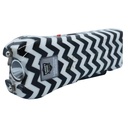
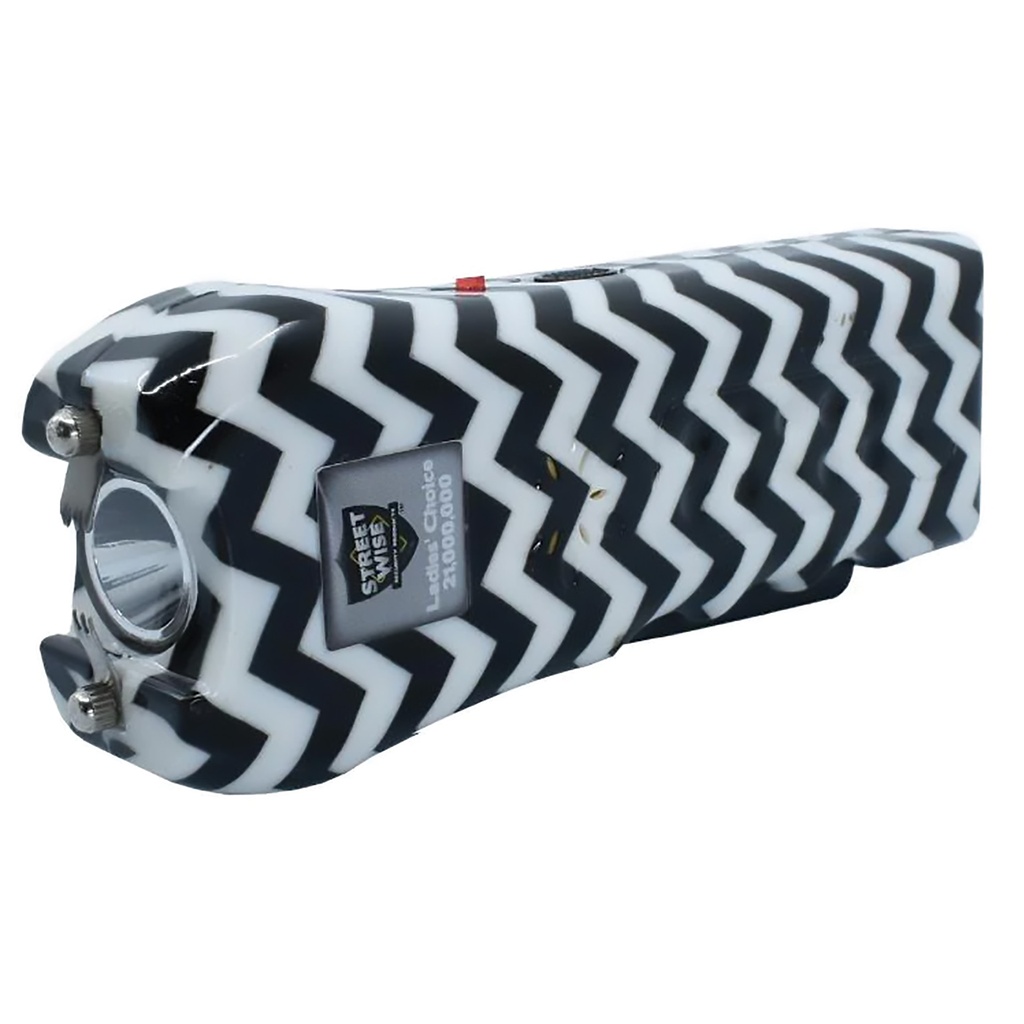
A stun gun for self defense only helps if you can get it in hand quickly, keep a solid grip, and deliver contact to a target area. The Chevron Shield Triple-Defense Stun Gun is shaped for that job. Its slim, narrow body fits naturally in smaller hands, and the contoured sides reduce the chance of slipping if your hands are sweaty or shaking. The front end combines a recessed flashlight lens with exposed metal stun contacts, giving you a clear orientation: light and contact facing forward, your hand protected behind the body.
Because it’s compact and patterned like a modern accessory, this stun gun doesn’t scream “weapon.” That matters for practical carry. A self defense tool you actually carry—on a night walk, leaving a late shift, walking to your car—is more valuable than a more aggressive-looking device that stays in a drawer. The Chevron Shield aims to live in your hand, bag, or pocket as a normal part of your routine, so it’s there when you need it.
Build Quality You Can Feel in the Hand
The glossy polymer body is more than cosmetic. It houses a solid internal frame, integrated charging system, and snug-fitting disable pin connection. The metal Streetwise branding plate isn’t just decoration; it signals a manufacturer that stakes its name on durability and backs it with a lifetime warranty. In self defense, reliability is part of protection—if a stun gun won’t fire when you squeeze, it’s just a plastic flashlight.
Triple-Defense Design: Warn, Blind, Stun
The Chevron Shield Triple-Defense system lines up your options in a logical order:
- Alarm first: a 120 dB siren that can startle, draw attention, or discourage someone before things escalate.
- Flashlight next: bright enough for close-range identification, checking your surroundings, and momentarily disrupting an attacker’s night vision at short distances.
- Stun last: a high-contact stun head designed to be pressed into a limb, torso, or hip at arm’s length for immediate pain and disruption.
That sequence supports a practical use-of-force mindset: try to deter and escape first, use close-contact force only if you must.
Voltage vs. Amperage: What Actually Matters in a Stun Gun
Most stun gun marketing shouts about “millions of volts.” Here’s the honest version: once you’re above roughly 30,000–50,000 volts, you already have more than enough voltage to arc through typical clothing gaps and into the body. More advertised voltage doesn’t automatically mean a more effective stun gun for self defense—it just sounds bigger on a package.
The Chevron Shield Triple-Defense Stun Gun focuses on the factors that count in real encounters:
- Amperage (current): enough current to cause pain and muscle disruption without being designed as a lethal weapon.
- Contact area: exposed metal prongs around the flashlight give you a focused contact point you can drive into the target.
- Contact time: a design that’s easy to grip and keep against the target for 1–5 seconds if necessary.
- Battery reliability: a built-in charger means you’re more likely to top it off regularly, instead of forgetting about replaceable batteries.
If you remember one thing: in a stun gun, current plus contact plus time equals real-world effectiveness. Voltage is just the doorway.
Carry Format: A Stun Gun for Personal Protection You’ll Actually Keep With You
A great self defense tool is one you can carry consistently without rearranging your life. The Chevron Shield was clearly designed with everyday carry in mind, especially for women and anyone who prefers a slimmer profile.
Slim, Non-Intimidating Profile
The narrow, rectangular body with its black-and-white chevron pattern looks more like a modern gadget than a weapon. That matters if you’re carrying it in a purse, walking through a parking lot, or keeping it in your hand on a late-night commute. You can hold it naturally at your side without broadcasting that you’re holding a stun gun, while still being ready to bring it up and activate it instantly.
Squeeze-and-Stun Activation Under Stress
Fine motor skills disappear when adrenaline spikes. That’s why the Chevron Shield uses a squeeze-and-stun activation system combined with a simple control switch. Once you’ve armed it, you don’t have to hunt for a tiny button; just keep your grip, squeeze, and the stun function activates. The disable pin on the wrist strap adds an extra layer of control: if someone yanks the stun gun away, the pin pulls free and the device is disabled, preventing it from being used against you.
For everyday carry, the built-in charger means you can plug the stun gun directly into an outlet or compatible cable (depending on the model variant) without tracking spare batteries or special charging docks. That simplification makes it more likely you’ll keep it charged and truly ready for self defense.
What People Ask Before Buying a Stun Gun for Protection
How effective are stun guns for self defense?
Stun guns can be effective for self defense in specific conditions: close range, solid contact, and a few seconds of maintained pressure. They shine as a last-resort, up-close tool—especially when combined with an alarm and light like this Triple-Defense design. They’re not magic distance weapons, and they won’t always “drop” someone instantly, particularly if the person is highly motivated or under the influence. A realistic plan is: alarm and voice commands first, flashlight and movement to create space, and stun contact only if escape isn’t possible. Within that framework, a reliable stun gun for self defense is a useful part of a layered personal protection strategy.
Does voltage or amperage matter more in a stun gun?
Amperage matters more. Voltage is about potential—it helps the electricity jump tiny gaps and get through clothing. Amperage is the actual flow of current through the body, and that’s what creates pain and muscular disruption. Once voltage is high enough to arc reliably, increasing the advertised number doesn’t dramatically change real-world performance. When choosing the best stun gun for personal protection, look for solid construction, positive activation, good contact design, a reputable brand, and clear safety features. Those factors, plus proper contact time, matter more than how many “millions of volts” are printed on the box.
Is this stun gun legal to carry in my state?
Stun gun laws vary by state and sometimes by city or county. Many states allow stun guns for personal protection with few restrictions; others require age limits, permits, or ban them in certain locations like schools or government buildings. A few jurisdictions restrict civilian possession entirely or treat them similarly to other controlled defensive tools. Before carrying this stun gun for self defense, check your state and local laws—search your state name plus “stun gun laws” and verify with an official state or city website when possible. If you travel, remember that what’s legal at home may not be legal in another state or on certain properties.
Carrying the Chevron Shield with Confidence and Competence
The goal of a stun gun for personal protection isn’t to make you feel like an action movie hero; it’s to give you a realistic, usable option when something feels wrong. The Chevron Shield Triple-Defense Stun Gun combines a warning siren, practical illumination, and close-contact stun capability in a form factor that fits real life—a slim grip, a patterned body that doesn’t scream “weapon,” and controls that still work when your hands are shaking.
If you choose to carry this stun gun, practice a simple routine: check charge weekly, rehearse drawing and arming it from your usual carry spot, and visualize your sequence—voice, alarm, move, light, then stun only if you must. That preparation, more than any voltage number, is what turns this from a gadget into a genuine self defense tool you can trust.