Classified Skull Field Booby Trap Reference Manual - Black Cover
12 sold in last 24 hours
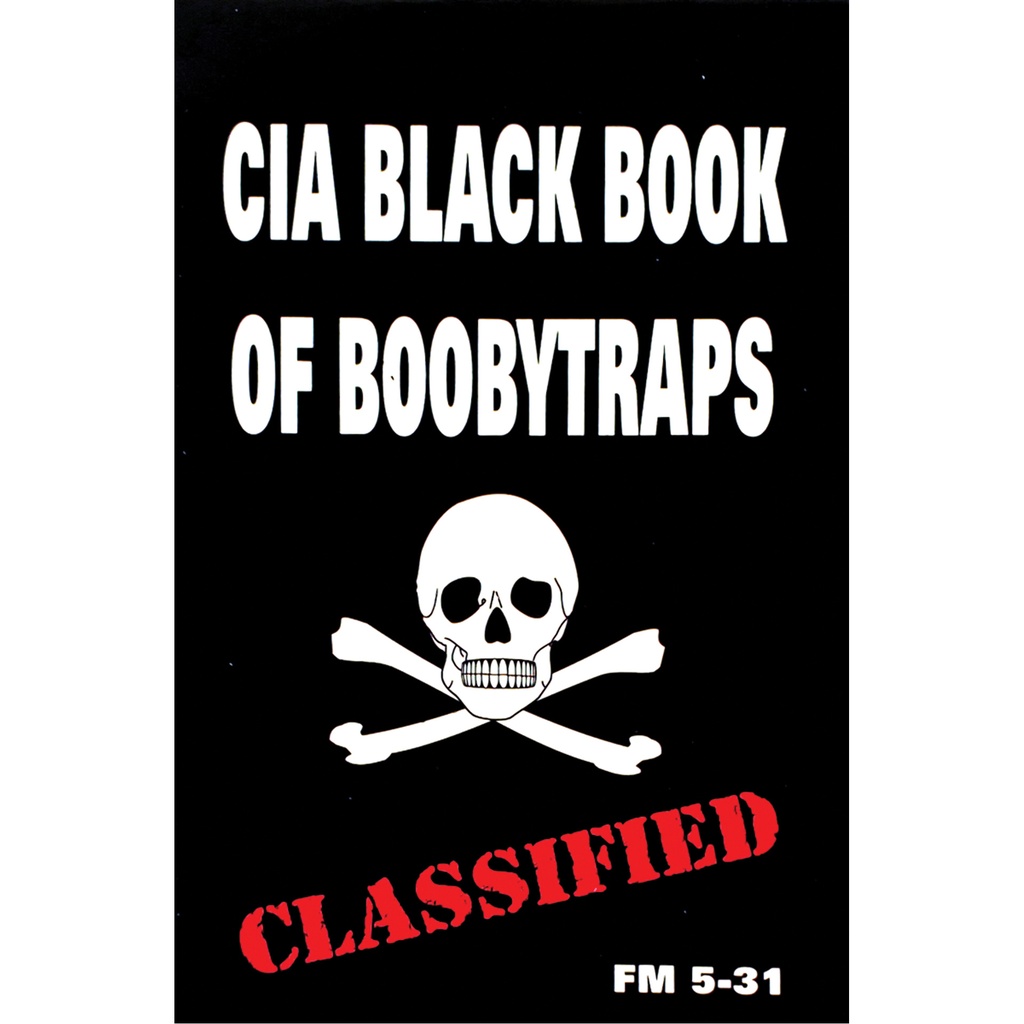
This classified-style booby trap manual is built like a field tool, not a coffee-table prop. The black cover, skull seal, and red CLASSIFIED banner frame 130 pages of heavily illustrated, historical guidance and countermeasure awareness. At 5.5 x 8.5 inches, it rides easily in a range bag, training kit, or reference shelf. Ideal for instructors, collectors, and safety-focused retailers, it delivers context and caution, helping responsible owners understand how booby traps were used—and how to recognize and avoid them today.
What This Booby Trap Field Manual Actually Is
This isn’t a novelty gag book or a how-to manual for would-be saboteurs. The Classified Skull Field Booby Trap Reference Manual - Black Cover is laid out like a pulled-from-the-archives field text: a compact, heavily illustrated reference that focuses on historical booby trap methods and countermeasure awareness. It’s designed for instructors, collectors, and responsible owners who want accurate context, not drama.
Think of it as a focused field primer: 130 pages, clear diagrams, and a stark black cover that looks at home in a range bag, training kit, or behind the counter of a safety-focused shop.
Design: Why It Looks Like a Classified Field Manual
The visual language is deliberate. The black background, bold white title, skull-and-crossbones emblem, and red CLASSIFIED banner all point in one direction: this is serious subject matter. It borrows the look and feel of a restricted field manual so the content is immediately framed as something to treat with caution and respect.
Compact, Field-Ready Format
- Size: 5.5 x 8.5 inches – small enough for a range bag, large enough to keep diagrams legible.
- Form: Portrait orientation with a flat, high-contrast cover that’s easy to spot and stack.
- Page Count: 130 pages of dense, heavily illustrated content.
This isn’t a glossy coffee-table piece. It’s built like a workbook: something you can reference, mark up, and revisit when planning a safety briefing or building a training block on hazards and historical booby trap use.
What the Booby Trap Manual Covers (And What It Doesn’t)
Because of the subject, it’s important to be clear about purpose. This booby trap manual is best understood as historical technical awareness and countermeasure context. It walks through legacy booby trap concepts so modern readers can:
- Recognize patterns and trigger concepts historically used in improvised devices.
- Understand why certain approaches were effective in their era.
- Frame informed discussions around safety, deconfliction, and avoidance.
It is not a modern EOD textbook, and it’s not a substitute for professional training. It gives you the historical picture, the basic technical language, and visual examples, so conversations with subject matter experts and students are more precise and grounded.
Who This Booby Trap Reference Manual Serves Best
The tone and format make it especially useful for three groups:
- Instructors and trainers who need a visual prop and historical reference when teaching about hazards, site security, or range safety.
- Collectors and enthusiasts who appreciate archival-style field manuals and want a piece that visually fits with other tactical and military references.
- Safety-focused retailers who curate serious, story-rich gear for a clientele that values responsible ownership and historical context.
Why Instructors Like This Format
Heavily illustrated pages allow you to flip to an image, hold it up, and make a point quickly. Instead of describing a concept from scratch, you can anchor the discussion on a diagram: “This is what I mean by a trip-based setup,” or “Here’s how concealment played into historical booby traps.” That speeds up learning and reduces miscommunication.
Build Quality and Everyday Usability
While this is a book, not a stun gun or hardware tool, the same practical standards apply: it needs to be readable, durable enough for repeated use, and sized for real training environments.
- High-contrast interior supports quick scanning in less-than-ideal light.
- Clear line art makes historical mechanisms easier to parse without engineering-level background.
- Moderate thickness (130 pages) balances content depth with portability.
Slip it into a backpack, instructor binder, or under a countertop. It’s compact enough that you’ll actually carry and reference it, instead of leaving it on a shelf.
How This Manual Fits Into Responsible Training and Ownership
Serious self-defense and security work aren’t just about weapons or devices; they’re about understanding environments and avoiding preventable risks. Historical booby trap knowledge supports that by giving you:
- Language and examples for safety briefings in high-risk or unfamiliar locations.
- Reference points when discussing why certain procedures (clearance, routes, checks) exist.
- Context when explaining to newer students that threats are often built into objects and spaces, not just people.
Used well, this manual turns a sensational topic into a sober, technical discussion about risk and countermeasures.
What People Ask Before Buying a Stun Gun for Protection
Even though this product is a booby trap manual, many buyers browsing this category are also researching a stun gun for self defense. The questions below come up constantly, so here are clear, practical answers to help you evaluate any stun gun you’re considering for personal protection.
How effective are stun guns for self defense?
A stun gun can be effective for self defense in very specific conditions: you must make solid contact with the attacker’s body, usually through clothing, and maintain that contact for long enough—often 2–5 seconds—to disrupt their muscular control or focus. They are close-contact tools, not distance solutions. A stun gun for self defense is best viewed as part of a larger protection plan that includes awareness, movement, and verbal skills, not as a magic-stop device.
Does voltage or amperage matter more in a stun gun?
Voltage gets the big headlines—“millions of volts” sounds impressive—but it’s mostly marketing. Once you cross the threshold needed to arc across clothing, amperage and contact time matter far more for a stun gun for personal protection. Amperage is the current actually moving through the body; that’s what affects muscles and pain response. When you evaluate the best stun gun for personal protection, prioritize build quality, contact area, and a design you can keep on target under stress over any claimed voltage number.
Is this stun gun legal to carry in my state?
Stun gun laws are highly state- and city-specific in the U.S. Some states treat a stun gun almost like a standard defensive tool; others restrict carry, require permits, or ban them in certain locations (schools, government buildings, public events). Before you buy a stun gun for self defense, check three layers: state law, local ordinances (city/county), and any workplace or campus policies that apply to you. When in doubt, read the statute directly or consult an attorney rather than relying on forum posts.
Using Information Like This Responsibly
Whether you’re looking at a booby trap manual for historical awareness or researching the best stun gun for personal protection, the same principle applies: tools and information should make you harder to harm, not more reckless.
This manual gives you context and visual examples so you can talk about historical booby traps calmly and accurately. The stun gun guidance helps you cut through voltage hype and focus on what actually drives real-world effectiveness: contact, current, build quality, and your ability to deploy under stress.
Used together with solid training and clear boundaries about what you will and won’t do, they support the same outcome: you move through the world a little more prepared, a little less naive, and a lot more deliberate about safety.