Clearview Gridline Map Navigation Compass - Transparent Base
11 sold in last 24 hours
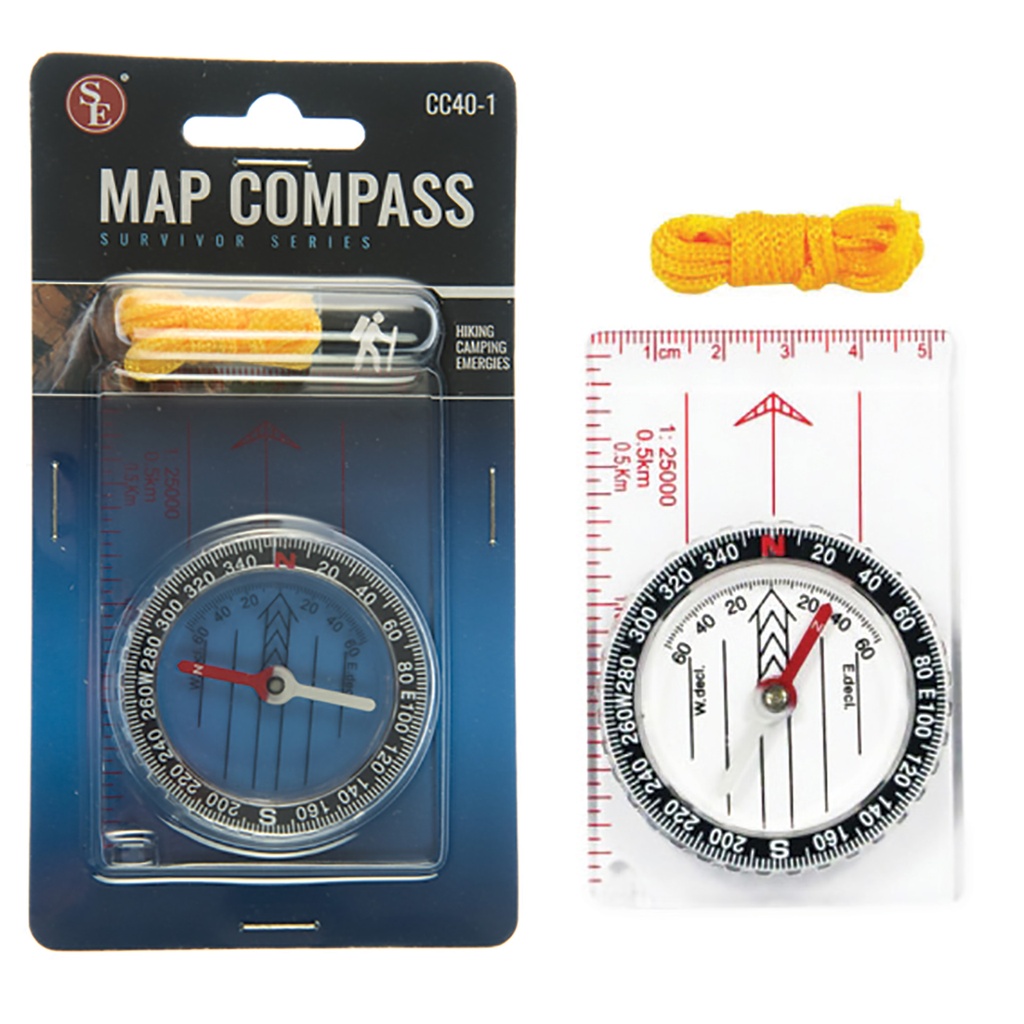
A map compass is only useful if you can actually read the map through it. This clear baseplate navigation compass lays flat over your topo, with bold red gridlines, 1:25,000 scale, and inch and kilometer rulers to keep your bearings honest. The rotating bezel dials in a heading quickly, while the bright yellow lanyard makes it easy to spot in a pack. For hikes, scouts, and emergency kits, it’s a simple, reliable way to turn paper maps into clear direction.
Clearview Gridline Map Navigation Compass – Built for Real Map Work
The Clearview Gridline Map Navigation Compass is a baseplate orienteering compass designed for people who actually use paper maps. The clear plastic base lets you see every contour line, the bold red rulers and 1:25,000 scale give you clean distance estimates, and the rotating bezel makes setting a bearing straightforward even if you’re new to navigation. It’s small enough for a pocket, bright enough to find fast in a pack, and simple enough for scouts and beginners.
How This Orienteering Compass Actually Helps You Navigate
A good orienteering compass does three practical things: it points to magnetic north, it helps you line up your map with the real world, and it lets you transfer bearings between map and terrain. This map compass covers all three without unnecessary extras.
The magnetic needle is free-swinging and settles quickly, so you aren’t waiting around for it to stop wobbling. The white dial with black markings and red north indicator gives clear contrast in daylight. Around the capsule, the black rotating bezel is marked 0–360 degrees with cardinal points, so you can set and follow a bearing in either degrees or general direction (N, E, S, W).
The clear rectangular baseplate is the real work surface. You lay it over your map, align its straight edges with grid lines or features, and use the printed rulers and 1:25,000 scale to judge distance. The red direction-of-travel arrow at one end shows exactly where you’re heading once you’ve set your bearing.
Build Details That Make This Map Compass Reliable
Clear Baseplate with Useful Scales
The transparent plastic base allows full visibility of map features underneath. Printed in red, the rulers and grid markings stand out against typical topo colors. You get:
- Inch and metric rulers along the edges for quick measuring
- A 1:25,000 map scale printed on the baseplate for common hiking maps
- A bold, easy-to-see direction-of-travel arrow for taking and following bearings
This isn’t a decorative compass disc on a keychain; it’s a functional baseplate compass sized and marked for practical map navigation.
Rotating Bezel and Readable Dial
The black bezel ring rotates smoothly around the compass housing. Degree markings are clear and evenly spaced, with cardinal letters in white that stand out. The white dial inside the capsule has orienting lines that help you square the bezel to the map’s north-south grid. Once the bezel is set, you simply turn your body until the red magnetic needle aligns with the bezel’s north marking, then follow the baseplate arrow.
High-Visibility Lanyard for Real Trail Use
The included bright yellow lanyard is more than an accessory. High-visibility cord makes the compass easy to spot if you set it down on a stump or drop it in leaf litter. Attach it to your wrist, belt, or pack so this navigation tool doesn’t walk away mid-hike. The small baseplate hole provides a clean attachment point without interfering with map reading.
Why This Compass Works for Hikers, Scouts, and Emergency Kits
This orienteering compass is aimed squarely at practical navigation, not gear collecting. It’s light, affordable, and does the essentials well. That makes it ideal for hiking groups, scout troops, outdoor classes, or any emergency-preparedness kit that includes paper maps.
For new users, the layout is intuitive: big arrow shows your direction of travel, rotating ring sets your heading, and clear rulers help you make sense of scale on a map. For more experienced users, the 1:25,000 scale and 360-degree bezel support standard orienteering techniques and resection work (figuring out where you are by lining up known landmarks).
Because it’s a full baseplate compass rather than a tiny button compass, you can actually align it accurately along map features and draw lines with it when plotting a route. The flat, rectangular design also slips easily into a pocket or map case.
Carry and Use: How to Get the Most from This Map Compass
The compass is compact enough to ride in a shirt pocket, hip belt pouch, or inside a first-aid or survival kit. The yellow lanyard lets you wear it around your neck on short navigation legs or clip it off to a pack strap when not in hand.
In use, the process stays simple:
- Lay the clear baseplate on your map, lining its edge along the line you want to travel.
- Rotate the bezel until its orienting lines are parallel with the map’s north-south grid, with north pointing toward map north.
- Lift the map and compass together, turn your body until the red needle lines up with the bezel’s north mark.
- Follow the red direction-of-travel arrow, checking the needle and bezel alignment as you go.
Because you can see straight through the baseplate, you’re never guessing what’s under the compass — contour lines, streams, and trails remain visible while you work.
What People Ask Before Buying a Map Compass
How accurate is this type of orienteering compass?
For hiking and basic orienteering, a baseplate compass like this is more than accurate enough. The 360-degree bezel lets you set bearings to within a few degrees, which is well within the margin of error for walking across typical terrain. The key factors for accuracy are steady hands, careful alignment with your map, and consistent technique, not exotic features. Used correctly, you can reliably follow headings, triangulate your position, and measure distances on standard 1:25,000 or similar maps.
Is a baseplate compass better than a small button compass?
For real navigation, yes. Button compasses can show rough direction (north, south, east, west), but they don’t give you a straightedge, rulers, or a rotating degree ring. A full baseplate compass lets you lay it on a map, line up features, set precise bearings, and measure distance. If you want more than “I’m generally going north,” a baseplate orienteering compass is the practical choice.
Will it still work if my GPS or phone dies?
Yes. This compass is fully mechanical and doesn’t rely on batteries or signal. As long as you have a paper map for your area and understand basic compass use, you can navigate without electronics. That’s why many hikers, scouts, and emergency planners still insist on packing a map compass even when they also carry GPS devices or smartphones.
Confidence Through Simple, Reliable Navigation Gear
The Clearview Gridline Map Navigation Compass doesn’t pretend to be a high-end survey instrument. It does something more useful for most people: it makes basic map-and-compass navigation accessible, readable, and reliable. The clear baseplate, practical scales, rotating bezel, and bright lanyard work together to give you a tool you’ll actually use, not just carry “just in case.”
Whether you’re leading a group hike, teaching new scouts, building an emergency kit, or just wanting a backup to your GPS, this orienteering compass gives you a straightforward way to stay oriented. No batteries, no apps, just an honest magnetic needle and a clear window onto your map.